
Google Bets Big on India With $15 Billion AI Hub Investment
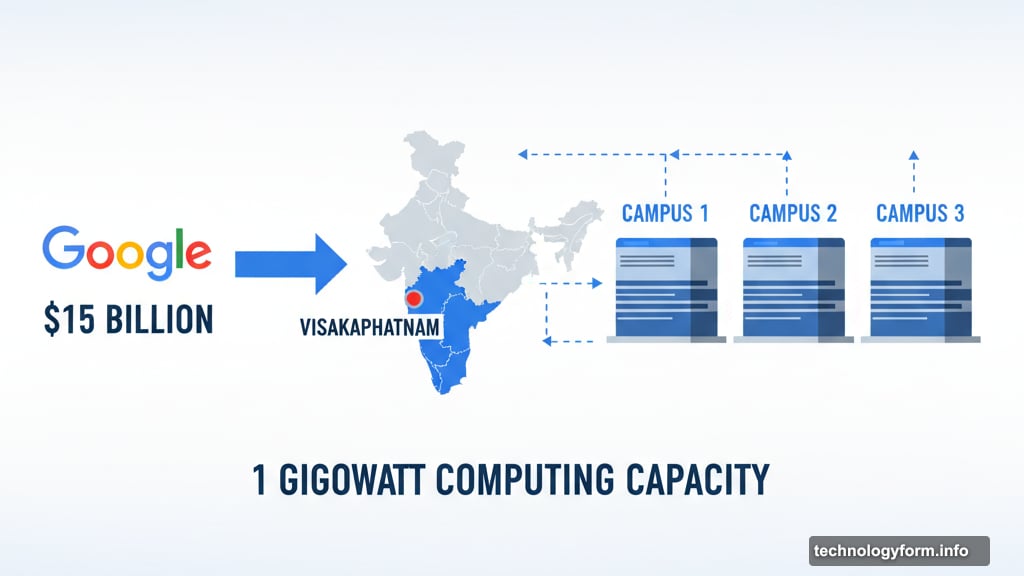
Google just committed $15 billion to build massive AI infrastructure in India. That’s not a typo. Fifteen billion dollars over five years, creating the company’s largest AI hub outside the United States.
The announcement came Tuesday from Google Cloud CEO Thomas Kurian at a major industry event. But the deal itself? That took a year of intense negotiations between Google and officials from Andhra Pradesh, a state in southern India.
So why is Google pouring this much money into India? The answer reveals a lot about where AI infrastructure is heading globally.
Breaking Down the Massive Investment
Google plans to build three separate data center campuses in Visakhapatnam, a coastal city in Andhra Pradesh. The project will deliver 1 gigawatt of computing capacity.
That’s enough power to run a small city. In fact, the energy requirements alone show how demanding modern AI systems have become. Training large language models and running inference at scale requires enormous computational resources.
Google’s Indian subsidiary Raiden Infotech will handle the development. Meanwhile, state officials already promised this is just the beginning. They want to dramatically scale up computing capacity over the next three years.
Nara Lokesh, the state’s Minister for Human Resources Development, called the deal the result of “relentless effort” after a year of negotiations. Plus, he made clear on social media that Andhra Pradesh plans to keep attracting similar investments.
Why India Became the Hottest AI Destination
India isn’t just attracting Google. Microsoft and Amazon Web Services already committed billions to build cloud and AI infrastructure there too.
What makes India so attractive? Several factors converged at once.
First, the math works. Building in India costs significantly less than constructing equivalent facilities in the United States or Europe. Labor, land, and construction all come cheaper. Yet the technical talent available in India rivals anywhere globally.
Second, the market potential is massive. India has 1.4 billion people and a rapidly growing digital economy. Companies building AI services need infrastructure close to users to minimize latency and improve performance.
Third, governments are rolling out the welcome mat. States like Andhra Pradesh compete aggressively to attract tech investments. They offer incentives, streamline permits, and promise supportive policies.
But there’s a fourth factor nobody talks about enough. Energy access.
The Hidden Energy Crisis Driving These Deals
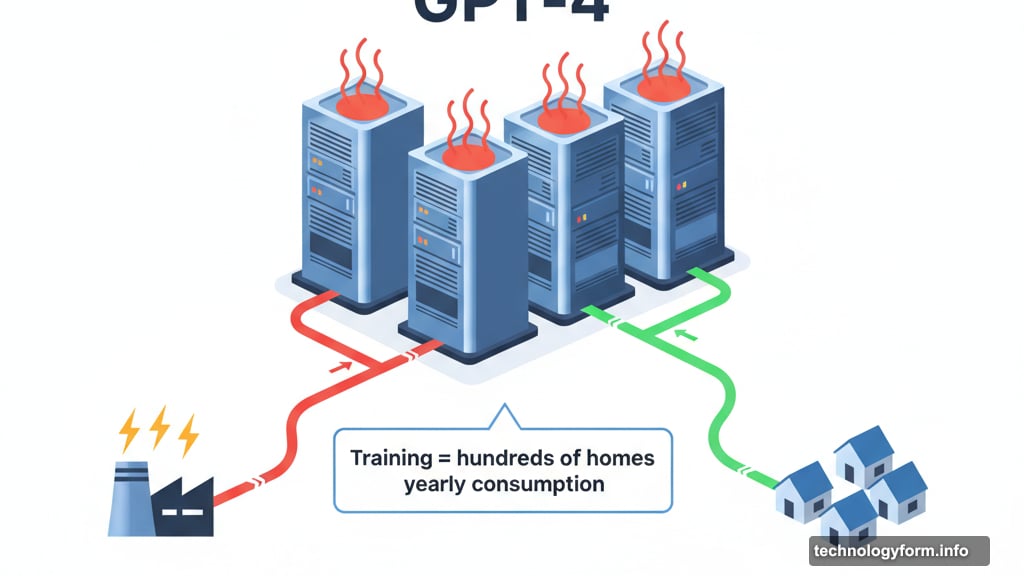
AI consumes staggering amounts of electricity. Training GPT-4 reportedly used as much power as several hundred homes consume in a year. Running inference at scale for millions of users requires constant energy.
That creates a problem. Many countries lack the grid capacity or stable power supply that data centers demand. India has both challenges and solutions.
The challenges? India’s power grid historically suffered from reliability issues and capacity constraints. Brown-outs and load shedding affect many regions.
The solutions? India is massively expanding renewable energy capacity. The country added more solar power than any nation except China last year. Plus, states with coastlines like Andhra Pradesh have access to offshore wind potential.
So Google’s 1-gigawatt facility will likely incorporate significant renewable energy. That helps Google meet sustainability commitments while accessing cheaper power than developed markets offer.
Google’s Bigger AI Infrastructure Play
This India investment fits into Google’s massive global spending spree on AI infrastructure.
In July, Google increased its 2025 capital expenditure forecast to $85 billion. That’s up from $75 billion just five months earlier. The company specifically cited “strong and growing demand for our Cloud products and services” driven by AI.
Moreover, Google announced plans to invest $25 billion across U.S. states for data centers and AI infrastructure. That investment focuses on the largest electric grid in America to ensure reliable power access.
Add the India commitment, and Google is spending over $100 billion on AI infrastructure in just a few years. That’s an astronomical bet on AI demand continuing to explode.
But is that bet justified? Consider the competition.
Microsoft already committed billions to expand Azure data centers globally. Amazon Web Services continues building at a furious pace. Meta poured resources into AI training infrastructure. Even smaller players like Oracle are spending billions.
Every major tech company reached the same conclusion. The computational requirements for AI are growing faster than anyone predicted. So the winners will be companies that build capacity ahead of demand.
What This Means for Cloud Costs
Here’s the uncomfortable truth. All this infrastructure investment costs money. Lots of money. And ultimately, those costs get passed to customers.
Google’s $85 billion in capital expenditures doesn’t disappear. It gets amortized across cloud services and AI products. So enterprise customers paying for Google Cloud services will see those infrastructure costs reflected in pricing.
Plus, the energy requirements of AI create ongoing operational expenses. Running a 1-gigawatt facility costs millions annually just for electricity. Then add cooling, maintenance, and staffing.
That’s why cloud bills keep rising despite all the talk about economies of scale. The infrastructure requirements of AI fundamentally changed the cost structure of cloud computing.
But there’s a silver lining. Building in markets like India helps keep costs lower than they would be otherwise. If Google built equivalent capacity entirely in California, the price tag would be significantly higher.
The Geopolitical Angle Everyone’s Ignoring
Google’s India investment isn’t just about costs and capacity. It’s also a strategic hedge against geopolitical risk.
Tech companies learned hard lessons about concentration risk. When U.S.-China tensions escalated, companies with heavy China exposure faced problems. Similarly, European data sovereignty requirements forced companies to build local infrastructure.
India offers a different risk profile. The country maintains relationships with both Western nations and other global players. It has a stable democratic government and strong legal protections for foreign investment.
Moreover, India actively wants to position itself as a technology hub. The government’s “Digital India” initiative creates favorable conditions for tech infrastructure investments.
So Google’s $15 billion bet on India diversifies infrastructure risk while tapping into a massive growth market. That’s smart strategy regardless of how AI demand evolves.
What Happens Next
Andhra Pradesh officials already said they plan to continue attracting similar investments. So expect more announcements about data center projects in India over the next few years.
Other states will compete aggressively. Karnataka, home to Bangalore, has advantages as India’s established tech hub. Tamil Nadu offers strong infrastructure and educated workforce. Gujarat provides business-friendly policies and coastal access.
Meanwhile, the scale of these investments raises questions about India’s ability to deliver the power and connectivity they require. Building 1 gigawatt of capacity is one thing. Actually powering it reliably is another.
But the momentum is clear. India is becoming a critical hub for global AI infrastructure. Companies that don’t invest there risk falling behind competitors who do.
Google’s $15 billion commitment signals that India’s role in the AI economy is just beginning. Other tech giants will need to match or exceed this investment to stay competitive.
The next five years will determine whether India becomes the AI infrastructure capital of the world outside America. Based on the money pouring in, that future looks increasingly likely.