I Listened to Only AI Music for a Week. Here’s What Broke Me.
Music runs my life. I have a playlist for every mood, every commute, every late-night writing session. Spotify Wrapped Day should honestly be a federal holiday.
So when I decided to spend an entire week listening exclusively to AI-generated music, I thought I knew what to expect. Bad songs. Weird vibes. Maybe some amusing novelty tracks.
What I didn’t expect was how deeply lonely it would feel.
The Experiment Starts Strong. Then Doesn’t.
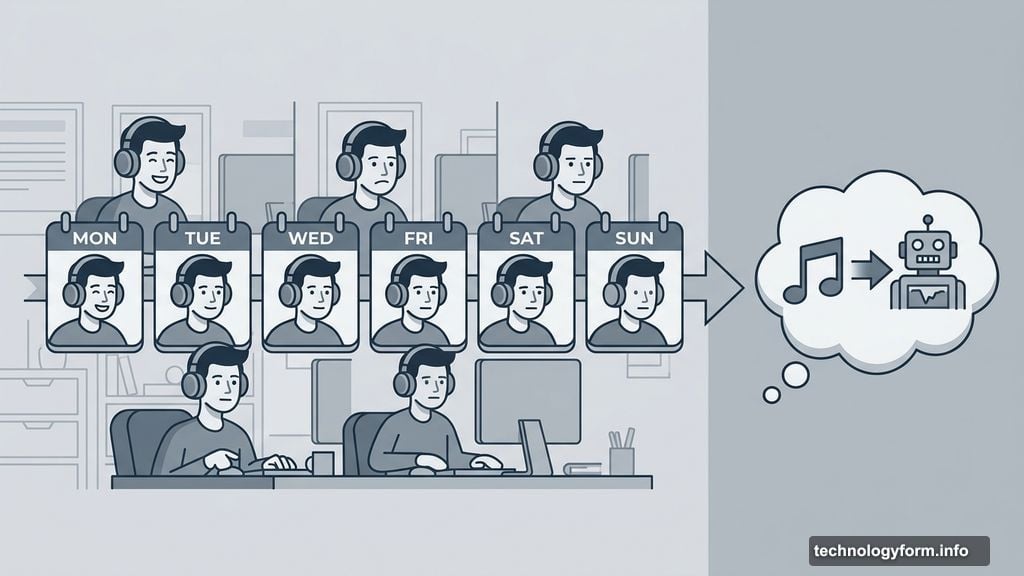
The rules were simple. For seven days, I only listened to music that was verifiably created or heavily altered by AI. No Spotify. No human artists. Just the machines.
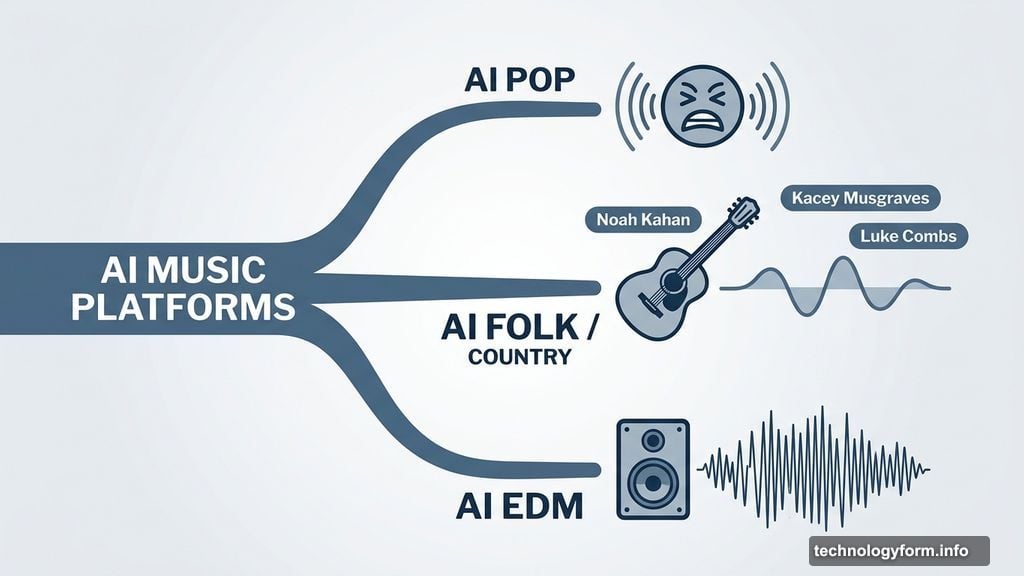
The first thing I noticed was variety. AI music platforms like Suno offer a surprisingly wide range of genres. That initial excitement faded fast, though.
Most of the pop music was shrill and synthetic. I’m talking the musical equivalent of plastic — the kind of sound that makes your jaw clench after thirty seconds. A lot of the trending content leaned heavily into electronic and EDM styles, which might work for fans of that genre. For me, it felt like being stuck at a house party where someone’s “aspiring DJ” friend took over the speakers and never gave them back.
Then I found the folk and country section. And honestly? Things got better.
A lot of the acoustic AI music genuinely sounded like it could belong to Noah Kahan, Kacey Musgraves, or Luke Combs. The focus on real-sounding instrumentation made it easier to relax into the music. I started building playlists. I got attached to a few songs. For a moment, I forgot I was listening to robots.
And then there was the truly unhinged category. An 8-minute Game of Thrones disco track — complete with a music video of white walkers doing the hustle like it’s 1978 — became a highlight of my week. Not because it was good, exactly. But because it was something.
AI Music Generation Has Come Surprisingly Far
Technology has always shaped music. Mark Ethier, founder of the iZotope music tech company and executive director of Berklee’s Emerging Artistic Technology Lab, put it in perspective for me.
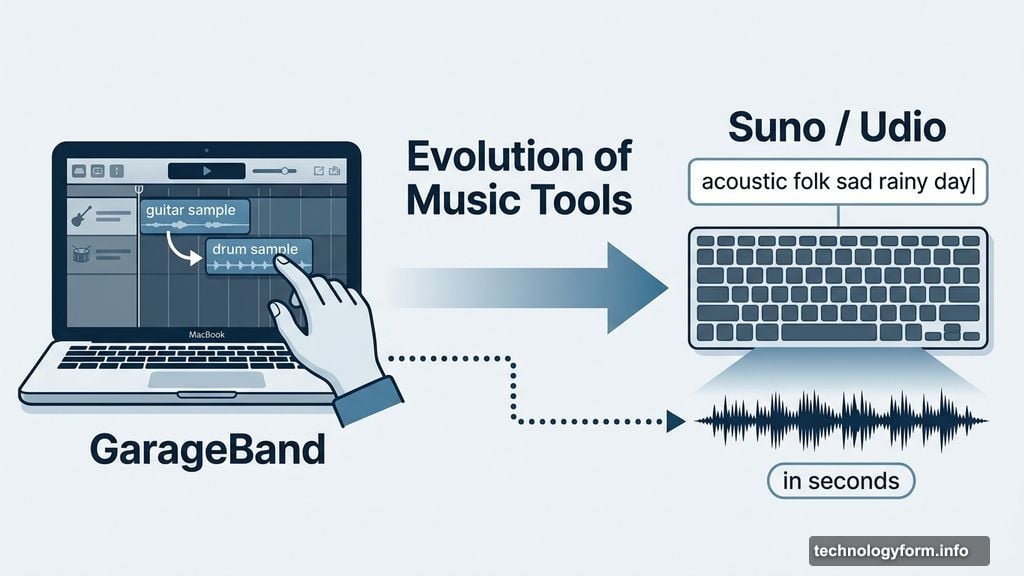
“When GarageBand came out, people felt like, ‘Oh my gosh, I can make music because I can drag some samples of a guitar, have a bass and some drums, and I’ve made a song,'” Ethier said. “Where we are today is the most extreme version of that.”
The difference is speed and polish. Tools like GarageBand were designed to enhance human creativity — they still required skill and intention to produce something good. AI music generators like Suno and Udio do something fundamentally different. You type a sentence describing a vibe and get a fully produced track back in seconds.
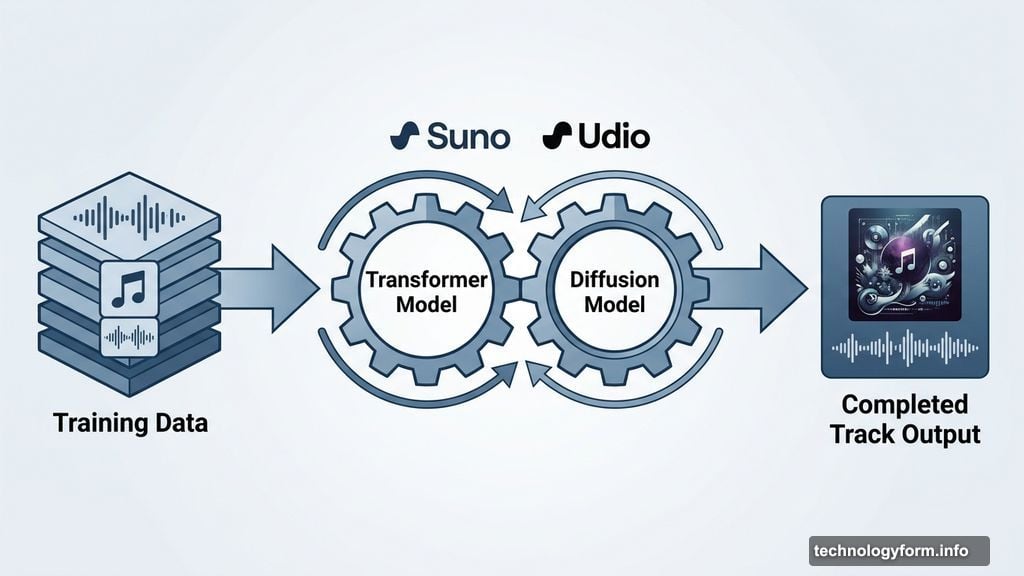
The underlying technology is similar to what powers AI chatbots and image generators — transformer models and diffusion methods, according to Suno cofounder Mikey Shulman. These systems don’t just stitch loops together. They synthesize something that sounds professionally produced.
Suno hit 2 million paying subscribers as of February, which tells you people are genuinely using these tools. But both Suno and Udio are currently being sued by major record labels. The allegation: they trained their AI models on musicians’ recordings without permission or compensation. Sound familiar? Writers, visual artists, and filmmakers are navigating the same messy territory.
“[AI] has changed just how much easier it is to do, and how indistinguishable the output is,” Ethier said. Before AI, throwing loops together on GarageBand wouldn’t produce something that sounded like a hit record. “Now, that distinction is not as clear anymore.”
Why Taylor Swift Made Me Feel Something (and That’s Complicated)
About halfway through the week, I stumbled into a corner of YouTube filled with AI covers of real songs. And something shifted.
There’s a neuroscientific reason for that reaction, as Joy Allen, a music therapist and director of Berklee’s Music and Health Institute, explained to me. Music is one of the only stimuli that activates every region of the brain simultaneously. During adolescence, when our brains are especially malleable, music forms deep emotional and neurochemical bonds.
“When you listen to music, it’s not just activating the auditory cortex,” Allen said. “It’s activating where you process emotions, physical responses… Our brains love patterns, and music is all patterns — chordal structures, melody lines. We get used to patterns and predictability.”
My teen years were essentially a Taylor Swift concert that never ended. So when I found AI covers reimagining her songs in different genres, the emotional response caught me off guard. An AI pop-punk version of “You Belong With Me” sounded eerily close to 5 Seconds of Summer. It got stuck in my head. For the first time all week, I felt something.
But here’s the thing. That feeling wasn’t about the AI music. It was about the original songs. The AI version was borrowing emotional real estate it hadn’t earned. I liked the AI folk cover of “All Too Well,” but it felt hollow next to the actual guitarist I heard play it at a coffee shop last year. Human covers pay tribute and add personality. The AI version felt like a cheap imitation — technically competent, emotionally empty.
Generative AI and the Soul Problem
My total music listening time dropped dramatically during the week. That surprised me. Music is usually background noise for everything I do — cooking, working, commuting. With AI music, I kept reaching for silence instead.
The AI songs were basically white noise. With a few weird exceptions, nothing pulled me in. By day five, I genuinely preferred the ambient sound of car horns and birds outside my window.
And that made me think about what music actually does for us.
So much of what we love about music is tied to memory and human connection. The song playing at your best friend’s wedding. The album you and your college roommate played on repeat. The track your dad sings too loud in the car. AI music doesn’t carry any of that. It can’t. It has no memories, no experiences, no emotion behind it.
The covers I felt most connected to during the week were all borrowed. They were reaching into emotions I had already built around real music, made by real people. AI music on its own offered nothing to attach to. No TikTok dances. No concert moments. No artist personality. No fanbase. No stories.
Ethier described the strangeness of this moment well. “As a musician, this is a really complicated time to be understanding tools,” he said. “You used to be able to pick up a trumpet and play trumpet. You didn’t have to think about how that trumpet was trained, or if the trumpet owns your music.”
What This Week Actually Taught Me
Would I recommend listening exclusively to AI music for a week? Absolutely not.
But it taught me something I couldn’t have learned any other way. The problem with AI music isn’t that it sounds bad — though a lot of it does. The problem is that it sounds like nothing. It’s technically functional and emotionally hollow. Music without human experience behind it is just organized sound.
What worries me isn’t that AI music exists. It’s that AI-generated tracks are flooding streaming platforms right now, creating real headaches for Apple Music and Spotify as they try to figure out what’s allowed and what’s monetizable. The line between human-made and AI-made is getting harder to see. And the more AI music fills up our feeds, the more it risks diluting the real thing.
Music is one of the strongest cultural touchstones we share. To have AI move so quickly into that space — mimicking something so deeply human — is both impressive and genuinely unsettling. I came out of this week not with answers, but with a sharper sense of what we stand to lose if we stop paying attention.
Go put on something made by a real person. I’m going back to Taylor.