Meta’s New AI Insights Feature Lets Parents See What Teens Are Asking
Meta just handed parents a window into their teenager’s AI conversations. And it’s already sparking debate.
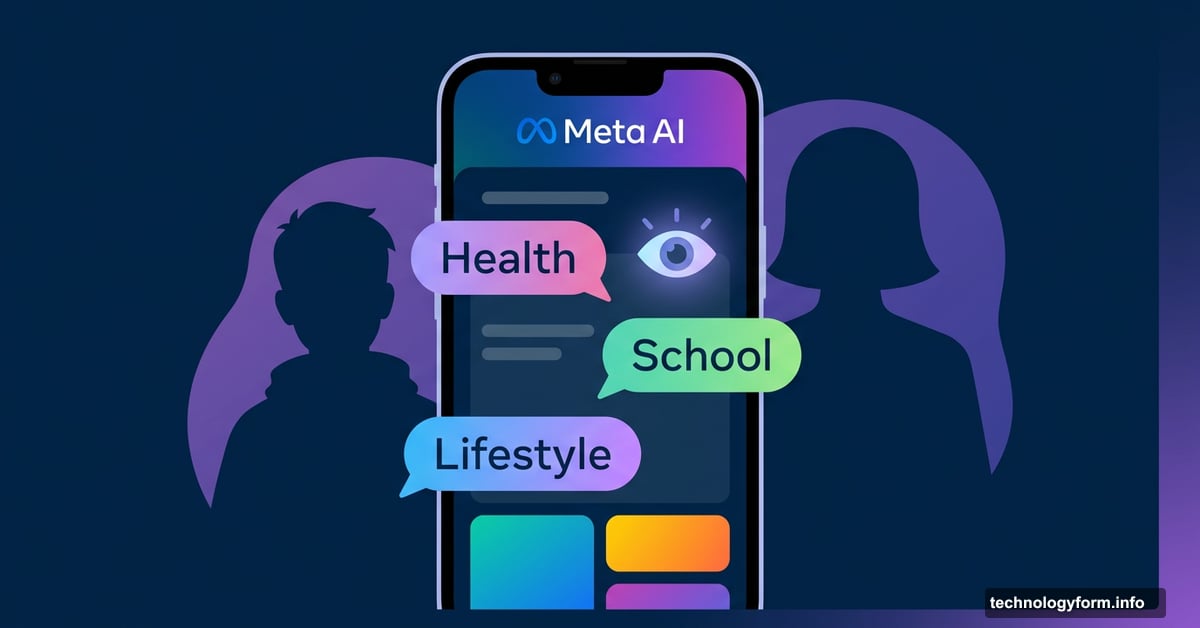
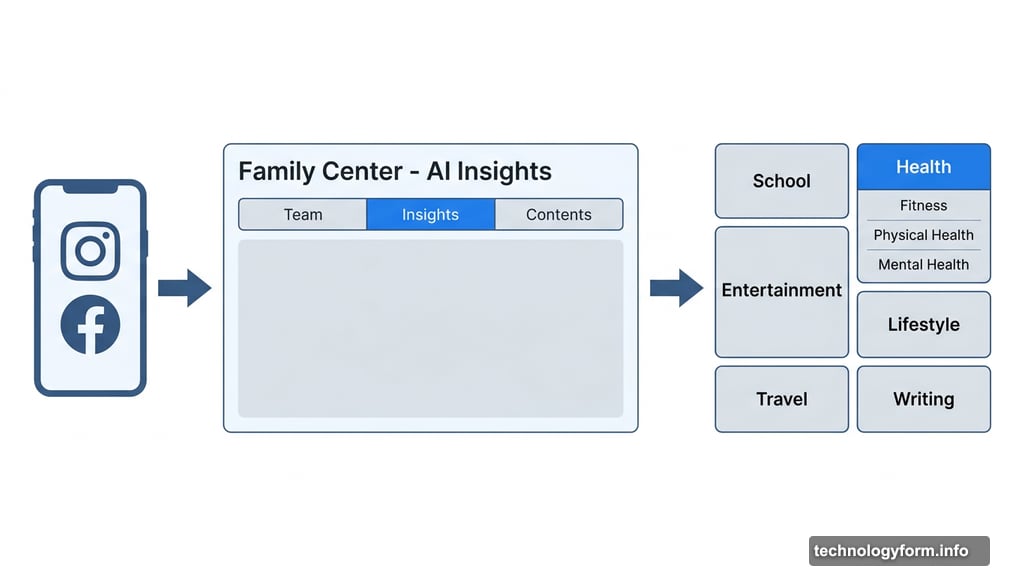
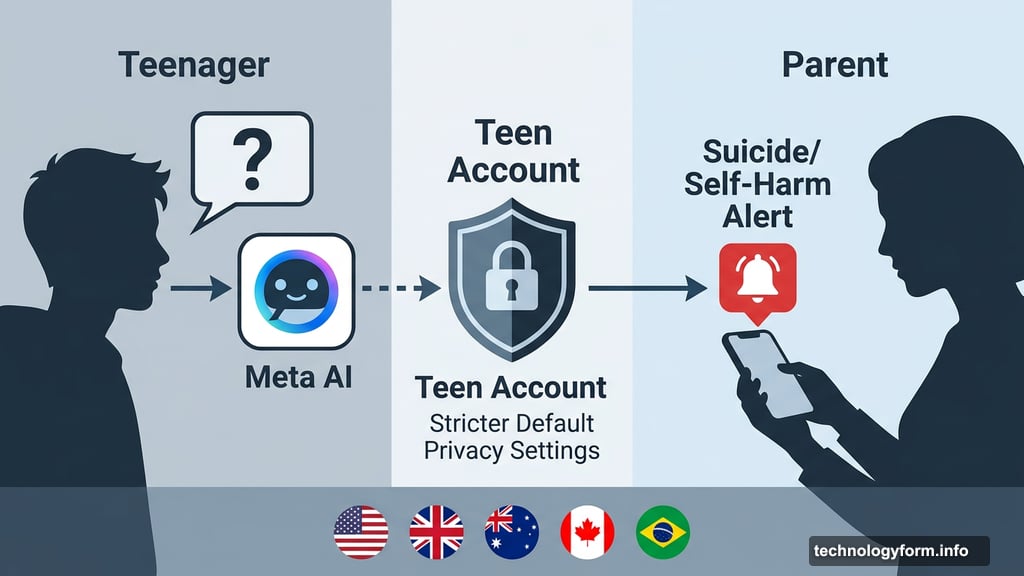
Starting now, parents who supervise Teen Accounts on Facebook, Messenger, or Instagram can see exactly which topics their kids have been exploring with Meta AI over the past seven days. The feature is called AI Insights, and it’s live today in the US, UK, Australia, Canada, and Brazil. Meta plans to roll it out globally in the coming weeks.
It sounds straightforward. But experts say the reality is much more complicated.
What AI Insights Shows Parents
The feature lives inside Meta’s Family Center, where parents can already manage supervision for teens aged 13 to 17. Now there’s a new tab simply labeled “Insights.”
Click it, and you’ll see a weekly summary of topics your teen has discussed with Meta AI. These topics include school, entertainment, lifestyle, travel, writing, and health. Each topic breaks down into categories. Health, for example, splits into fitness, physical health, and mental health.
Parents see topics and categories, not full conversation transcripts. So it’s a broad overview rather than word-for-word surveillance.
Meta also added an alert system back in February. If a teen asks Meta AI about suicide or self-harm on Instagram, parents get notified immediately. That remains part of the package.
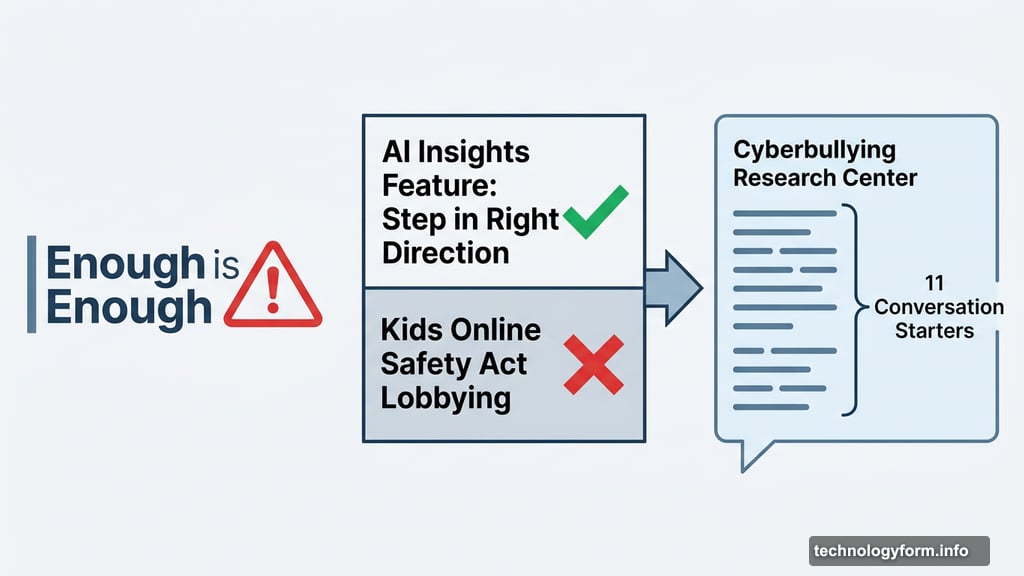
Plus, Meta partnered with the Cyberbullying Research Center to develop 11 conversation starters parents can use to talk with their kids about AI. You’ll find those linked directly inside the Insights tab.
Teen Accounts Already Have Stricter Settings
AI Insights builds on Teen Accounts, which Meta introduced as a safer experience for younger users. These accounts come with stricter default privacy settings and tighter content controls compared to standard accounts.
Meta says the number of US teens enrolled in supervision has doubled over the past year. That growth is part of why the company says it wants to make parental supervision “even more valuable for parents.”
This new feature follows a similar move from October 2024, when Meta gave parents the ability to block their kids from interacting with AI chatbot characters entirely. Those are fictional AI-powered personas that users can chat with on Meta’s platforms.
Experts Say This Isn’t Enough
Here’s where things get complicated. Child safety advocates welcome the move but warn it falls well short of what’s actually needed.
Donna Rice Hughes, CEO of the online child safety organization Enough is Enough, called AI Insights a “step in the right direction.” But she didn’t stop there. Hughes pointed to Meta’s lobbying efforts to kill the Kids Online Safety Act in the US House in 2024, arguing the company “cannot be trusted when it comes to teen safety and continues to put profits over safety.”
Her message to parents is clear. Use every parental control available, including Meta’s new tools. But also have frequent, open conversations with your kids about staying safe online. And pressure Big Tech as a whole, not just Meta, to build stronger protections.
“Parents simply can’t continue to shoulder this burden alone,” Hughes told CNET.
The Surveillance Problem Nobody Wants to Talk About
Some researchers are raising a harder question. Could this feature actually harm certain teens rather than protect them?
Ardath Whynacht, an associate professor of sociology at Mount Allison University who specializes in mental health and family violence, thinks so. She told CNET that shifting responsibility to parents doesn’t replace real content moderation. It just creates a new surveillance layer.
“Parental surveillance is not content moderation,” Whynacht said. “As companies like Meta do less content moderation, they expose children and youth to harm more frequently. It shouldn’t be the parent’s job to make the product less harmful.”
Her concern is especially pointed for LGBTQ+ teens. Many use digital spaces to find community and support they can’t access at home. Knowing that a parent can see their AI search topics might push vulnerable teens away from safer spaces and toward less monitored corners of the internet.
“It’s a sad fact that kids often need protection from their parents as much as they need protection from harms online,” Whynacht added.
Meta Faces Serious Legal Pressure
This feature doesn’t exist in a vacuum. Meta has faced enormous legal and regulatory pressure over how its platforms affect young people.
Last month, a court ordered Meta to pay $375 million after finding the company liable in a child exploitation case. The company was also found liable in a separate California case where a woman alleged that Instagram and YouTube were deliberately designed to be addictive to children.
Back in 2023, more than 40 US states filed lawsuits against Meta, alleging the company intentionally tried to addict children to its apps, contributing to a broader youth mental health crisis.
Against that backdrop, AI Insights reads less like a generous gift to parents and more like a company trying to demonstrate good faith to courts and regulators.
Meta didn’t respond to CNET’s request for comment before publication.
Parents deserve real tools to protect their kids online. AI Insights is one of those tools, and knowing which topics your teen is exploring with AI has genuine value. But it works best as one piece of a much larger puzzle.
Have the conversations. Use the controls. And keep pushing for platforms to build safer products from the ground up, rather than putting all the responsibility on parents after the fact.