OpenAI Named Its New Science AI After the Woman Who Helped Crack DNA
OpenAI just launched something a lot more ambitious than another chatbot. Meet GPT-Rosalind, the company’s first AI model built specifically for life sciences.
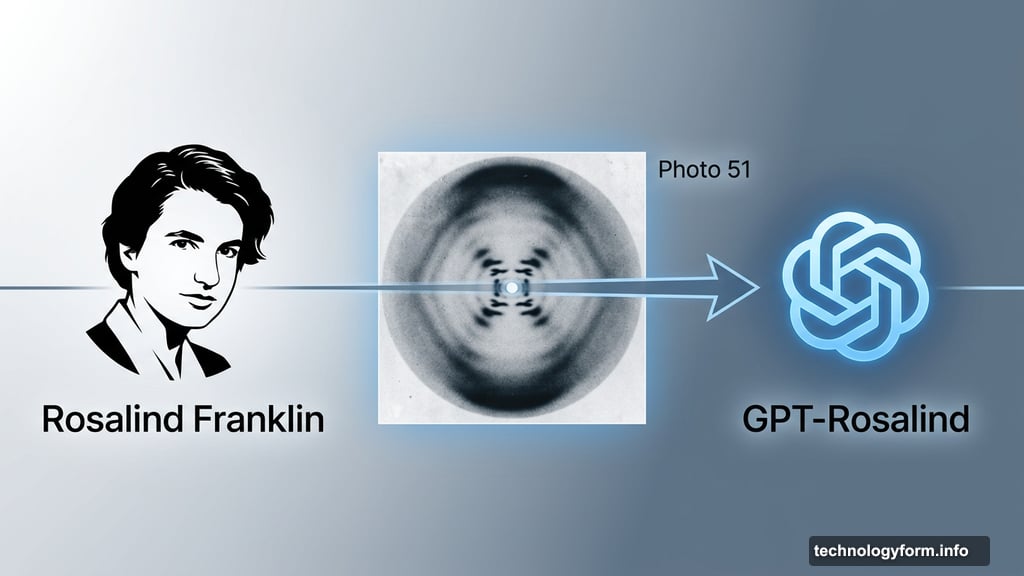
Named after Rosalind Franklin, the pioneering scientist whose research revealed the structure of DNA, this model is designed to help researchers tackle some of medicine’s toughest challenges. Think drug discovery, molecular biology, and translational medicine. Not spreadsheets. Not recipes. Real scientific work.
Drug Discovery Takes Forever. GPT-Rosalind Wants to Change That
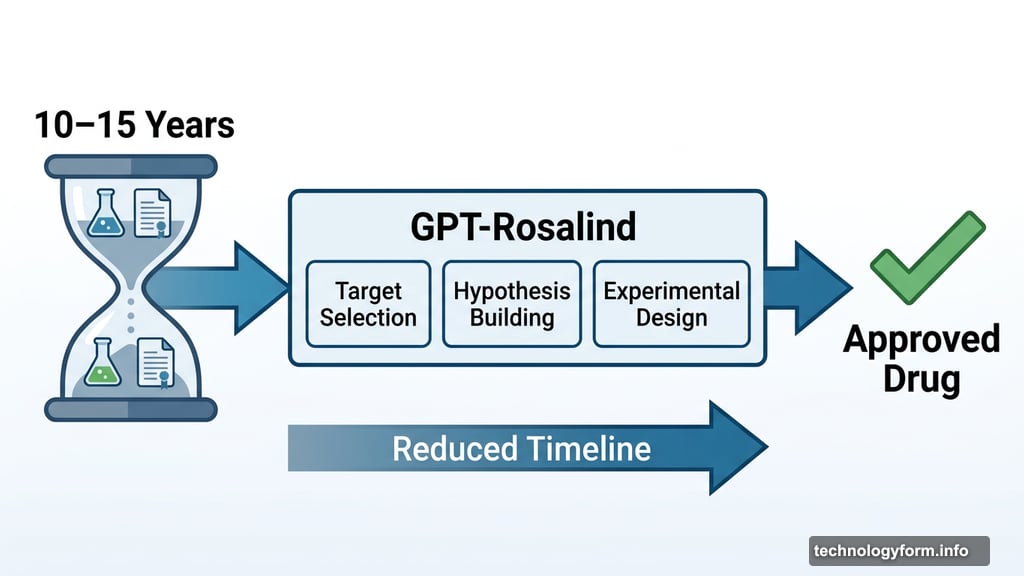
Here’s a number that puts things in perspective. Developing a new drug and getting it approved in the US takes 10 to 15 years on average. That’s over a decade of research, trials, and regulatory hurdles before a medicine ever reaches patients.
GPT-Rosalind targets this problem directly. The model is designed to sharpen target selection, help researchers build stronger hypotheses, and ultimately raise the quality of experiments from the start. Better early decisions mean fewer costly dead ends down the road.
So far, OpenAI has tested the model on organic chemistry, protein science, and genetics. Researchers can use it to dig through scientific literature or plan experimental designs. That’s a meaningful shift from general-purpose AI tools that weren’t built with lab work in mind.
OpenAI Isn’t First to the Lab
To be fair, OpenAI is entering a space where others have already made serious moves.
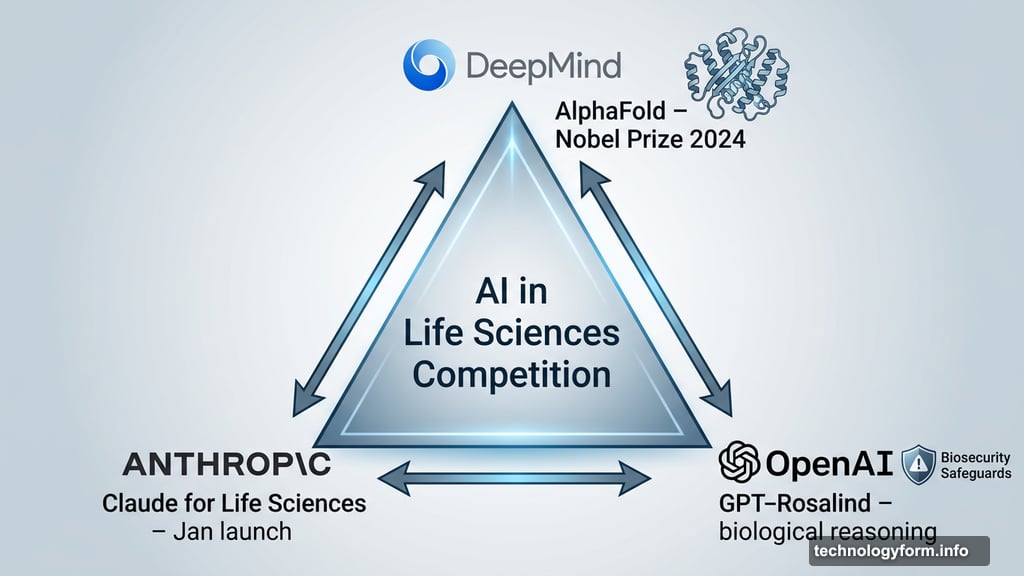
Google DeepMind’s AlphaFold is probably the most famous example. That protein-structure prediction model was so significant its creators received a share of the 2024 Nobel Prize in Chemistry. Google DeepMind CEO Demis Hassabis summed up the potential clearly in a recent interview: “For me, the best use case for AI was to improve human health and accelerate scientific discovery.”
Anthropic is in the mix too. The company launched Claude for Life Sciences back in January with a similar mission. So GPT-Rosalind enters a competitive field, but OpenAI’s model brings its own distinct approach to biological reasoning and research support.
Scientists Have Real Concerns About AI in Research
Not everyone is celebrating AI’s arrival in the lab. Some scientists have raised serious questions about how quickly these tools are reshaping scientific work.
Concerns include potential misuse, vulnerabilities in how data gets represented, and the risk of AI-generated errors sneaking into research pipelines. These aren’t hypothetical worries. They reflect genuine friction between the speed of AI development and the careful, methodical nature of good science.
OpenAI says GPT-Rosalind includes safeguards against serious misuse, including protections against attempts to use it for creating biological weapons. The company has also partnered with biotechnology, pharmaceutical, and life sciences organizations to guide its development responsibly.
Who Gets Access Right Now
GPT-Rosalind isn’t publicly available yet. For now, it’s accessible only through OpenAI’s trusted-access system as a research preview.
One early partner is Amgen, the biopharmaceutical giant. Sean Bruich, Amgen’s senior vice president of artificial intelligence and data, noted that scientific work demands a high level of precision. He described the collaboration as an opportunity to “apply their most advanced capabilities and tools in new and innovative ways with the potential to accelerate how we deliver medicines to patients.”
That kind of partnership matters. Life science AI needs domain expertise baked in, not bolted on afterward. Working directly with pharmaceutical and biotech organizations from the start gives GPT-Rosalind a better shot at actually being useful in real research environments.
Why the Name Matters
Naming a science-focused AI after Rosalind Franklin is a deliberate choice worth acknowledging. Franklin’s X-ray crystallography work was foundational to understanding DNA’s double helix structure. For decades, her contributions were largely overlooked while others received the credit.
Attaching her name to a model built to advance scientific discovery feels meaningful, even symbolic. If GPT-Rosalind delivers on its promise, it could help bring the kind of breakthrough thinking Franklin embodied to thousands of researchers around the world.
That’s worth rooting for, whether you’re a scientist, a patient waiting on a new treatment, or just someone who appreciates when technology gets pointed at something genuinely important.