Voice Cloning Just Got Corporate. ElevenLabs Built a Marketplace for Dead Celebrities
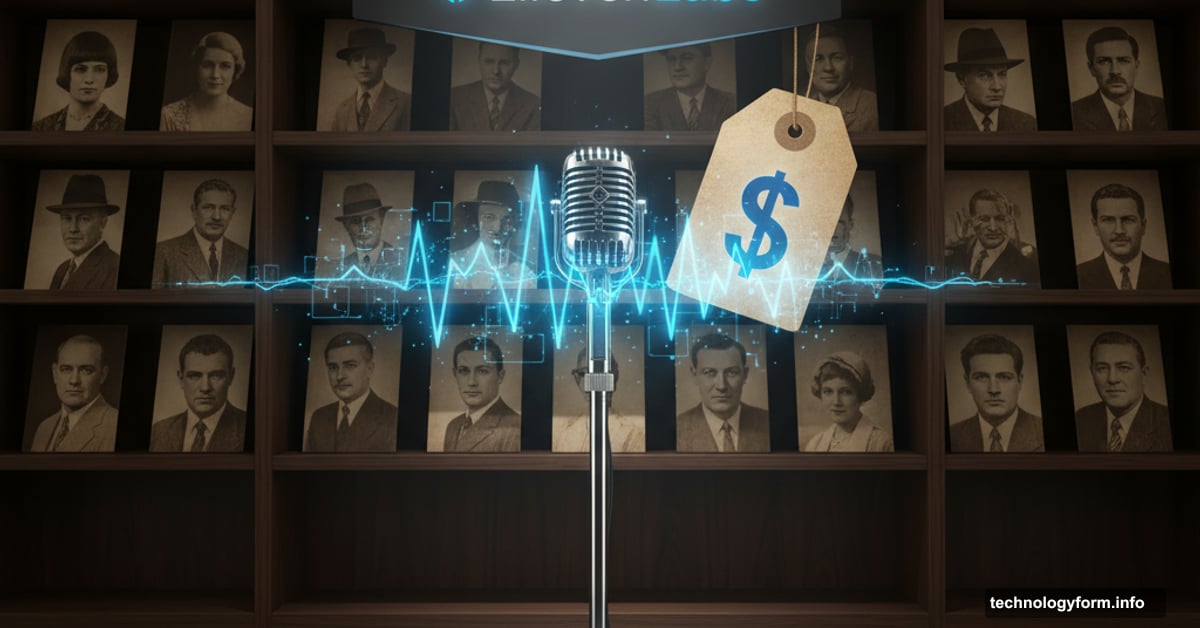
ElevenLabs dropped something wild. The AI voice startup launched a marketplace where brands can license AI-cloned voices of famous people for ads and content. Yes, including dead people.
The company positions this as solving ethical problems in voice AI. But look closer. What they’ve actually built is a permission-based system for turning historical figures into spokespersons for modern products. Plus, the implications go way beyond what they’re advertising.
How This Actually Works
ElevenLabs acts as the middleman between brands and whoever owns the rights to a voice. The platform handles licensing agreements and synthesizes the voices using AI.
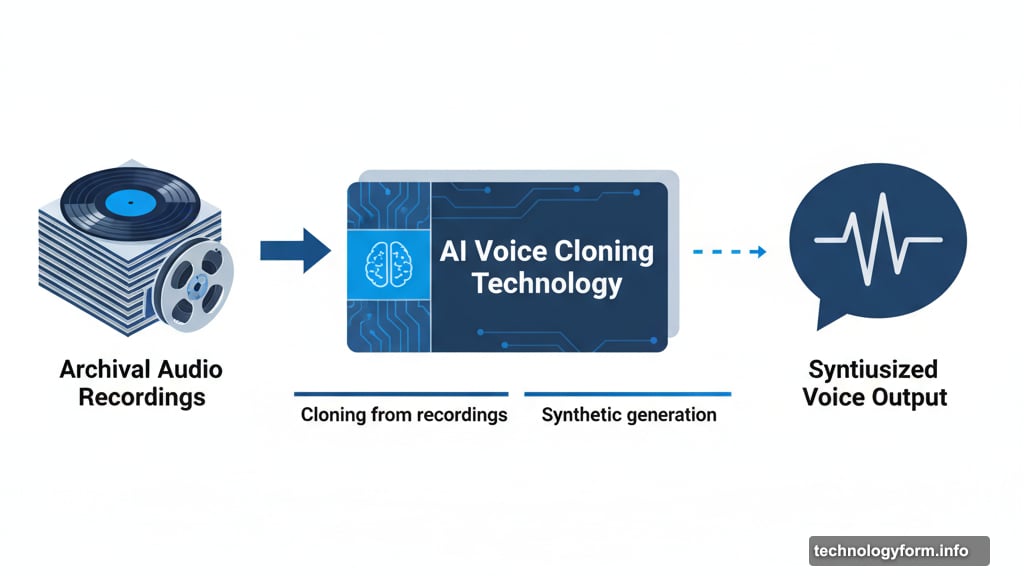
Some voices come from cloning technology that analyzes existing recordings. Others get built synthetically by referencing archival audio. So if you want Thomas Edison to sell your lightbulbs, ElevenLabs can make that happen.
The company says only “verified, iconic talent and IP owners” can list voices. That’s supposed to ensure consent, transparency, and fair compensation. But here’s the thing. Dead people can’t consent. Their estates can. Big difference.
Who’s Actually Available
Twenty-eight voices launched on the marketplace. The mix is bizarre.
Michael Caine is there as one of the few living participants. He gave a statement about “amplifying voices” and “opening doors for new storytellers.” Fair enough. He chose to participate.
Then you’ve got historical figures like Mark Twain, Thomas Edison, and Alan Turing. Also Judy Garland, Babe Ruth, and J. Robert Oppenheimer. Most people wouldn’t recognize their actual voices anyway.
Liza Minnelli, Art Garfunkel, and Burt Reynolds round out the living celebrities. The rest? Historical figures whose estates presumably approved the licensing deals.
Here’s what bugs me. ElevenLabs calls this a marketplace for “iconic voices.” But half these people would be unrecognizable by voice alone. The appeal isn’t the actual sound. It’s the name recognition.
The Ethics Get Messier Than Advertised
ElevenLabs claims this approach addresses ethical concerns around AI voice cloning. Does it though?
Sure, they’re getting permission from rights holders. That’s better than just cloning anyone without consent. But permission from an estate isn’t the same as permission from the person.
Would Alan Turing want his voice used to sell productivity software? Would Maya Angelou approve of her voice in a corporate training video? We’ll never know. Their estates decided for them.
Plus, the company controls the synthesis technology. Brands license the voice through ElevenLabs’ platform. So there’s a technical chokepoint that determines how these voices get used.
The terms probably include usage restrictions. But those restrictions come from contracts, not from the actual people who once owned these voices. That distinction matters more than ElevenLabs acknowledges.
What Brands Will Actually Do With This
Imagine the possibilities. And then imagine them going wrong.
Some brand will use Thomas Edison’s voice for an electricity company ad. Fine. Then another brand uses Mark Twain to sell Mississippi River cruises. Also fine. But what happens when someone uses Judy Garland’s voice for a mental health medication ad? Or Rocky Marciano’s voice for a gambling app?
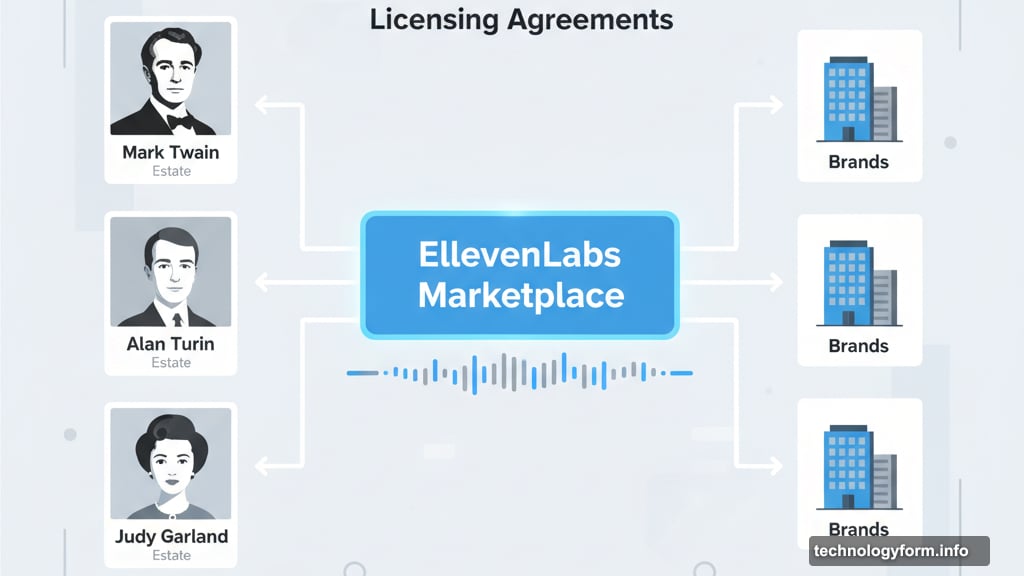
The licensing agreements probably prevent the worst abuses. Probably. But consider the precedent. We’re normalizing the idea that famous voices become corporate assets after death.
Moreover, audiences won’t always know these voices are synthetic. Sure, disclosures exist. But how many people read the fine print? A 30-second radio ad featuring “Michael Caine” won’t include a lengthy explanation about AI synthesis.
So listeners assume the celebrity actually recorded that ad. They don’t realize it’s generated from previous recordings. The illusion of endorsement happens even when it’s technically disclosed.
The Slippery Slope Nobody’s Discussing
This marketplace establishes infrastructure for something bigger. Right now, ElevenLabs only allows “verified, iconic talent.” But what defines iconic? What prevents this from expanding?
Today it’s Michael Caine. Tomorrow it might be any actor whose estate needs money. Then it’s historical figures from the last century. Then it’s people from the last decade. Where’s the line?
Furthermore, the technology keeps improving. Current AI voices sound pretty good but aren’t perfect. In two years? Five years? The voices will be indistinguishable from real recordings. That makes the ethical questions harder, not easier.
Also consider the precedent for living celebrities. Michael Caine participated voluntarily. But what happens when contracts start including clauses that automatically grant AI voice rights? Studios and labels will push for those terms. Talent might not have a choice.
The infrastructure ElevenLabs built doesn’t just serve current demand. It creates a framework for much broader commercialization of human voices. That’s the real story here.
Why Michael Caine’s Statement Rings Hollow
Caine said ElevenLabs “gives everyone the tools to be heard” and helps the “next generation tell their stories.” Nice words. But this marketplace doesn’t help new storytellers. It helps brands use famous voices.
If ElevenLabs wanted to empower new voices, they’d build tools for emerging creators to develop their own unique synthetic voices. Instead, they built a licensing platform for established names. That’s the opposite of democratization.
Plus, Caine’s own voice is now a product on this marketplace. When he dies, his estate will control how brands use his AI-cloned voice for decades. That’s not storytelling. That’s posthumous advertising.
The statement feels like marketing copy more than a thoughtful endorsement. Maybe Caine genuinely believes in the mission. But the platform’s actual use case contradicts his words.
What This Means for Voice Actors
Voice actors already face AI disruption. This marketplace makes it worse.
Brands previously hired voice actors to narrate ads, record audiobooks, and provide character voices. Now they can license a famous voice instead. Why hire a professional narrator when you can get “Laurence Olivier” for your documentary?
Sure, those are different use cases. But they compete for the same budgets. A brand considering voice talent now has another option: synthetic celebrities. That reduces opportunities for working voice actors.
Moreover, it sets expectations. If synthetic celebrity voices become normal in advertising, audiences might expect that level of name recognition in all content. That further disadvantages talented but unknown voice actors.
The company will say they’re not replacing voice actors, just adding options. But adding options changes the market. More importantly, it shifts power away from individual performers toward whoever controls the AI synthesis technology.
The Consent Problem Isn’t Actually Solved
ElevenLabs claims their approach is “consent-based” and “performer-first.” But consent from estates isn’t equivalent to consent from performers.
Dead people can’t opt out if they don’t like how their voice gets used. They can’t renegotiate terms. They can’t refuse deals that feel wrong. Their estates make those decisions.
Plus, estates have financial incentives to license broadly. Why say no to revenue? The deceased person might have valued their reputation differently than their heirs value the income stream.
Furthermore, what happens when estate ownership changes? When rights get sold or inherited by distant relatives? The connection between the original person and the licensing decisions gets more tenuous over time.
Calling this “consent-based” implies the people involved agreed to it. Most of them didn’t. Their legal representatives agreed after they died. That’s permission in a technical sense. But it’s not truly consensual.
Three Things That Should Worry You
First, this normalizes treating human voices as perpetual commercial assets. Your voice doesn’t stop being property when you die. It becomes an inheritance that generates revenue indefinitely. That’s a fundamental shift in how we think about identity and personhood.
Second, it creates infrastructure that will inevitably expand beyond “iconic” figures. The technical platform works for any voice. The only barrier is business deals. As demand grows, the definition of who qualifies will broaden. Eventually, it might include anyone with archival recordings.
Third, it separates endorsement from intention. When audiences hear a voice, they assume the person chose to speak those words. AI synthesis breaks that assumption. But most listeners won’t know the difference. So brands get false implied endorsements that feel authentic.
What Actually Happens Next
This marketplace will succeed. Brands want celebrity voices. Estates want revenue. ElevenLabs provides the infrastructure. That’s a viable business regardless of ethical concerns.
Other companies will launch competing platforms. AI voice synthesis isn’t proprietary to ElevenLabs. Within a year, multiple marketplaces will exist. That increases supply and probably reduces costs. More brands start using synthetic celebrity voices because it becomes affordable.
Meanwhile, regulations lag behind. Policymakers haven’t figured out how to handle AI-generated content. They definitely haven’t addressed posthumous voice licensing. So this grows unchecked for years before any meaningful oversight arrives.
Eventually, someone crosses an obvious line. A brand uses a synthetic voice for something offensive or inappropriate. Public backlash happens. Then maybe we get regulations. But by that point, the infrastructure is established and the practice is normalized.
My Take on This Whole Mess
ElevenLabs built something technically impressive but ethically questionable. Getting estate permission is better than nothing. But it doesn’t resolve the fundamental weirdness of turning deceased people into AI-powered spokespeople.
Michael Caine participating as a living celebrity? Fine. He made that choice. Thomas Edison selling modern products? That’s bizarre. Alan Turing promoting technology he never knew existed? That’s worse.
The company claims they’re addressing ethical concerns. What they’re actually doing is creating a legal framework that lets brands exploit famous voices while minimizing liability. That’s not the same thing.
Moreover, the long-term implications worry me more than the current implementation. This technology will improve. The marketplace will expand. And we’ll normalize something that probably shouldn’t be normal: treating human identity as a perpetual commercial asset.
Choose your concerns carefully. This isn’t about stopping AI progress. It’s about questioning whether every possible application of AI should happen just because it can. In this case, I’m not convinced turning dead celebrities into AI spokespeople serves any purpose beyond generating revenue for platforms and estates.
But here we are. The marketplace exists. Brands will use it. And in five years, nobody will remember when hearing synthetic versions of dead people in advertisements seemed strange.