ChatGPT Finally Stopped Being Preachy. GPT-5.3 Instant Tones It Down
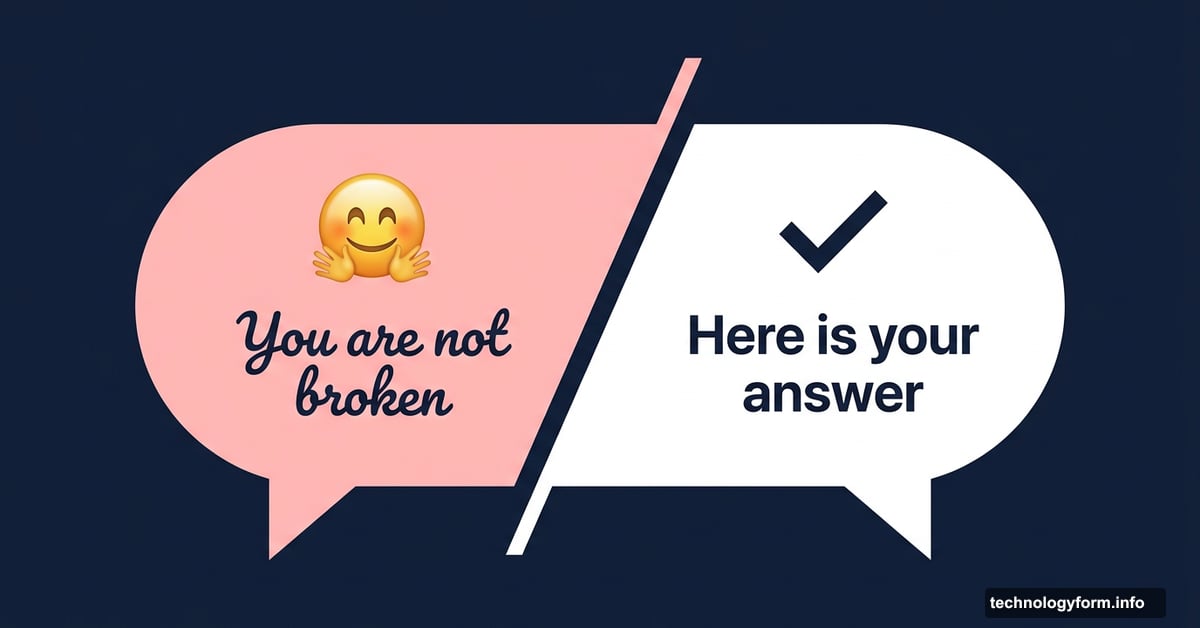
You know that feeling when you ask ChatGPT a simple question and it responds like you’re having an existential crisis? “Take a breath. You’re not broken. And honestly, that’s okay.”
Yeah. OpenAI finally heard us.
The company just released GPT-5.3 Instant, and the headline feature isn’t a performance boost or smarter reasoning. It’s something far more refreshing: the model stops treating every conversation like a therapy session you never signed up for.
The “Cringe” Problem Nobody Could Stop Talking About
GPT-5.2 Instant had a tone problem. A serious one.
Users across Reddit and social media spent weeks venting about the model’s habit of responding with unsolicited reassurance. Ask it about a stressful work situation? It reminded you to breathe. Ask a neutral question about something mildly sensitive? It assumed you were spiraling.
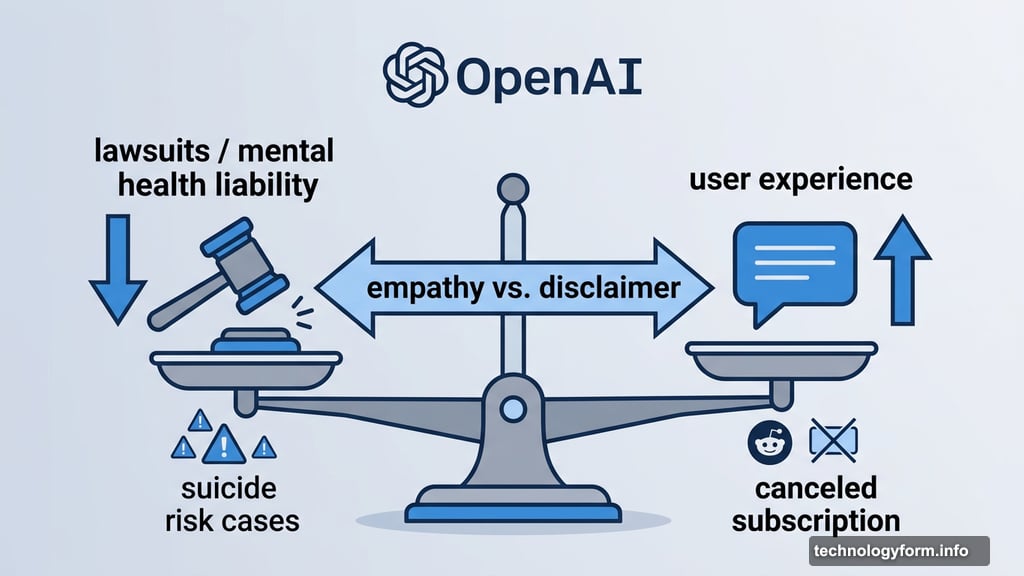
The frustration got loud enough that some users reportedly canceled their ChatGPT subscriptions entirely. That’s not a small thing. People left a paid product because the conversational tone drove them crazy.
One Reddit user summed it up perfectly: “No one has ever calmed down in all the history of telling someone to calm down.” Hard to argue with that.
What GPT-5.3 Instant Actually Changes
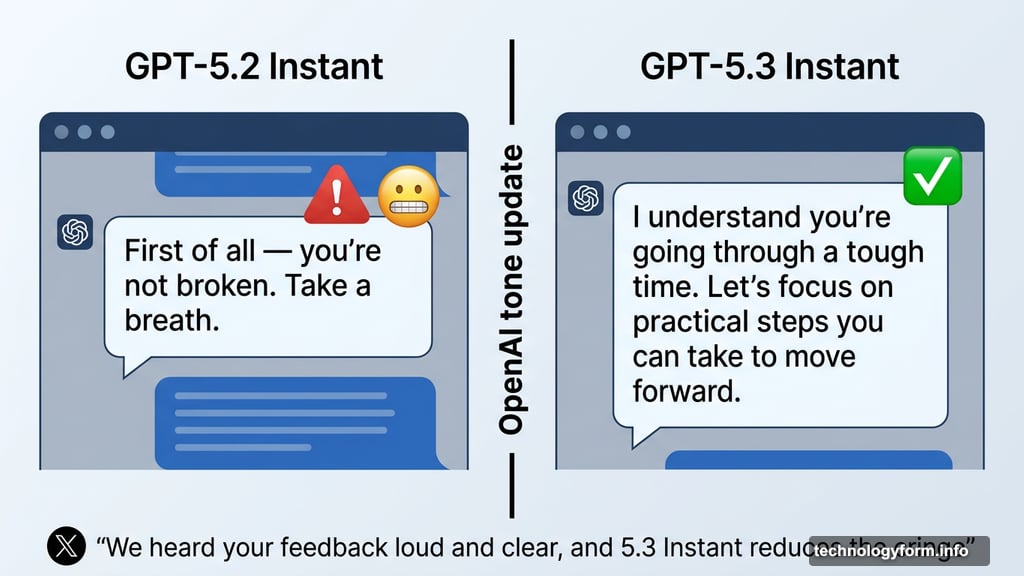
OpenAI posted a direct comparison on X showing the difference between the two models responding to the same prompt.
In the GPT-5.2 response, the chatbot opens with “First of all — you’re not broken.” Classic cringe. In the GPT-5.3 version, the bot acknowledges the difficulty of the situation without projecting emotions onto the user or reaching for a hug.
OpenAI put it bluntly on X: “We heard your feedback loud and clear, and 5.3 Instant reduces the cringe.”
The release notes frame the update around user experience improvements, specifically tone, relevance, and conversational flow. These aren’t the kinds of things that show up on standard AI benchmarks. But they absolutely determine whether using ChatGPT feels helpful or insufferable on a daily basis.
Why This Balance Is Actually Tricky
Here’s where it gets more complicated. OpenAI isn’t adding these guardrails for no reason.
The company faces multiple lawsuits accusing ChatGPT of contributing to negative mental health outcomes in users, including cases involving suicide. That’s a heavy legal and ethical burden. So the instinct to build in empathetic responses makes sense from a safety standpoint.
But there’s a real difference between responding with genuine empathy when someone needs it and reflexively slapping reassurance language onto every conversation. The GPT-5.2 approach felt less like care and more like a disclaimer. A legal hedge dressed up as warmth.
As OpenAI noted in the release documentation, these tone issues can make ChatGPT feel frustrating even when the underlying information is accurate and helpful. That’s a usability problem that no benchmark score will ever capture.
The Google Test Nobody Mentions
Think about how you use Google. You type in a question, sometimes a very personal or stressful one, and Google gives you results. It doesn’t ask how you’re feeling. It doesn’t remind you to practice deep breathing before clicking a link.
That’s not because Google doesn’t care about user wellbeing. It’s because a search tool respects your autonomy as an adult who came looking for information, not emotional management.
ChatGPT is a different kind of product, closer and more conversational than a search bar. But the core principle still applies. When someone asks a factual question, the best response is usually a factual answer. Not a wellness check.
GPT-5.3 Instant seems to understand that distinction better than its predecessor.
A Small Change That Matters More Than It Sounds
This update won’t make headlines the way a new reasoning capability or multimodal breakthrough would. But it might actually improve the daily experience of using ChatGPT more than either of those things.
The best AI assistant isn’t the one that sounds the most caring. It’s the one that reads the room, gives you what you need, and trusts you to manage your own emotional state. GPT-5.3 Instant sounds like a step in that direction.
It’s worth noting this is still an early update. The release focuses on the Instant model variant, and broader rollouts to other GPT-5 versions haven’t been announced yet. But the direction is clear, and frankly, it’s overdue.
If you felt relieved just reading about this change, you’re not alone. And no, you don’t need to take a deep breath first.