
AWS Data Centers in the UAE and Bahrain Were Hit by Drone Strikes
Amazon Web Services just confirmed something pretty alarming. Drone strikes over the weekend damaged cloud infrastructure in two key Middle East locations, disrupting services for customers across the region.
This isn’t a minor outage from a software bug or routine maintenance. Physical buildings were hit, power systems were knocked offline, and fires broke out inside facilities that store and process enormous amounts of cloud data.
Structural Damage, Fires, and Water in the Server Rooms
Two AWS data center facilities in the United Arab Emirates took direct hits. A separate strike near an Amazon facility in Bahrain caused infrastructure damage as well.
According to Amazon’s own AWS status page, the impact was serious across multiple dimensions. “These strikes have caused structural damage, disrupted power delivery to our infrastructure, and in some cases required fire suppression activities that resulted in additional water damage,” the company said.
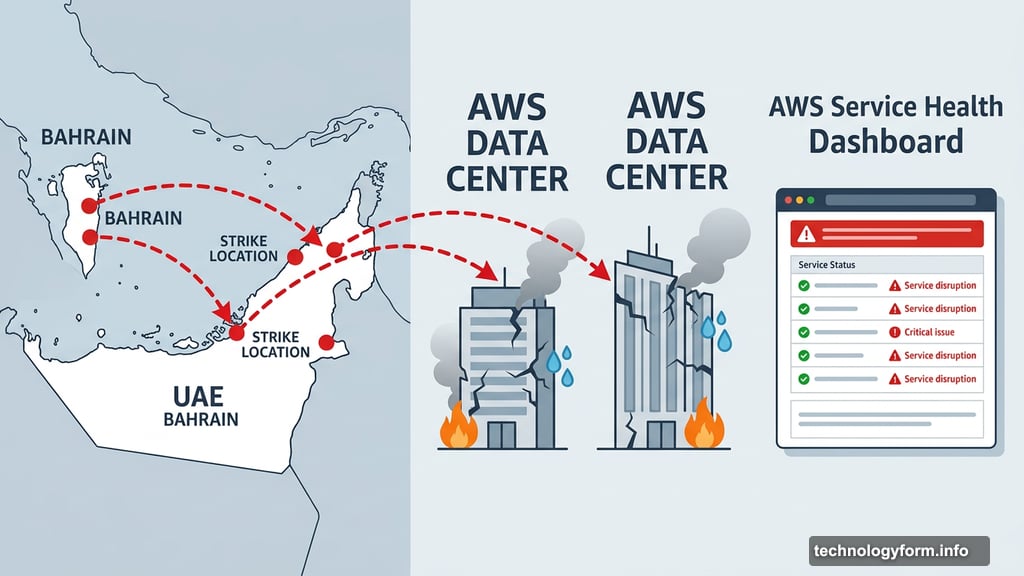
So it wasn’t just one problem. The strikes triggered a cascade of issues. Power went down, fires started, sprinkler systems or suppression equipment kicked in, and water damage followed. That’s a worst-case scenario for any data center operator.
Amazon said it’s working closely with local authorities and focusing on keeping its personnel safe during recovery efforts.
What Caused the Strikes
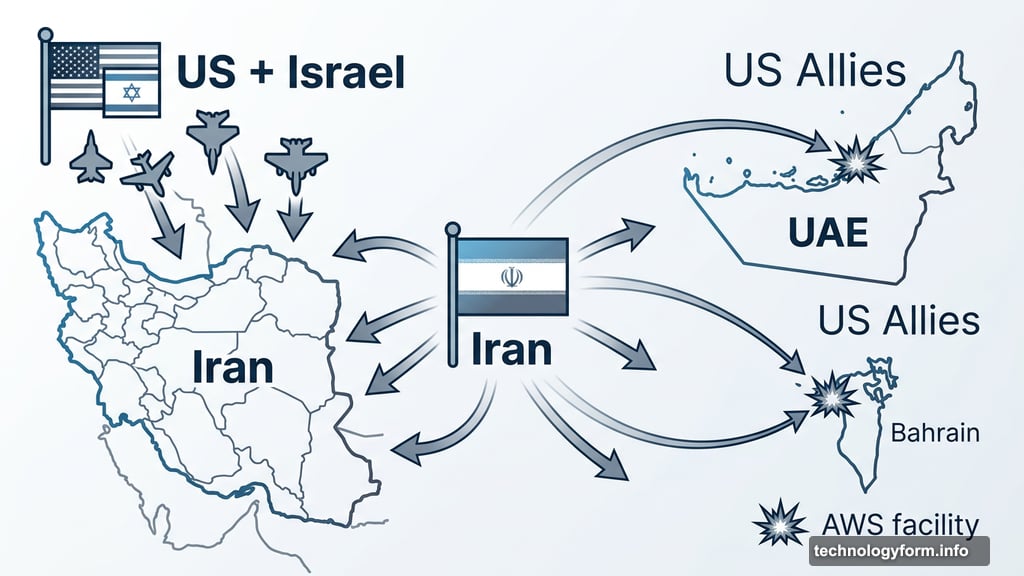
The attacks happened in the context of rapidly escalating tensions across the broader Middle East. Over the weekend, the United States and Israel launched air strikes against Iran following rising concerns over Iran’s nuclear activities and regional military involvement.
Iran responded by launching missile and drone attacks across the region. Some of those drones reached facilities in the UAE and Bahrain, both of which are US allies. That’s how AWS data centers ended up in the crossfire of a geopolitical conflict neither Amazon nor its customers had any control over.
An Amazon spokesperson confirmed the status page was the most current source for updates but declined to comment further on the situation.
![Aerial view of a large-scale AWS data center campus with multiple server buildings and cooling infrastructure in a desert region]
Customers Are Seeing Delays Beyond the Cloud
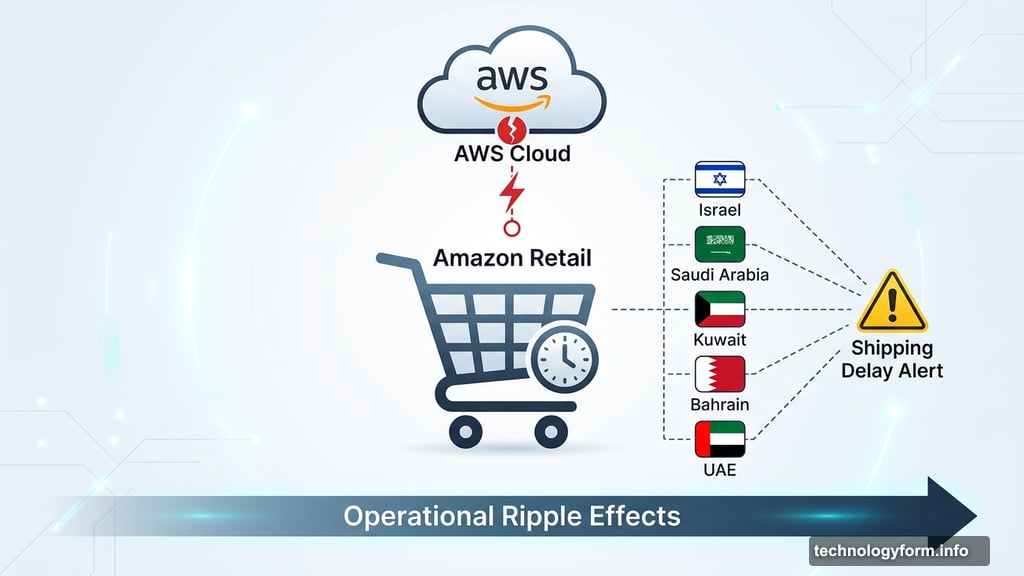
The disruption isn’t limited to cloud services. On Monday, Amazon began warning customers across parts of the Middle East about extended delivery times for physical orders.
According to CNBC, Amazon’s retail sites in Israel, Saudi Arabia, Kuwait, Bahrain, and the UAE are now displaying alerts about shipping delays. That covers a significant stretch of the region, suggesting the operational ripple effects extend well beyond the data centers themselves.
For businesses that rely on AWS cloud services in the Middle East, the situation highlights just how vulnerable physical infrastructure can be to real-world events. Cloud computing runs on actual buildings, actual power grids, and actual people showing up to work. When those things are disrupted, the digital services built on top of them feel it immediately.
Why This Matters Beyond the Middle East
Events like this are a reminder that “the cloud” isn’t some abstract, invulnerable thing floating in digital space. It’s a network of physical buildings spread across the world. Most of those buildings sit in politically stable regions with robust security. But some operate in areas where geopolitical risk is very real.
AWS, Microsoft Azure, and Google Cloud have all invested heavily in Middle East infrastructure over the past several years, chasing demand from regional governments and businesses. That growth makes sense commercially. But it also means more exposure to regional instability.
For customers with critical workloads running in those regions, this weekend’s events will likely trigger conversations about redundancy, disaster recovery, and whether workloads need backup capacity in geographically distant locations.
Amazon hasn’t provided a timeline for full recovery. Anyone relying on AWS services in the UAE or Bahrain should keep checking the AWS status page for the most current updates as the company works through repairs.