Kids Actually Love This AI Sticker Printer. I Tested It
An AI toy that prints stickers? My daughter rolled her eyes. Then we tried Stickerbox.
Skepticism turned to surprise within minutes. This $99 voice-activated printer transforms spoken ideas into physical stickers kids can color and stick anywhere. Plus, it does something unexpected—it makes AI feel like creative play instead of passive consumption.
After testing the device with my daughter, I realized Stickerbox represents a different approach to kid-friendly AI. One that doesn’t replace imagination with automation.
How a Red Box Wins Over Skeptics
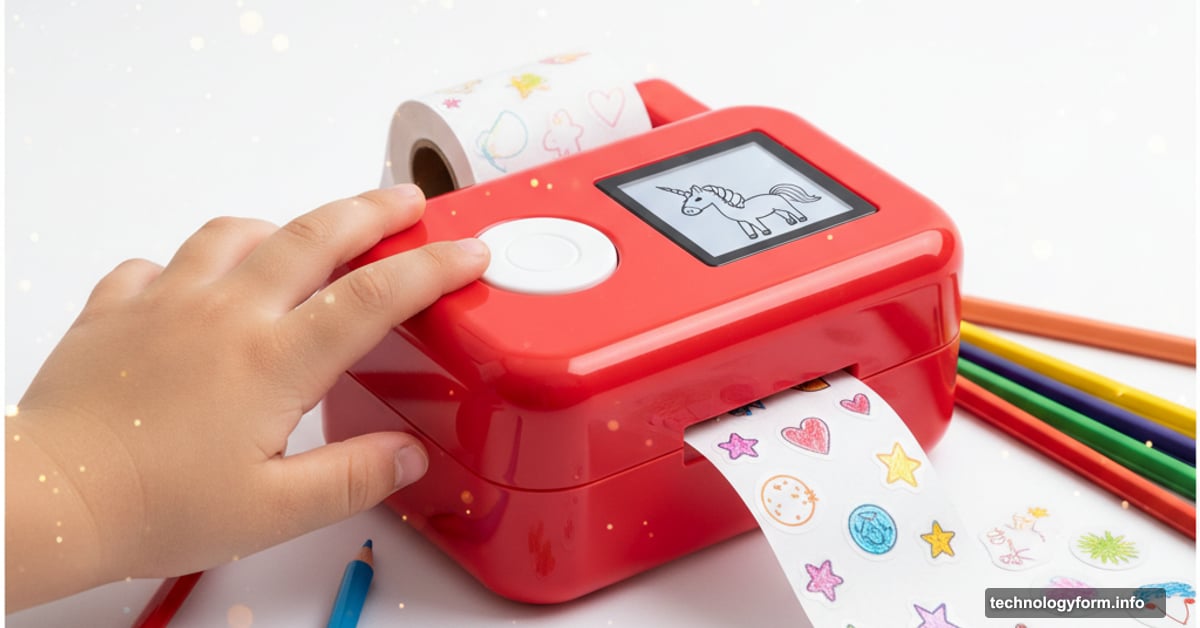
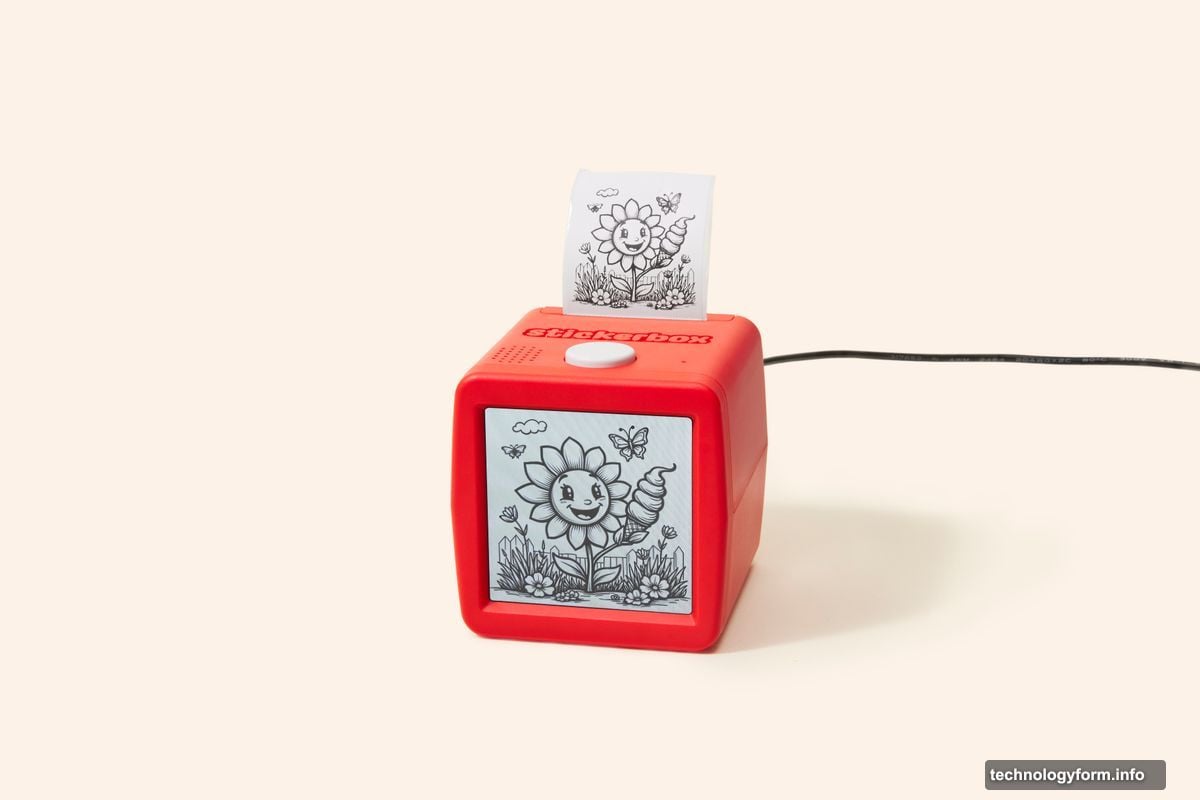
Stickerbox looks like a modern Etch A Sketch. The bright red device features a small black-and-white screen and one big white button on top.
Push the button. Describe an image. Release. Your text appears on screen, followed by an AI-generated drawing as the thermal printer spits out a physical sticker.
Setup takes about a minute. Parents connect the device to home Wi-Fi just like adding a smart speaker. Then kids can start creating immediately.
The box ships with three paper rolls (180 stickers total), colored pencils, and a power cord. The thermal printer needs no ink, and the BPS and BPA-free paper makes it safe for kids.
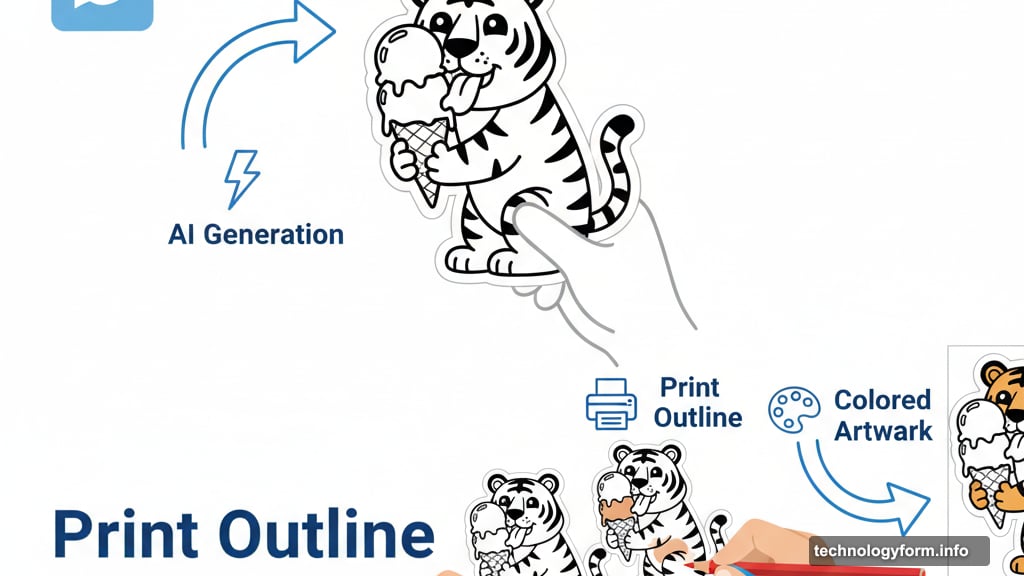
Here’s what surprised us. The printed stickers become coloring projects. Kids get the dopamine hit of instant creation, then slow down to color their designs with the included pencils or their own markers and crayons.
That balance matters. Fast tech thrills combined with meditative coloring created healthier play patterns than pure screen time.
Voice Commands Replace Drawing Skills
Remember learning Etch A Sketch controls? Those knobs tested patience and coordination. Stickerbox replaces mechanical skill with verbal creativity.
Kids don’t worry about prompt engineering. They just talk naturally about what they imagine. The AI parses long, rambling descriptions surprisingly well.
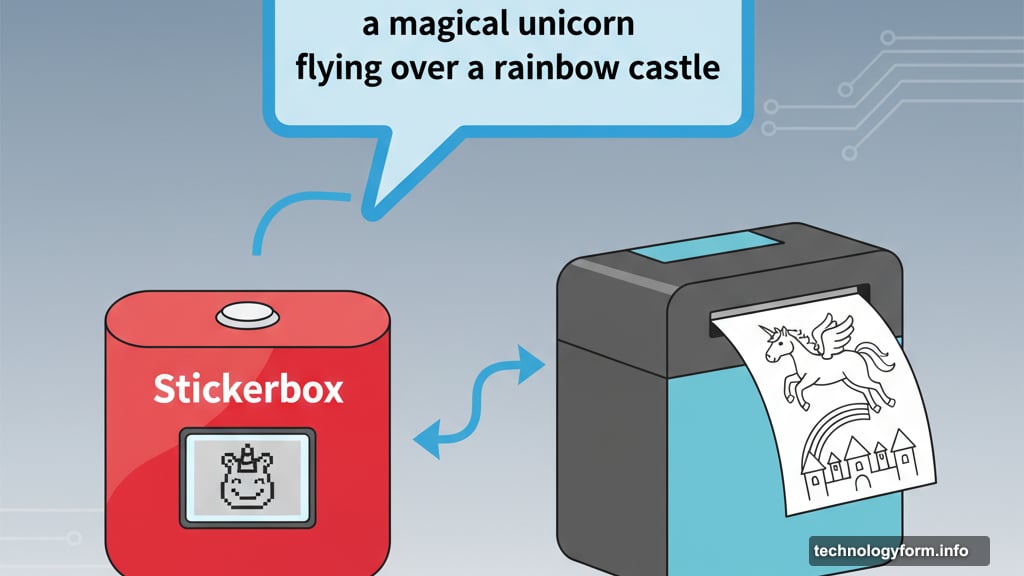
This proves useful because kids rarely explain things in straightforward ways. My daughter tested complex prompts like “a magical unicorn flying over a rainbow castle with sparkles everywhere and maybe some clouds.” The printer understood perfectly.
The more you use it, the more creative prompts become. Simple requests like “draw a cat” evolve into elaborate scenes with multiple characters and settings.
Brooklyn Startup Built AI for Actual Kids
Hapiko launched this year with co-founders Arun Gupta (CEO) and Robert Whitney (CTO). The pair previously worked together at Grailed, the e-commerce marketplace that sold to GOAT Group in 2022.
Whitney’s experience spans interesting territory. He directed engineering at The New York Times Games division during their expansion beyond crosswords. Later, he worked at Anthropic, getting firsthand exposure to cutting-edge AI development.
But his son inspired Stickerbox. When the boy requested a specific coloring page, Whitney used ChatGPT to generate and print a tiger eating ice cream. His son had never seen a printer before.
“He ran off happily and started coloring it,” Whitney explained. “But a minute later, he came back. He was like, ‘I want a lizard riding a skateboard.'”
That look of pure magic on his son’s face sparked the idea. Kids possess endless imagination but lacked AI tools designed specifically for them.
“Nobody’s building AI specifically for kids,” said Gupta. “What are the right guardrails? What are the right ways? What are the right products?”
Safety Features Work Without Killing Fun
Stickerbox runs multiple AI models, including proprietary tech focused on kid safety. The device won’t respond to requests for violent or sexual content. It automatically filters swear words.
We tested the limits. Asking for “boobs” just prints a random cartoon character—maybe a generic girl, but nothing inappropriate. After a few failed attempts at naughty content, most kids give up and return to silly prompts instead.
“We want to be the trusted brand for parents,” Gupta noted. “You don’t have to look over your kid’s shoulder wondering what they’re doing.”
A recent firmware update added guardrails discouraging recognizable characters. Instead, the device nudges kids toward original designs. This promotes creativity over copying existing IP.
Business Model Keeps Paper Cheap
The device costs $99.99 upfront. Replacement paper runs just $5.99 for three rolls (180 stickers). Currently, purchases include six rolls as a promotion.
That pricing strategy makes sense. Hook families with affordable consumables so kids can create freely without parents worrying about costs. Compare that to printer ink cartridges that cost more than some printers.
Over time, Hapiko plans premium features. Possibilities include uploading photos to imagine yourself in fantasy scenarios or collaboration tools for multiple kids.
As a Wi-Fi device, Stickerbox receives regular firmware updates. A companion app launching soon will store past creations and save favorites. That app could eventually house premium subscription features.
The startup raised $7 million from investors including Maveron, Serena Williams’ Serena Ventures, and the Allen Institute’s AI2 incubator. Angel investors include product leaders from major consumer apps.
Physical Creation Beats Pure Digital
Here’s what makes Stickerbox different from screen-based AI toys. Kids hold something real within seconds of imagining it.
That tangibility matters. Instead of scrolling through digital galleries, children tear off stickers, color them, and stick them places. They create collages, decorate notebooks, or gift designs to friends.
This bridges digital and physical play naturally. The AI handles image generation. Kids handle everything after that—coloring, cutting, arranging, displaying.
My daughter made a series of ocean animal stickers, then built an underwater scene on poster board. She combined her creations with hand-drawn elements. The AI became a tool, not the entire experience.
The Etch A Sketch Comparison Holds Up
Stickerbox truly feels like an Etch A Sketch for the AI age. Both devices turn abstract inputs into visible images. Both require practice to get better results. Both appeal to kids who want to see ideas become real.
The red color scheme reinforces that connection deliberately. Hapiko wants parents to recognize this as creative play equipment, not addictive technology.
Does it work? Sort of. The voice interface still feels modern and tech-forward. But the coloring pencils and physical stickers ground the experience in traditional play patterns.
That hybrid approach might be exactly right. Give kids AI-powered creation tools, then require hands-on work to complete projects. Fast meets slow. Digital meets analog.
Paper Rolls Fly Off the Printer
One warning for parents. Kids burn through stickers fast once they start experimenting. Having spare paper rolls on hand prevents disappointment when creativity strikes.
The thermal printing speed helps. Stickers emerge in seconds, keeping pace with kid attention spans. Slower printing would kill momentum between ideas.
But that speed also means three rolls disappear quickly. Buying bulk paper makes sense if your kid takes to the device.
Some parents might worry about waste. But compared to abandoned app subscriptions or toys used once, consumable paper for active creative play seems reasonable.
Not Every AI Toy Deserves Groans
I started this review skeptical. Another AI gadget for kids? Really?
But Stickerbox surprised me. It uses AI without making kids passive consumers. Instead, the technology amplifies imagination and leads to hands-on creation.
The voice interface feels natural for kids. The safety guardrails work without being heavy-handed. The physical stickers provide immediate satisfaction while coloring adds lasting engagement.
This might be what good AI toys look like. Tools that enhance creativity rather than replace it. Devices that generate starting points, not finished products. Technology that leads to real-world play.
My daughter’s already planning her next batch of stickers. That tells me more than any feature list could.