OpenAI’s Mystery Device Promises Peace. Will It Deliver?
Sam Altman wants you to put down your iPhone. Not forever. Just long enough to imagine something different.
The OpenAI CEO spent this weekend describing his company’s upcoming AI hardware device in surprisingly emotional terms. He painted a picture of technology that feels more like a mountain retreat than Times Square. But here’s the thing: we’ve heard grand promises about peaceful tech before.
The Vibe Check Nobody Asked For
Altman and Jony Ive sat down with Laurene Powell Jobs at Emerson Collective’s Demo Day in San Francisco. They didn’t share specs or features. Instead, they talked about how the device should make you feel.
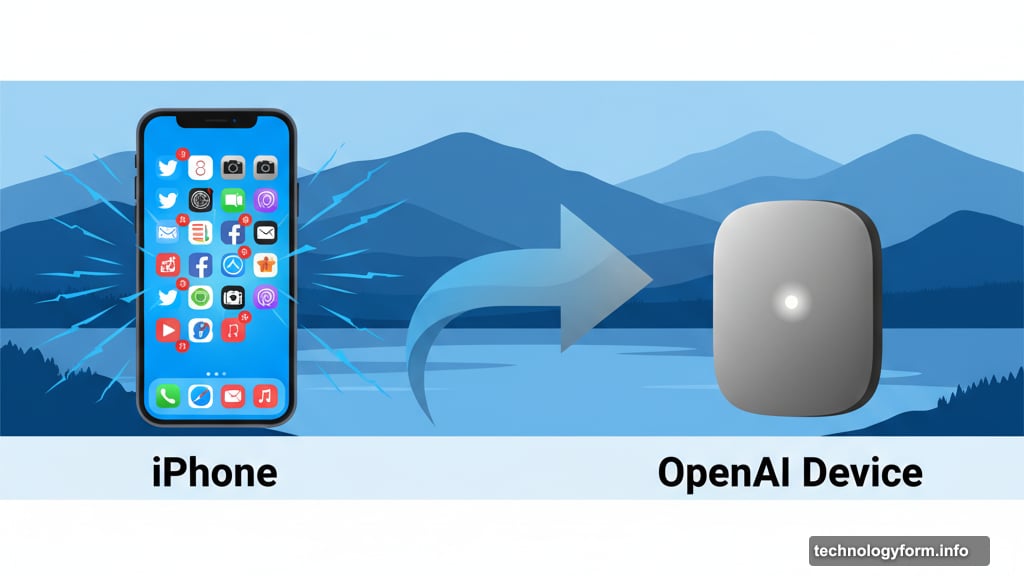
Picture this. You’re in a beautiful cabin by a lake. Mountains surround you. Everything feels calm and peaceful. That’s the vibe Altman wants his AI device to create.
Now contrast that with your current phone experience. Altman compared modern devices to walking through Times Square. Flashing lights assault your eyes. People bump into you constantly. Noise blares from every direction. Plus, those dopamine-chasing social apps keep yanking your attention in different directions.
He’s not wrong about that part.
What We Actually Know
The device itself remains mostly mysterious. But a few details have emerged over recent months.
First, it’s reportedly screenless. Second, it fits in your pocket. Third, OpenAI acquired Ive’s design startup io earlier this year to make this happen. And now we know it’s currently a prototype.
Ive confirmed one concrete timeline. The device should launch in under two years. So expect something by late 2027 at the latest.
Both Ive and Altman emphasized simplicity. When people see it, Altman predicts they’ll say “that’s it?” Because apparently looking simple is the goal. Ive talked about products that “teeter on appearing almost naive in their simplicity.”
The Trust Problem
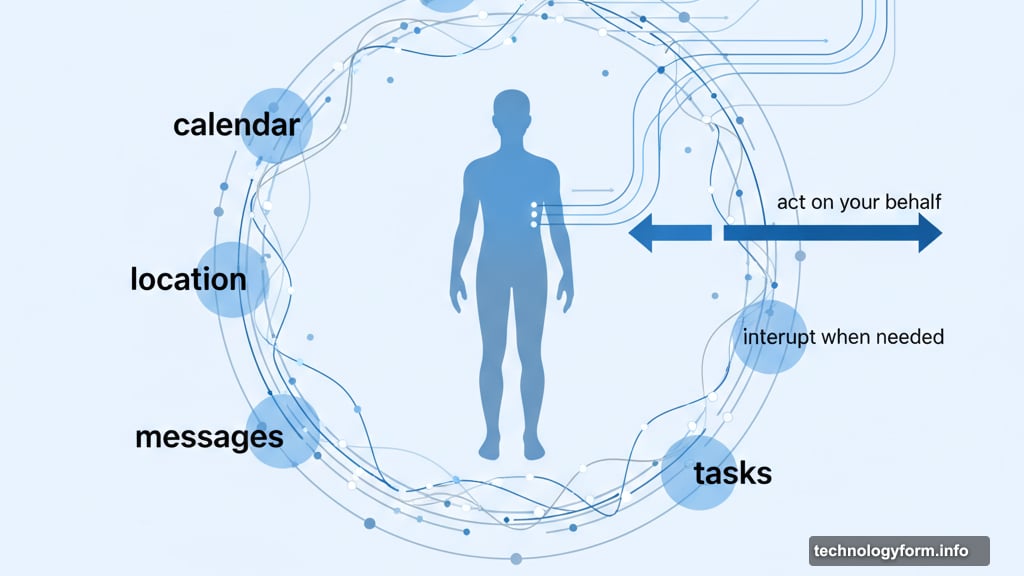
Here’s where things get interesting. Altman envisions AI that handles tasks over long periods while you do other things. The device would have “incredible contextual awareness of your whole life.”
Think about that for a second. You’re supposed to trust an AI with complete access to your life context. It decides when to interrupt you. It filters what information reaches you. It acts on your behalf without constant supervision.
That’s either incredibly liberating or deeply unsettling. Probably both.
The technology would need to understand when you’re busy versus free. It should know which notifications matter and which ones can wait. Plus, it has to make these judgment calls without annoying you or missing something important.
Good luck building that.
The iPhone Comparison
Altman called the iPhone the “crowning achievement of consumer products” so far. He divides his life into before iPhone and after iPhone eras.
Fair enough. The iPhone genuinely changed how humans interact with technology and each other. But here’s the catch: Altman now criticizes the iPhone for creating the exact problems his device aims to solve.
The iPhone brought us constant notifications. It enabled dopamine-chasing apps. It made distraction the default state for billions of people. So OpenAI plans to fix problems that the iPhone created while somehow being as revolutionary as the iPhone was.
That’s a tall order.
What Could Go Wrong
Let’s talk about the elephant in the room. A screenless device with AI that knows your whole life context sounds convenient. It also sounds like a privacy nightmare waiting to happen.
How does this device handle your data? Where does that contextual awareness live? Who can access it? What happens when something goes wrong? These questions matter more than the device’s “vibe.”
Moreover, we’ve seen tech companies promise calm, peaceful experiences before. Then they need to hit revenue targets. Suddenly the peaceful experience includes ads or premium tiers or subscription models that compromise the original vision.
Plus, trusting AI to filter your information creates a different problem. You’re putting an algorithm between yourself and reality. That algorithm has biases. It makes mistakes. It might hide information you actually need to see.
The Simplicity Trap
Ive loves talking about products that feel simple to use. His track record backs that up. The original iPhone, the iPod, the MacBook Air—all seemed almost magical in their simplicity.
But simple-looking products often hide massive complexity. The question isn’t whether OpenAI and Ive can build something that looks simple. They probably can. The question is whether they can build something that actually solves problems without creating new ones.
A screenless device sounds peaceful until you need to check something visual. AI that filters your information sounds helpful until it filters out something crucial. Contextual awareness sounds convenient until you realize how much data that requires.
Two Years to Judgment Day
Ive says the device launches in under two years. That’s enough time to test whether these promises hold up or fall apart.
Will people actually want technology that filters their experience so aggressively? Do we trust OpenAI enough to give them that much control over our digital lives? Can they build this without massive privacy concerns?
Nobody knows yet. But Altman and Ive are betting they can deliver something revolutionary. Meanwhile, the rest of us should stay skeptical until we see the actual product.
Technology that promises peace and calm sounds great. Technology that delivers it is much rarer.