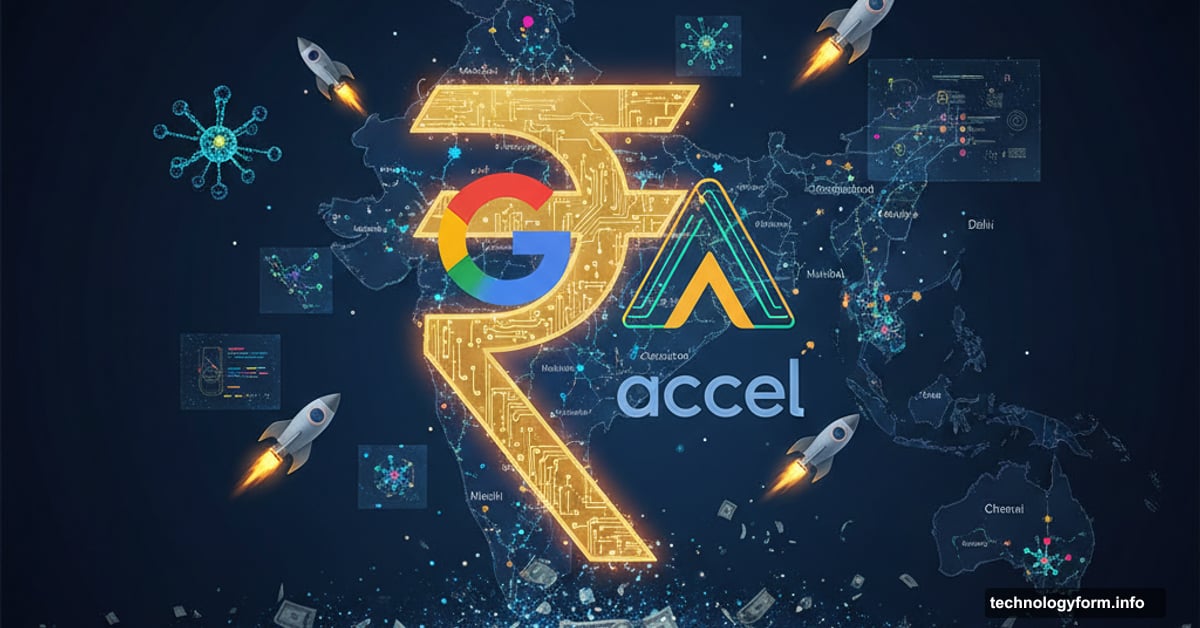
Google and Accel Hunt India’s Next AI Unicorns With $2M Checks
Google just made its first regional bet on the AI Futures Fund. The tech giant partnered with Accel to find India’s earliest-stage AI startups through a joint investment program.
Each selected startup gets up to $2 million split evenly between the two firms. But the real value might be what comes after the check clears.
Why India Matters Now
India sits in an interesting position. The country has the world’s second-largest internet user base after China and deep engineering talent pools. Yet it hasn’t produced many companies pushing AI’s technical boundaries.
That’s starting to shift. OpenAI and Anthropic recently opened Indian offices. Global investors are stepping up early-stage commitments. Plus, infrastructure is catching up to ambition.
The bet is straightforward. A massive mobile-first population combined with expanding cloud infrastructure and relatively low software costs could transform India into a meaningful AI market. But only if the ecosystem can convert talent and demand into original research and products.
More Than Just Money
Capital alone doesn’t build companies. So Google and Accel structured the program around comprehensive support.
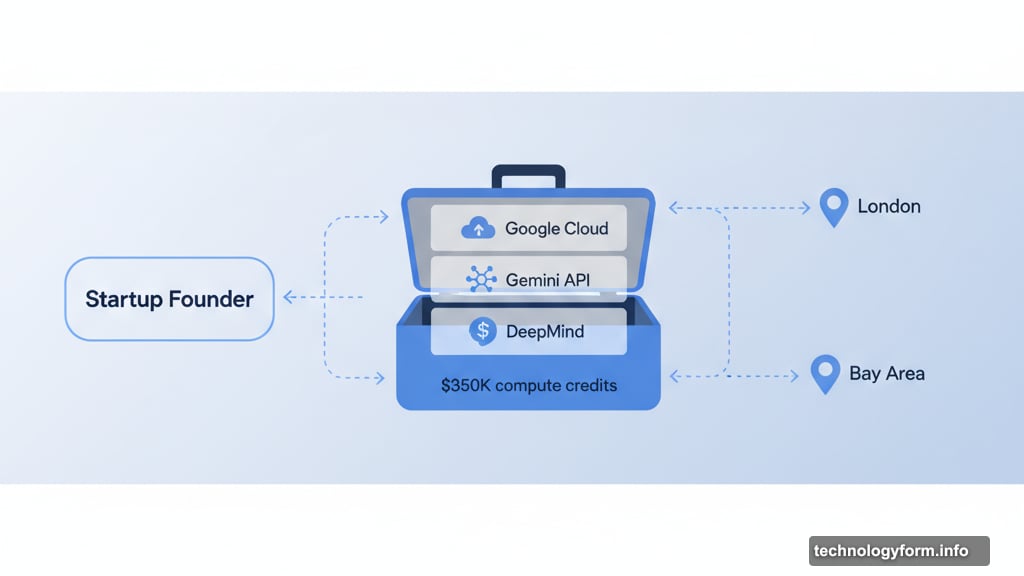
Founders receive up to $350,000 in compute credits across Google Cloud, Gemini, and DeepMind. Plus, they get early access to experimental models and APIs before public release.
The support extends beyond technology. Monthly mentorship sessions pair founders with Accel partners and Google technical leads. Immersion programs in London and the Bay Area provide global exposure. Access to Google I/O connects startups with the broader developer ecosystem.

Marketing support through both firms’ global channels helps startups reach customers. Meanwhile, connections to Accel’s Atoms founder network and Google’s AI builder community create peer learning opportunities.
No Platform Lock-In Required
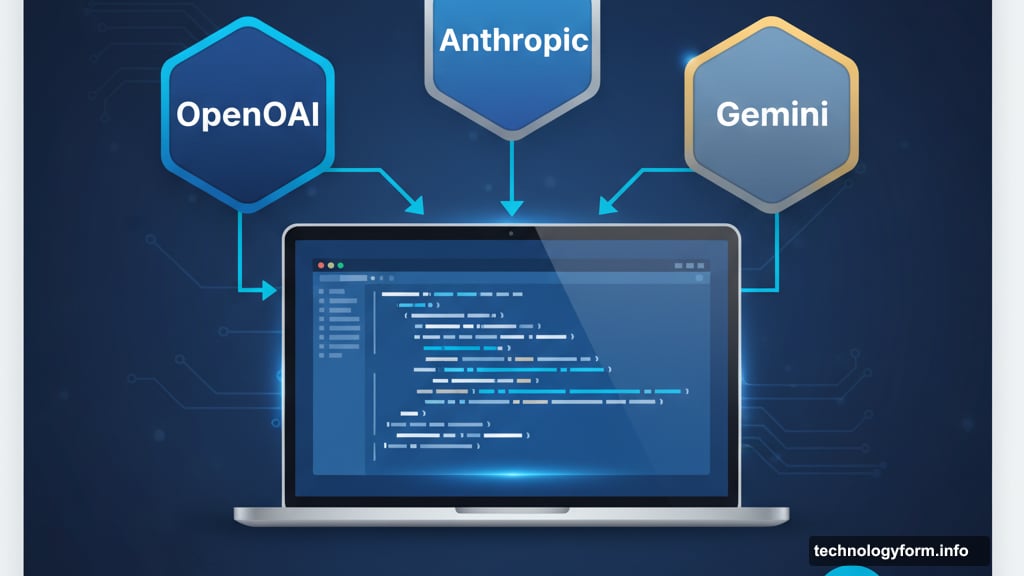
Here’s what surprised me most. Google isn’t requiring startups to exclusively use Gemini or other Google products.
“Sometimes, Google’s technology is the best. Other times, you’ll see Anthropic or OpenAI,” Jonathan Silber, co-founder of the Google AI Futures Fund, told TechCrunch. “We’re not putting firm requirements that say you can only use Google’s models.”
That’s unusual for a tech giant investment program. Most corporate venture arms push their platforms hard. Instead, Google seems focused on fostering innovation rather than capturing customers.
Silber emphasized they’re not running a sales operation. The goal is simply enabling the next wave of AI innovation from India.
What Gets Funded
The program casts a wide net. Prayank Swaroop, an Accel partner, said investments will target creativity, entertainment, coding, and work applications. Even foundational models are on the table.
“The future of work here is more encompassing, which is essentially SaaS, and all other applications,” Swaroop explained. “It could even be foundational models.”
The firms will also identify areas where large language models are likely to advance over the next 12 to 24 months. Then hunt for Indian startups building in those directions.
Two focus areas stand out. First, building AI products for billions of Indians. Second, supporting AI products built in India for global markets. Both represent massive opportunities.
Track Record and Timing
Accel’s Atoms program launched in 2021 and has backed over 40 companies since then. Those startups collectively raised more than $300 million in follow-on funding. So the model works.
This year, Accel expanded Atoms to include Indian-origin founders based overseas. The firm also recently partnered with Prosus on Atoms X, backing early-stage Indian founders building large-scale solutions.
Google’s AI Futures Fund launched in May 2025 as a dedicated vehicle to invest in and collaborate with AI startups globally. The fund has backed companies including Replit and Harvey. It also invested directly in Indian startups such as Toonsutra and STAN.
This marks the Futures Fund’s first regional collaboration anywhere in the world. Google chose India deliberately, building on years of commitment to the country’s digital transformation.
Infrastructure Investment Backs Software Bets
Google’s software bet comes alongside massive infrastructure commitments. The company recently announced a $15 billion plan to build a 1-gigawatt data center and AI hub in India.
That follows a $10 billion digitization fund announced in 2020, which backed firms including Bharti Airtel, Reliance Jio, and Walmart-owned Flipkart. Last month, Google partnered with Reliance to offer millions of Jio users free access to Gemini AI Pro.
The infrastructure investments make the startup program more credible. You can’t build AI companies without compute infrastructure. Google is betting on both layers simultaneously.
The Real Competition
India’s AI ecosystem faces stiff competition from the U.S. and China, where frontier model development remains concentrated. Those countries have head starts in talent density, capital deployment, and research output.
But India has advantages too. Lower operational costs mean startups can experiment longer before finding product-market fit. A massive domestic market provides built-in distribution for successful products. Plus, engineers familiar with building for India’s constraints often create more efficient solutions.
The question is whether India can move from engineering talent supplier to innovation creator. Programs like this help by providing capital, compute, and connections. But execution still falls on founders.
What This Signals
Corporate venture arms typically invest to capture future customers or acquisition targets. Google insists that’s not the play here.
“We’re not structuring the partnership as a pathway to future acquisitions, or even future cloud customers,” Silber said. “Our objective is simply to see the next wave of innovation in the AI space coming out of India.”
Maybe that’s genuine altruism. Or maybe Google recognizes that a thriving Indian AI ecosystem benefits everyone, including Google. Either way, the terms seem founder-friendly.
The 2026 cohort focuses on founders in India and the Indian diaspora building AI products from day one. Applications will open soon. For early-stage founders in India, this represents one of the best-structured support programs available.
Whether it produces the next wave of AI innovation remains to be seen. But Google and Accel just placed a serious bet that it will.