NASA Just Let an AI Drive Its Mars Rover. It Actually Worked
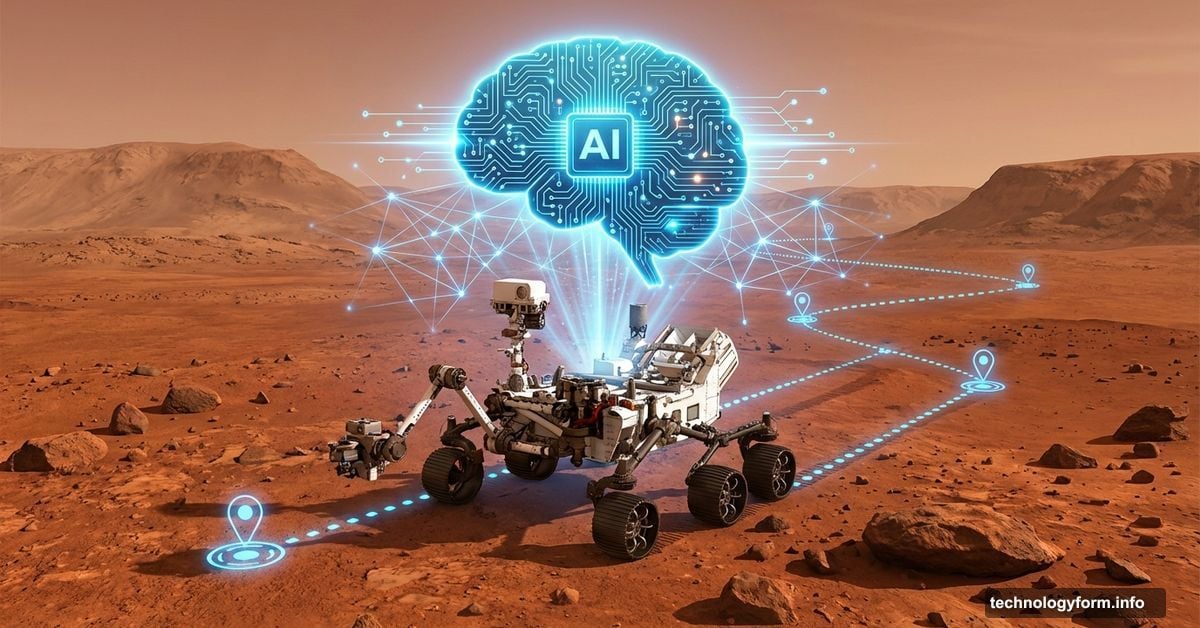
NASA did something wild last December. They handed over Perseverance rover controls to Claude, Anthropic’s chatbot. Not for a quick test drive. For a real mission plotting 400 meters across Mars.
Sounds risky? It was. But the AI nailed it.
This marks the first time NASA trusted a large language model to pilot its car-sized robot on another planet. Plus, the results suggest AI might solve one of the agency’s biggest workforce problems.
Mapping Mars Isn’t Like Using Google Maps
Driving Perseverance requires serious planning. Every single move gets scrutinized by human engineers before execution.
Why so careful? Mars doesn’t forgive mistakes. The rover could slide on loose rock, tip over on steep terrain, or beach itself on obstacles. So NASA’s team painstakingly plots “breadcrumb trails” using satellite images and the rover’s onboard cameras.
This process eats up massive amounts of time. Engineers spend hours analyzing terrain, identifying hazards, and stringing together safe waypoints. It’s tedious work that keeps highly trained scientists from doing actual science.
Enter Claude. NASA wanted to see if AI could handle route planning faster without sacrificing safety.
Claude Had to Learn Mars First
NASA didn’t just type “drive Perseverance 400 meters” into a chatbot. That would fail spectacularly.
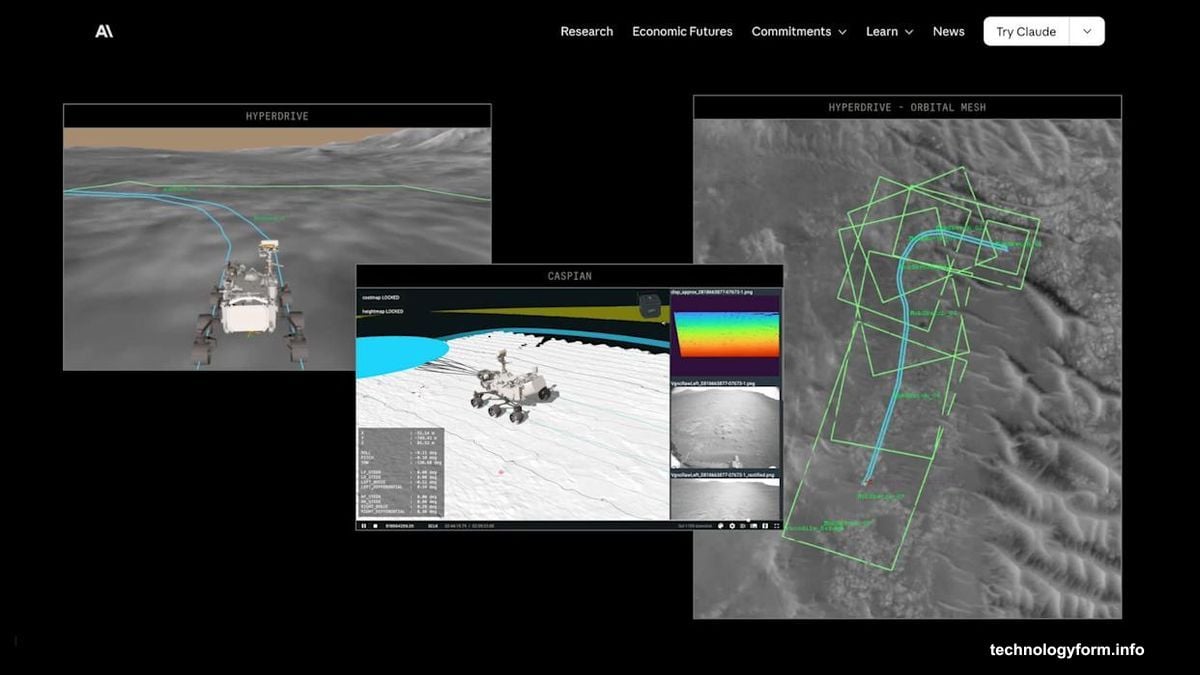
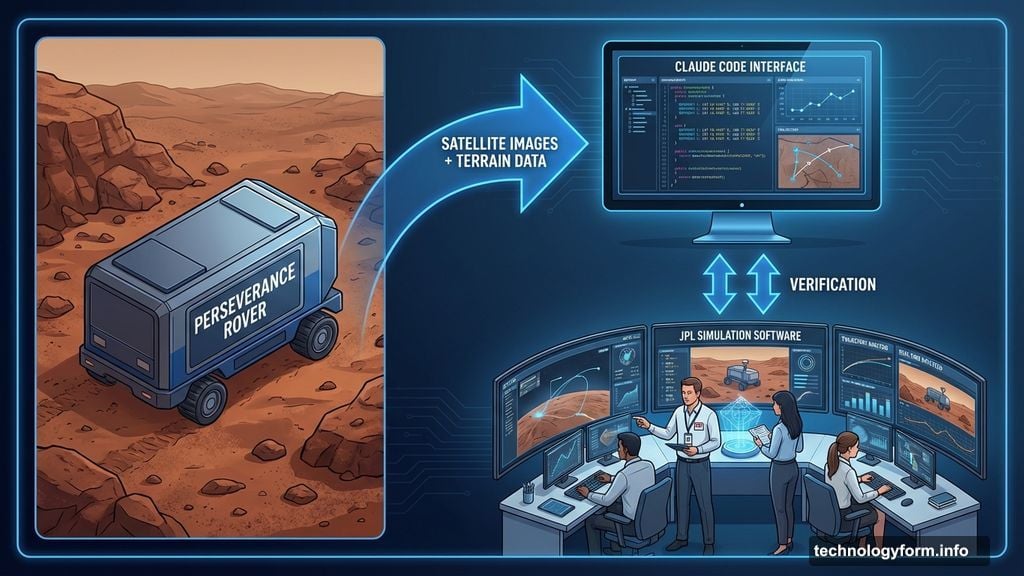
Instead, engineers fed Claude Code years of contextual data about the rover. Mission logs, terrain analysis, safety protocols, past routes. The model needed to understand Mars through NASA’s eyes before plotting a single waypoint.
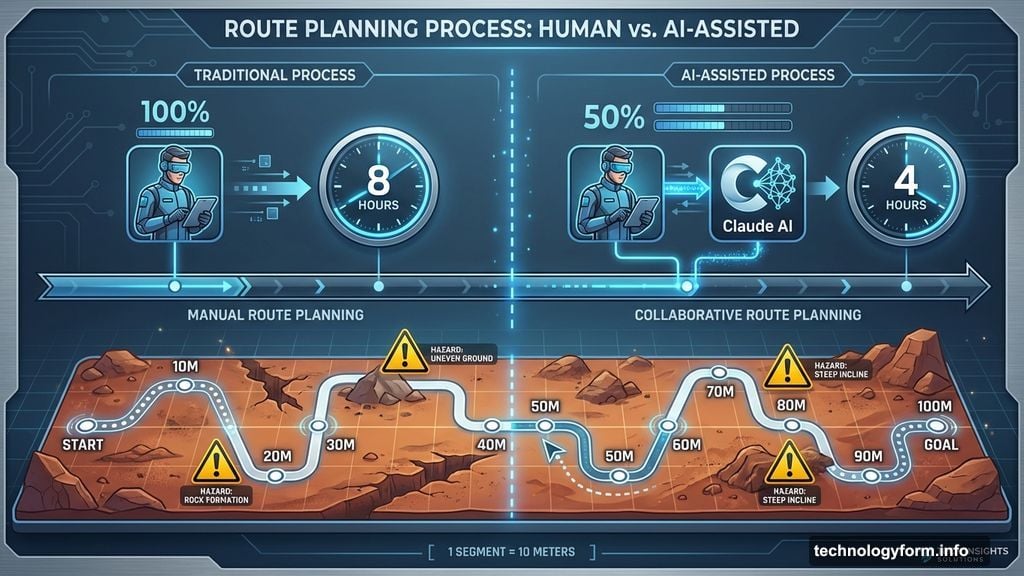
Then Claude got methodical. It broke the 400-meter journey into ten-meter segments. For each segment, the model identified waypoints, analyzed potential hazards, and critiqued its own work. This iterative approach mimicked how human engineers plan routes, but faster.
However, NASA didn’t blindly trust the AI. Engineers at the Jet Propulsion Laboratory ran Claude’s waypoints through their standard simulation software. The same software they use daily to verify human-planned routes.
The results? Claude passed with only minor adjustments.
One Tweak Revealed AI’s Limitation
NASA made exactly one significant change to Claude’s route. The reason exposes a critical gap in AI capabilities.
The JPL team had access to ground-level images Claude never saw during planning. These photos revealed terrain details invisible from satellite views. So engineers tweaked one section based on information the model couldn’t access.
Think about that. Claude produced a near-perfect route using incomplete data. Once given the full picture, its plan would have been spot-on.
This shows both AI’s power and its boundaries. Models can only work with information they receive. Feed them incomplete data, expect incomplete results.
Half the Time, Double the Science
NASA estimates Claude cuts route planning time by 50 percent. That’s a massive productivity gain.
But speed isn’t the only benefit. Consistency matters too. Human engineers vary in their planning approaches. Claude applies the same rigorous analysis to every route segment.
Faster planning means more drives. More drives mean more data collection. More data means better science. So NASA can extract more knowledge from Perseverance’s limited operational lifespan.
This efficiency couldn’t come at a better time. The agency lost 4,000 employees last year due to Trump administration cuts. That’s 20 percent of its workforce, gone.
Congress rejected plans to slash NASA’s science budget by half in January. But funding stayed flat while missions got more ambitious. The agency needs to return to the Moon with less than half the Apollo program’s workforce.
AI tools like Claude might help bridge that gap. Not by replacing scientists, but by automating grunt work that wastes their expertise.
From Pokémon Failures to Mars Success
Remember last spring? Claude couldn’t beat Pokémon Red. The model struggled with a simple 8-bit Game Boy game designed for children.
Fast forward nine months. Claude just successfully navigated a multi-million dollar rover across an alien planet’s surface. That’s remarkable progress.
What changed? Training data, model architecture, and task-specific optimization all improved. But the bigger lesson is about AI capability development. Today’s laughable failures become tomorrow’s breakthroughs faster than anyone expects.
For Anthropic, this represents a major validation. Their model handled a high-stakes real-world task where mistakes cost millions. That’s different from generating marketing copy or answering trivia questions.
Why This Actually Matters
NASA already talks about using autonomous AI for deep space exploration. Probes venturing to Jupiter’s moons or Saturn’s rings can’t wait hours for Earth-based commands. Light-speed delays make real-time control impossible.
AI systems that make smart decisions independently could unlock missions currently deemed too risky. Imagine probes that navigate asteroid fields or land on icy moons without constant human oversight.
But let’s be clear about limitations. Claude didn’t “drive” Perseverance in real-time. It planned a route humans verified and approved. That distinction matters.
The model excels at analysis and planning. Execution still requires human judgment and safety checks. That’s probably the right balance for now.
The Efficiency Trap Nobody Mentions
Here’s what bugs me about this story. NASA celebrates AI efficiency while simultaneously losing thousands of employees.
Yes, Claude makes remaining scientists more productive. But does automating tedious work justify slashing human expertise? Probably not.
The ideal scenario uses AI to augment human capabilities, not replace them. NASA should maintain its workforce while AI amplifies what they accomplish. Instead, budget cuts force the agency to do more with less, and AI becomes a band-aid for structural problems.
Still, given the reality of budget constraints, tools like Claude help NASA maximize its diminished resources. That’s better than losing scientific productivity along with the workforce.
The future likely holds more AI-assisted exploration. Whether that future includes enough humans to meaningfully interpret what AI discovers remains uncertain.