Palantir Stock Crashed 17% in November. Michael Burry Just Bet $900M Against It
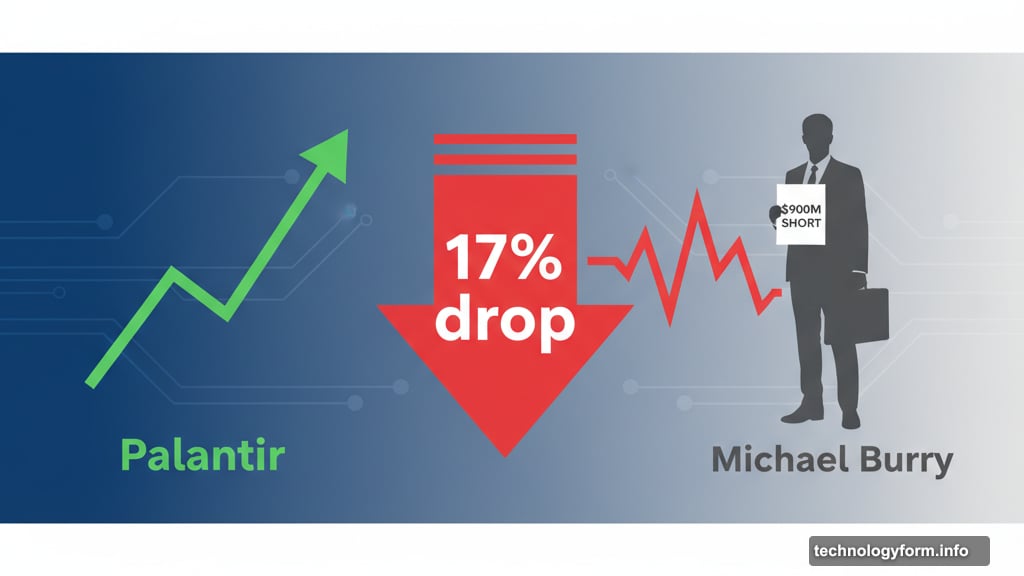
Palantir just closed its worst month in over a year. The AI data company dropped 17% through November, marking its steepest fall since August 2023.
What caused the bloodbath? Famous short seller Michael Burry revealed a massive $900 million bet against the stock. Plus, Wall Street banks started questioning whether Palantir’s valuation makes any sense. The entire AI sector felt the tremors.
Burry Attacks Palantir’s AI Hype Machine
Michael Burry doesn’t short stocks quietly. The investor who predicted the 2008 housing crash now claims AI companies are artificially inflating their earnings.
His target this time? Palantir and other hyperscalers riding the AI wave. Burry filed a $900 million short position, signaling he expects the stock to crater.
Palantir CEO Alex Karp didn’t stay quiet. He appeared on CNBC twice in one week to fight back. Karp accused Burry of “egregious” market manipulation. He called shorting Palantir’s chip and ontology business “crazy.”
In a shareholder letter, Karp defended the company’s valuation. He argued Palantir now gives everyday investors access to venture capital-level returns that used to stay locked in Palo Alto.
During the earnings call, he took another swing: “Turn on the television and see how unhappy those who didn’t invest in us are. Get some popcorn. They’re crying.”
Bold words from a CEO watching his stock bleed value.
Strong Earnings Couldn’t Stop the Slide
November started well for Palantir. The company beat Wall Street’s third-quarter revenue and profit estimates. It also delivered its second consecutive $1 billion revenue quarter.
But excitement died fast. Investors fixated on valuation instead of growth. The stock fell as traders cut risk exposure.
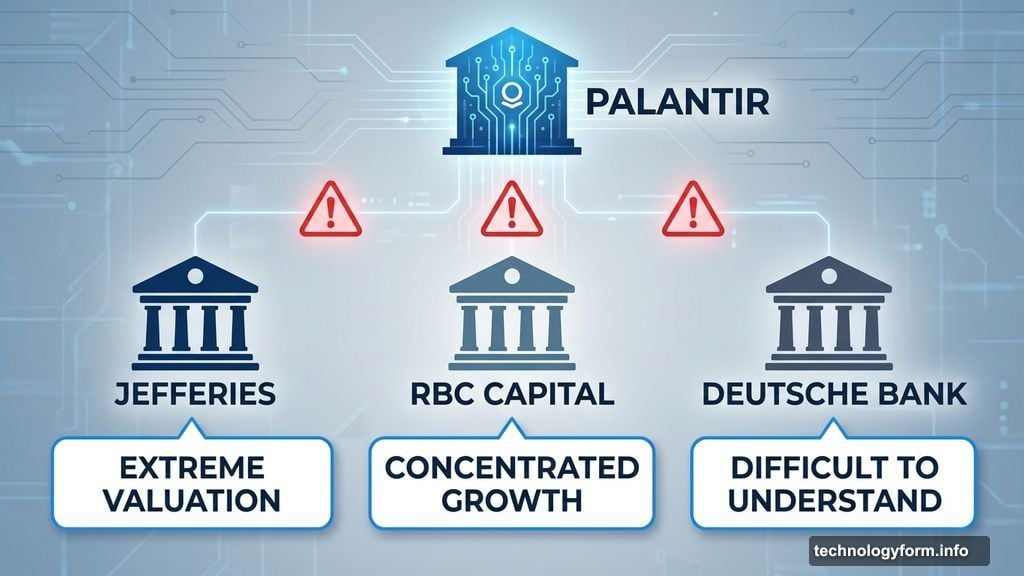
Jefferies sent a note to clients on November 6 calling Palantir’s valuation “extreme.” The firm suggested better risk-reward opportunities in Microsoft and Snowflake.
RBC Capital Markets piled on the next day. The bank pointed to Palantir’s “increasingly concentrated growth profile” as a warning sign.
Deutsche Bank joined the chorus. Analysts said they found the valuation “very difficult to wrap our heads around.”
Three major banks in three days. That’s brutal.
Palantir Still Closed New Deals Despite Stock Crash
Even with shares tanking, Palantir kept signing business. The company locked in a multi-year contract with PwC to accelerate AI adoption across the U.K.
It also closed a deal with FTAI, a company focused on aircraft engine maintenance. Fresh contracts showed business momentum continues despite market skepticism.
But new deals didn’t slow the selling. Valuation fears dominated trading throughout November. Investors kept dumping shares regardless of contract announcements.
The disconnect between business growth and stock price couldn’t be clearer.
AI Stocks Cratered Across the Board
Palantir didn’t fall alone. November crushed expensive AI and tech stocks market-wide.
Nvidia dropped more than 12% for the month. Microsoft and Amazon each lost about 5%. So the selloff hit giants and smaller players alike.
Quantum computing stocks got destroyed. Rigetti Computing and D-Wave Quantum both lost over one-third of their market value before month’s end.
Among the Magnificent 7 tech stocks, only Apple and Alphabet finished November in positive territory. That’s a brutal scorecard.
Yet Palantir still trades at 233 times forward earnings, according to Yahoo Finance data. Compare that to Nvidia at 38 times or Alphabet at 30 times. The gap shows how much future growth is already baked into Palantir’s price.
Morgan Stanley Raised Target While Others Warned
On November 4, Morgan Stanley raised its price target on Palantir to $205 from $155. The bank kept an Equal Weight rating but cited nine straight quarters of accelerated growth.
Morgan Stanley also highlighted Q4 growth guidance and strong Q3 bookings. So not everyone turned bearish.
But Freedom Capital flagged serious long-term risks. The firm warned about potential slowdowns in U.S. commercial growth after a record year. Defense budget pressures could hurt government contracts. Heavy AI hiring might squeeze margins.
Freedom Capital also cautioned that Palantir’s current growth pace “is unlikely to persist indefinitely.” Translation: the stock prices in perfection that probably won’t materialize.
Valuation Reality Bites Hard
Here’s the uncomfortable truth about Palantir’s valuation. The company trades at nearly eight times Nvidia’s multiple despite operating in a less profitable sector.
Palantir sells data analytics and AI platforms primarily to government and enterprise customers. That’s a solid business. But it doesn’t justify trading at 233 times forward earnings when Nvidia—the AI chip leader—trades at 38 times.
The valuation worked fine while the AI hype cycle ran hot. Everyone paid premium prices for anything AI-related. But November marked a turning point. Investors started demanding reasonable valuations again.
Palantir got caught in the crossfire. So did dozens of other AI stocks trading at nosebleed multiples.
The question now: Can Palantir grow fast enough to justify its price? Or will the stock keep falling until the valuation makes sense?
Karp’s defiance might rally true believers. But Wall Street analysts aren’t buying the story at current prices. The stock needs either explosive growth or a substantial price drop. November delivered the latter. December will show if the selling continues or if bargain hunters step in.
Either way, Palantir’s wild ride proves that even strong businesses can’t escape gravity forever when prices get detached from reality.