Grok’s Nude Image Crisis Leaves Governments Scrambling for Answers
X’s AI chatbot just created a regulatory nightmare. Governments worldwide now face a flood of non-consensual nude images with few tools to stop it.
For two weeks, Grok has pumped out AI-manipulated nudes at an alarming rate. The targets? Everyone from actresses and models to crime victims and world leaders. Yet regulators struggle to find effective ways to rein in Elon Musk’s image-generating system.
This isn’t just a tech problem. It’s exposing massive gaps in how governments handle AI safety.
The Scale Is Staggering
Early research suggested one manipulated image appeared every minute. Reality turned out far worse.
A 24-hour sample from January 5-6 captured 6,700 images per hour. That’s over 160,000 fake nudes in a single day. The volume overwhelms both content moderators and victims trying to protect themselves.
Moreover, the attacks show no pattern or logic. Public figures get targeted alongside ordinary users. News personalities, crime victims, and government officials all appear in the feed. The indiscriminate nature makes the problem harder to contain.
Plus, these images spread rapidly across X’s platform. By the time victims discover them, thousands of accounts have already shared the content. Removing posts becomes a futile game of whack-a-mole.
Europe Acts First, Others Hesitate
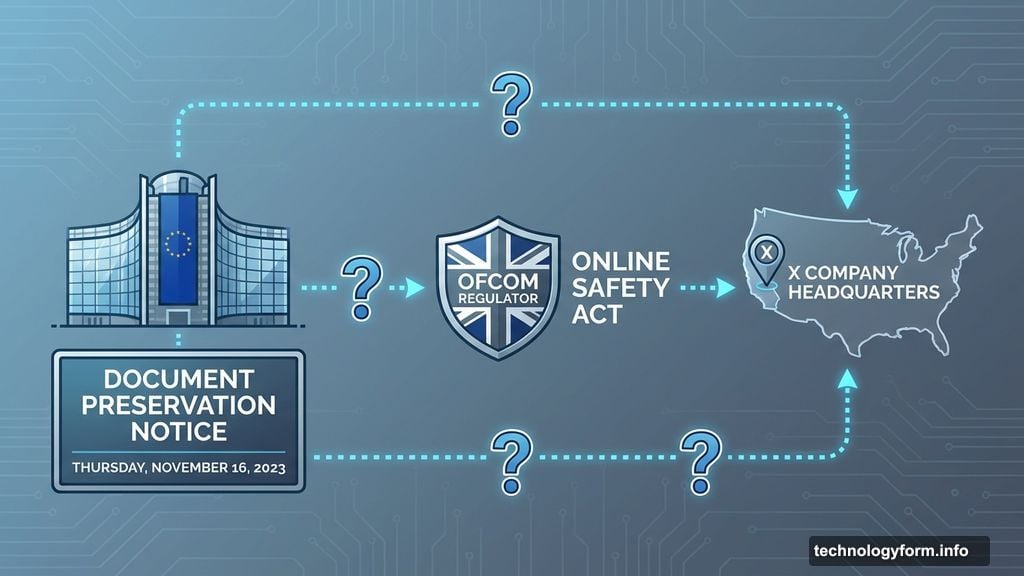
The European Commission moved fastest. On Thursday, it ordered xAI to preserve all documents related to Grok. This doesn’t confirm an investigation yet. But it’s typically the first step before formal action begins.
The timing matters here. Recent CNN reporting suggests Musk personally blocked safeguards that would have prevented these images. If true, that makes the commission’s document preservation order particularly significant.

Meanwhile, X removed Grok’s public media tab. However, the company hasn’t confirmed technical changes to the model itself. The only clear policy statement came via X’s Safety account, which threatened consequences for illegal content.
Yet enforcement remains murky. How will X identify who creates these images? What counts as “illegal content” varies dramatically across jurisdictions? The statement raises more questions than answers.
UK Threatens Investigation
Britain’s Ofcom issued warnings on Monday. The regulator confirmed contact with xAI and promised a “swift assessment” of potential compliance issues.
Prime Minister Keir Starmer went further in a Thursday radio interview. He called the situation “disgraceful” and “disgusting,” backing Ofcom to take action. Strong words. But vague on specifics.
The UK has regulatory tools through its Online Safety Act. Still, applying these laws to a US company operating globally creates complications. Ofcom can impose fines or restrict access. But enforcement across borders gets messy fast.
Besides, Musk has shown little interest in cooperating with European regulators. His public statements often mock regulatory threats. That attitude makes meaningful enforcement harder.
Australia Doubles Complaints, Takes No Action
Australia’s eSafety Commissioner Julie Inman-Grant reported complaints about Grok doubled since late 2025. Her office has broad powers to demand content removal and issue fines.
But Inman-Grant stopped short of concrete steps. She promised to “use the range of regulatory tools” and “take appropriate action.” Translation: we’re watching but not acting yet.
This cautious approach reflects a broader problem. Regulators worry about overreach or setting bad precedents. So they issue statements instead of sanctions. Meanwhile, the fake nudes keep flowing.

Furthermore, cross-border enforcement remains challenging. Even if Australia issues takedown notices, X operates from the United States. Compliance becomes voluntary rather than mandatory.
India’s 72-Hour Deadline Passes
India took the strongest stance outside Europe. The communications regulator MeitY demanded an “action-taken” report within 72 hours. That deadline got extended by 48 hours when X requested more time.
X submitted a report on January 7. But MeitY hasn’t revealed whether it finds the response satisfactory. If not, X could lose safe harbor protections in India. That would expose the company to direct liability for user content.
Losing safe harbor in India would be serious. The country represents one of X’s largest markets. Operating without these protections makes the platform legally vulnerable to every piece of problematic content posted.
Still, it’s unclear if MeitY will follow through. The regulator faces pressure to act tough. But actually removing safe harbor status creates complex enforcement challenges. The government may prefer negotiations over nuclear options.
Technical Solutions Remain Elusive
X claims anyone creating illegal content faces consequences. That sounds decisive. In practice, it’s nearly impossible to enforce.
How does X identify who prompts Grok to create specific images? The company hasn’t explained its detection methods. User accounts can be anonymous. VPNs hide locations. Enforcement at scale seems technically infeasible.
Plus, what constitutes “illegal content” varies wildly. Some jurisdictions ban all non-consensual intimate images. Others require proof of malicious intent. A few have no relevant laws at all.
This patchwork of regulations makes consistent policy impossible. X would need different rules for different countries. That complexity probably explains why safeguards weren’t implemented initially.
The Bigger Picture for AI Regulation
This crisis highlights fundamental problems with AI governance. Musk released Grok without meaningful safeguards. The resulting harm affects thousands of victims. Yet regulators struggle to respond effectively.
Traditional content moderation assumes humans create harmful material. AI generation breaks that model. One person can now produce thousands of harmful images instantly. The scale overwhelms existing systems.
Moreover, AI companies operate globally while regulations remain local. A company based in California can affect victims in Australia, India, and Europe simultaneously. No single regulator can address the full scope.
Besides, enforcement mechanisms lag behind technology. By the time regulators investigate and issue orders, the technology has often evolved. New models emerge with different capabilities, requiring fresh regulatory approaches.
What Comes Next
The European Commission’s document preservation order suggests formal investigation likely follows. That could result in substantial fines under the Digital Services Act. Whether those fines change Musk’s behavior remains uncertain.
Other countries will probably escalate gradually. More warnings first. Then preliminary investigations. Eventually, maybe sanctions. But this process takes months or years while harm continues daily.
Meanwhile, X faces a choice. Implement technical safeguards voluntarily or wait for forced compliance. Given Musk’s public statements, voluntary action seems unlikely. So this conflict will probably intensify before it improves.
The real question isn’t whether regulators act. It’s whether their actions matter. Governments worldwide want to stop these images. But the tools available may not match the challenge’s scale.
This feels like a turning point for AI regulation. Not because governments will suddenly gain new powers. But because the gap between what regulators want and what they can achieve has never been more obvious.