VSCO Cuts 24 Jobs as Photo App Pivots to Professional Tools
VSCO just laid off 24 employees. The photo-editing app that built its name on filters and creative tools is now betting everything on professional photographers.
CEO Eric Wittman broke the news in an internal memo. The consumer business declined faster than expected. New growth experiments flopped. So now VSCO is restructuring to focus on tools for pros instead of casual users.
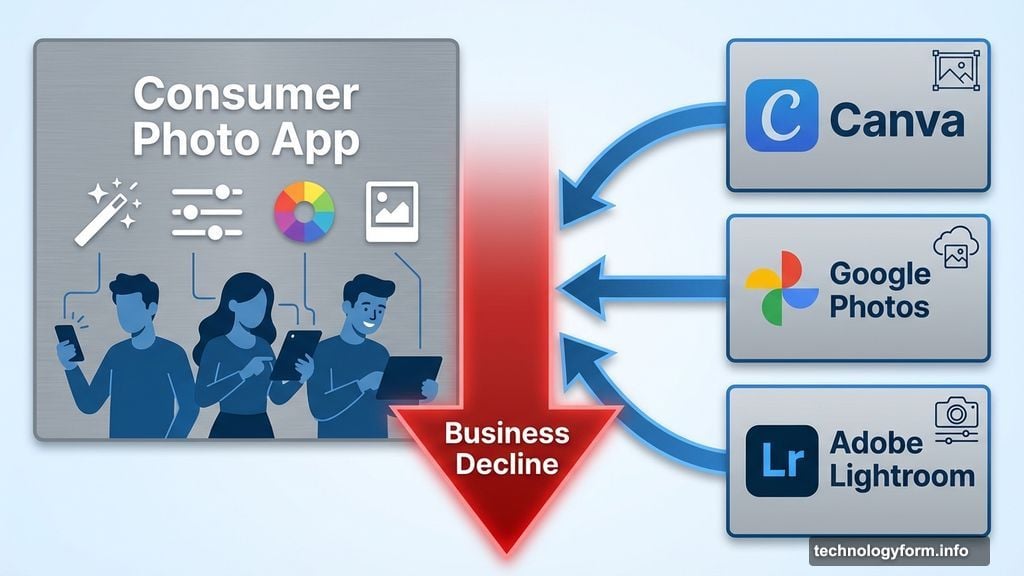
This marks a major shift for an app that millions downloaded for its signature filters and aesthetic. But the writing was on the wall. Consumer photo apps face brutal competition from giants like Canva, Google Photos, and Adobe Lightroom.
The Consumer Business Collapsed
VSCO’s consumer app just couldn’t compete anymore. Despite being installed on more U.S. devices than Reddit, according to Wittman’s memo, the business declined significantly.
The layoffs hit marketing, tech, and program management teams. Every department lost people. Wittman called the departing employees “valued members” who “contributed meaningfully” to the company’s mission.
But here’s the reality. When your core business shrinks that fast, restructuring becomes inevitable. VSCO stayed EBITDA-positive for three of the past four years. That’s impressive. Yet positive cash flow doesn’t mean growth, and growth is what investors demand.
The company tried launching new initiatives. None delivered the results VSCO needed. So management made a choice: double down on professional photographers or keep bleeding in the consumer market.
AI-Native Strategy Takes Center Stage
VSCO’s new plan revolves entirely around artificial intelligence. Wittman wrote in the memo that the company needs to “operate as an AI-native company” to succeed over the next five years.
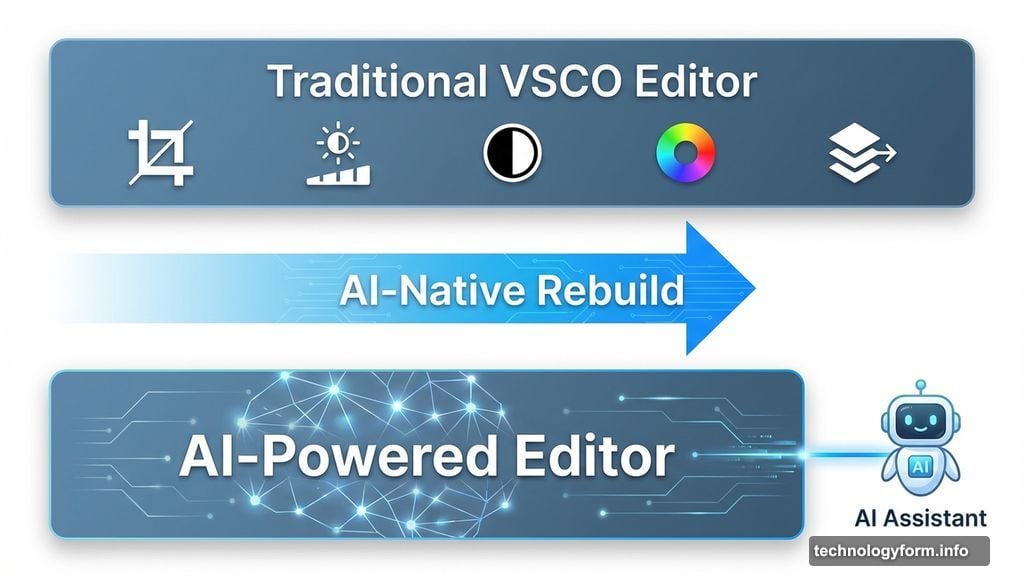
What does that mean in practice? VSCO plans to build an AI-powered editor from scratch. Not just adding AI features to existing tools. A complete redesign built around artificial intelligence.
Plus, the company wants to create an AI assistant that helps users complete tasks across all VSCO products. Think of it as a smart helper that knows photography workflows and can automate repetitive editing tasks.
This AI push makes sense. Every photo editing tool now races to add smart features. Adobe built AI directly into Lightroom. Google Photos uses AI for search and editing suggestions. Canva’s Magic Studio automates design tasks.
VSCO can’t compete with those giants on feature breadth. But focusing on professional photographers creates a defensible niche. Pro photographers need specialized tools that consumer apps don’t provide.
Professional Tools Become the Priority
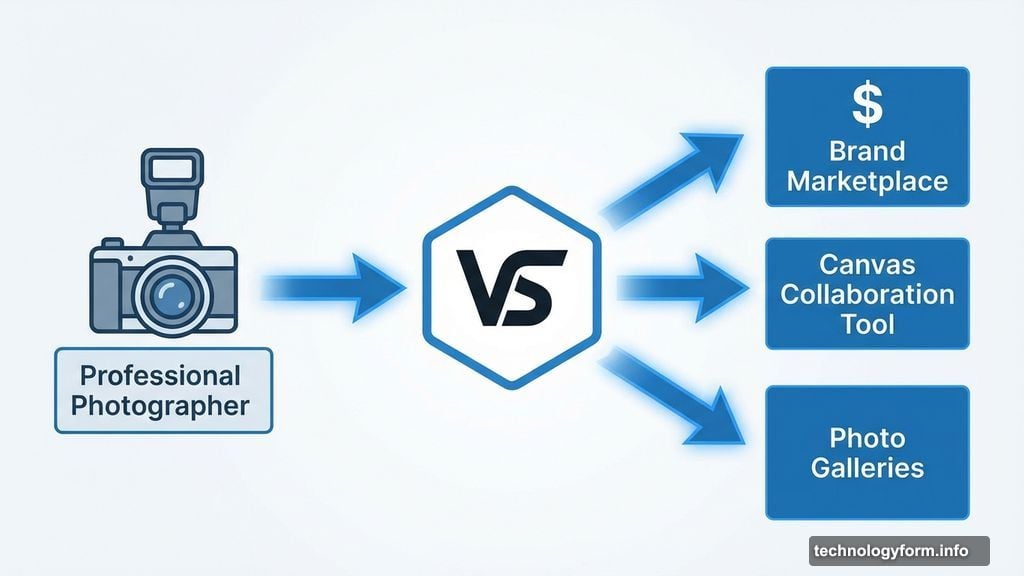
VSCO already started building its professional ecosystem before the layoffs. Last year, the company launched a marketplace connecting photographers with brands for paid projects.
This year, VSCO shipped Canvas for collaboration and new AI editing features. The company also redesigned its Photo Galleries, which let photographers showcase portfolios publicly.
These professional tools performed better than the consumer app. That’s why VSCO is betting its future on them. The strategy acknowledges a hard truth: casual users won’t pay subscription fees when free alternatives exist.
But professional photographers will pay. They need reliable tools, client collaboration features, and ways to find work. VSCO can build a sustainable business serving that audience.
The company plans to increase brand awareness among professional photographers. That means marketing dollars shift away from consumers toward a narrower, more valuable target market.
What This Means for VSCO’s Future
VSCO is making a calculated retreat. Instead of fighting giants in the consumer market, it’s carving out a professional niche.
This strategy could work. Professional creative tools often build successful businesses serving smaller audiences. Look at Capture One for photographers or DaVinci Resolve for video editors. These tools thrive by serving professionals who need advanced features.
However, VSCO faces risks. Professional photographers already use established tools like Adobe Lightroom. Convincing them to switch requires demonstrating clear advantages. The AI features need to deliver genuine productivity gains, not just flashy demos.
Plus, reducing headcount while rebuilding products creates execution challenges. The remaining team needs to ship ambitious AI features with fewer resources. That’s not easy.
VSCO’s pivot shows how brutal the consumer app market has become. Even apps with millions of installs struggle to compete when tech giants offer similar features for free. Focusing on paying professionals might be VSCO’s best shot at long-term survival.
The next year will reveal whether this strategy works. If VSCO can build genuinely useful AI tools for professional photographers, the company might find sustainable growth. If not, more layoffs could follow.