OpenAI’s Dominance Is Crumbling Fast. Here’s Why
Remember when ChatGPT terrified Google? Those days are over.
OpenAI went from industry leader to scrambling challenger in less than three years. The company that sparked an AI arms race now finds itself outpaced by competitors, bleeding money, and making risky bets that could backfire spectacularly.
Let’s examine how quickly things fell apart.
DeepSeek Blindsided Everyone
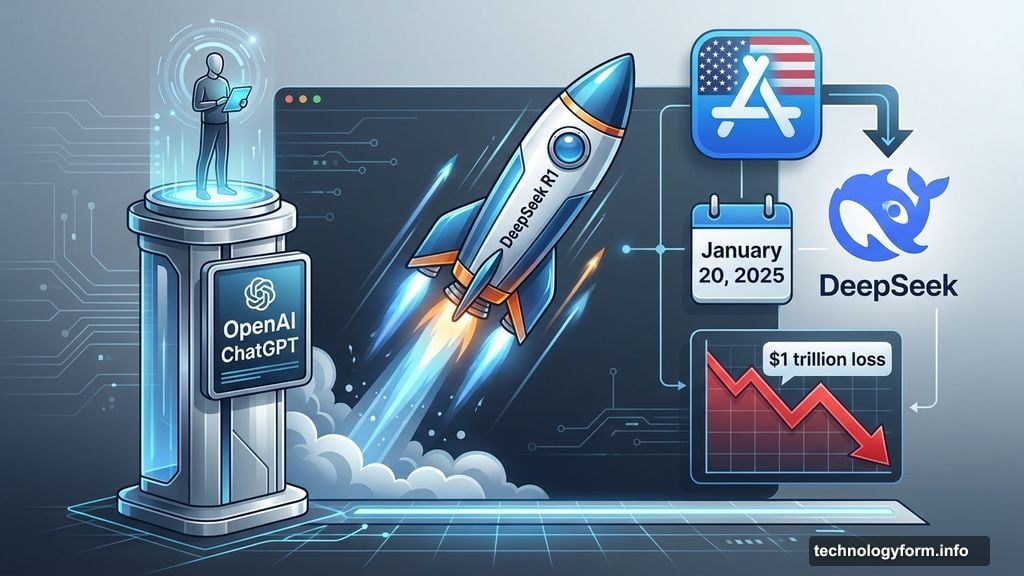
January 20, 2025 changed everything. While Sam Altman mingled with tech executives at Trump’s inauguration, China’s DeepSeek quietly dropped its R1 model.
Within a week, DeepSeek’s chatbot topped ChatGPT as the most-downloaded free app on the US App Store. The overnight success wiped out $1 trillion in stock market value. OpenAI clearly didn’t see it coming.
The company suddenly showed unprecedented urgency. In one week alone, OpenAI released both o3-mini and Deep Research. They even announced Deep Research on a Sunday evening. That’s not normal operating procedure. That’s panic.
But rushed releases don’t fix fundamental problems. And OpenAI has bigger issues than DeepSeek.
GPT-5 Disappointed Hard
OpenAI hyped GPT-5 as smarter, faster, and better than everything before it. Users got their hands on it and found something else entirely.
The chatbot made surprisingly basic mistakes. It lacked personality. Many people felt GPT-5 was actually worse than the older, simpler GPT-4o.
That’s a disaster for a company that raised billions on promises of continuous improvement. Plus, it opened the door for competitors to pounce.
Anthropic jumped at the opportunity. Microsoft, previously OpenAI’s exclusive partner, signed a deal to bring Claude models to Copilot 365. The reason? According to The Information, Microsoft found Anthropic’s Sonnet 4.0 performed better “in subtle but important ways” compared to OpenAI’s offerings.
That stings. But Google’s move hurt even more.
Google Reclaimed the Crown
November 18 marked the turning point. Google released Gemini 3 Pro and immediately leapfrogged the competition.
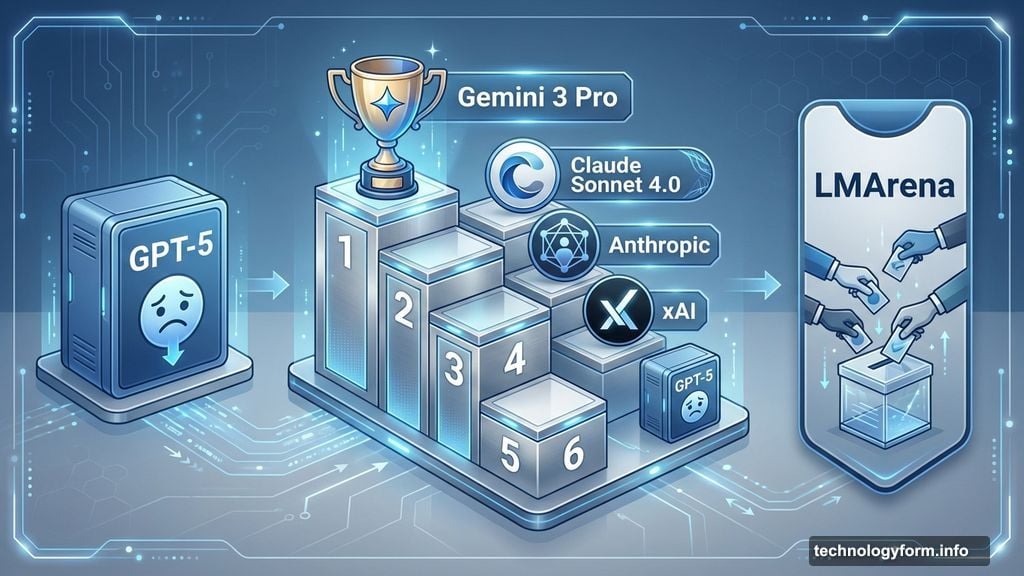
As of now, Gemini 3 Pro sits at the top of LMArena, where humans compare AI outputs and vote for the best. GPT-5? Ranked sixth overall. Behind models from Anthropic and even Elon Musk’s xAI.
Sam Altman sent a companywide “code red” memo after Gemini 3 Pro’s release, according to The Wall Street Journal. He called for temporary reassignments and delayed some products. All to catch up to Google and Anthropic.
The irony is thick. Google declared “code red” when ChatGPT launched in 2022. Now OpenAI uses the same language about Google.
The Numbers Tell a Grim Story
ChatGPT has 800 million monthly users. Sounds impressive. But Google’s Gemini app hit 650 million users by October, up from 450 million in July. That growth came largely from its Nano Banana Pro image generator.
More importantly, Google doesn’t depend on AI for survival. Gemini is one product in a massive portfolio of profitable services. Google can fund AI development with revenue from Search, YouTube, and Cloud.
OpenAI can’t say the same. The company constantly raises money just to stay operational.
According to financial documents obtained by The Journal, OpenAI needs to hit $200 billion in annual revenue by 2030 to become profitable. In November, Altman claimed the company was on track for $20 billion in annualized revenue this year.
That means OpenAI needs to 10x its revenue in five years. Good luck with that.
The Infrastructure Gamble Could Backfire
OpenAI signed over $1.4 trillion worth of infrastructure deals in recent months. The strategy? Outscale the competition through sheer computing power.
Many of these agreements look circular. Companies invest in OpenAI, which spends that money on data centers, which creates demand for more investment. It’s a cycle that only works as long as money keeps flowing in.
The risks are enormous. Investment in data centers accounted for nearly all US GDP growth in the first half of 2025. That’s not sustainable.
Moreover, this AI boom is making electronics more expensive for regular people right now. Since late October, demand for server-grade components sent consumer PC part prices skyrocketing.
RAM kits doubled and tripled in price. Some SSDs jumped 60 percent in November. Next year, smartphone memory costs are expected to climb too.
“Everyone that uses memory is facing pressure from price hikes and supply constraints,” Zhao Haijun, co-CEO of SMIC, told analysts per Bloomberg.

The Bubble Could Pop Hard
Gita Gopinath, former chief economist for the International Monetary Fund, estimated an AI bubble burst would wipe out $20 trillion in household wealth. For context, the Great Recession reduced US household net worth by $11.5 trillion.
That crisis took years to recover from. An AI crash could be worse.
The modern AI bubble might have started with ChatGPT, but it won’t necessarily end there. The field is crowded now. Google, Anthropic, Meta, and others can keep going even if OpenAI collapses.
However, OpenAI’s failure would trigger a reckoning. All those circular infrastructure deals? They’d unwind fast. Companies betting on AI’s immediate profitability would face harsh reality.
OpenAI Needs to Prove Its Worth
Novelty is gone. Technical superiority? Also gone. OpenAI no longer leads on either front.
So what’s left? Sam Altman needs to demonstrate why his company deserves unprecedented investment levels. And he needs to do it quickly.
Right now, the evidence points in the wrong direction. Competitors are building better models. Google’s ecosystem provides inherent advantages. OpenAI’s financial path to profitability looks increasingly unrealistic.
The house of cards is wobbling. One strong gust might bring it down. And when billions of dollars in circular investments are involved, the collapse won’t be quiet.
OpenAI started the modern AI race. But winning requires more than being first. It requires staying ahead. And right now, OpenAI is falling behind.