Prediction Markets Are Selling You a Fantasy, and You’re Buying It
In mid-March, conspiracy theories claimed Benjamin Netanyahu had been replaced by an AI clone. No proof existed. Yet on X, posts flooded the timeline pushing prediction markets where people could bet on whether he’d be out of office by March 31st.
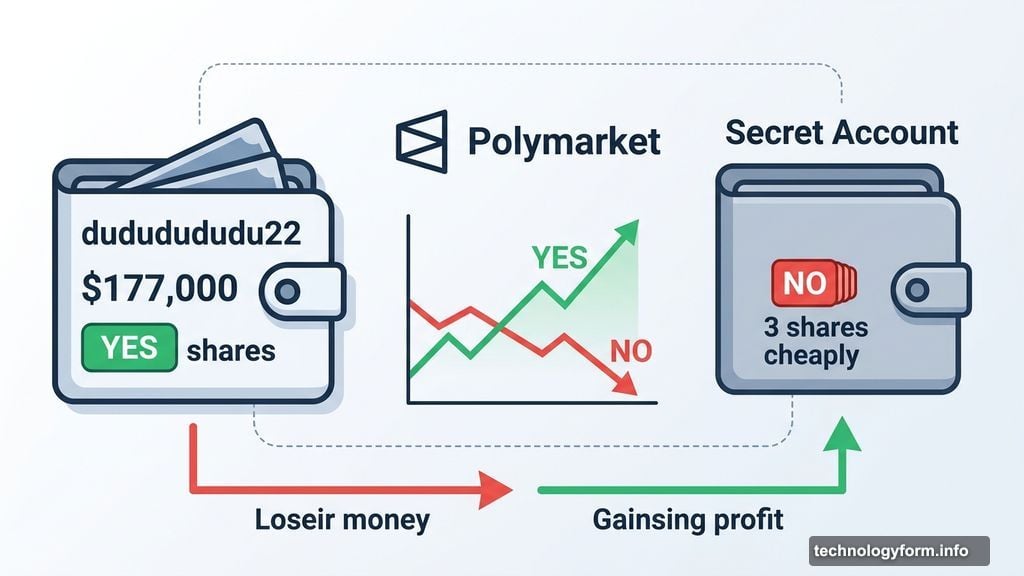
One Polymarket account grabbed everyone’s attention. The username dududududu22 had dropped more than $177,000 on “Yes” shares at 4.7 cents each. Surely, only an insider would make a bet that wild, right? “This makes him possible to get paid of $3,779,000 in case of win,” one post read, complete with a link to the profile.
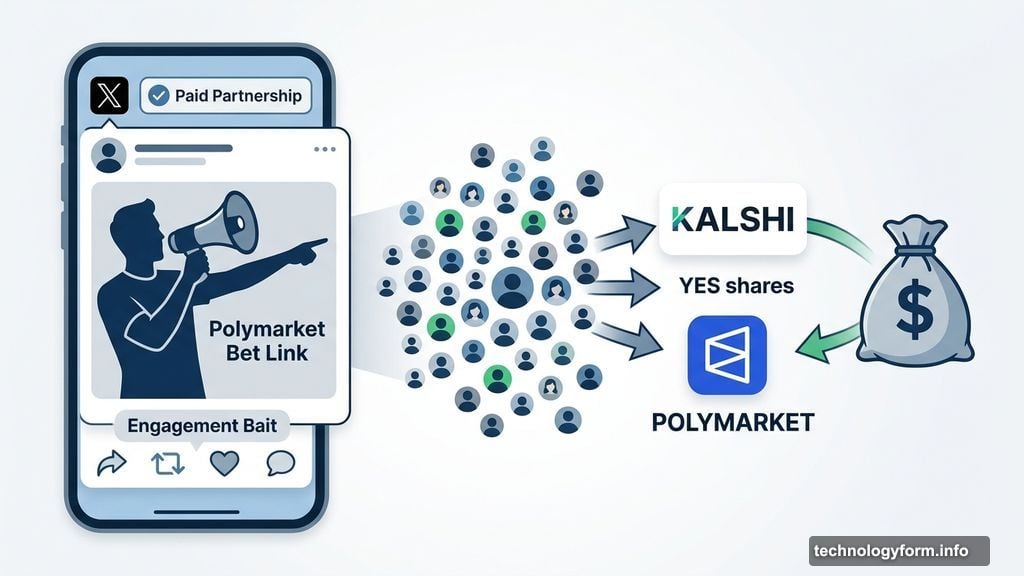
That post was marked as a paid partnership.
Netanyahu was still prime minister by March 31st. Dududududu22’s position collapsed to roughly $1,889. And somewhere out there, an influencer had already cashed their check.
Insider Trading Became Its Own Content Genre
Polymarket and rival platform Kalshi have exploded into the mainstream, generating hundreds of millions of dollars in trades on everything from March Madness to geopolitical events. With that growth came a very particular type of viral content: posts claiming to spot mysterious, possibly illegal, insider trading activity.
Unlike stocks, insider trading on prediction markets occupies a murky legal and cultural space. Suspicious bets have been genuinely tied to real events before. Massive wins preceded the US-facilitated capture of Venezuelan president Nicolás Maduro and airstrikes on Iran. In February, Kalshi confirmed it took action against an editor working for YouTuber MrBeast, who had traded on related markets. Israeli officials arrested several people, including an Air Force major, accused of trading on Polymarket using insider knowledge.

So the insider trading angle isn’t entirely fictional. But it’s also not what most of these posts are actually about.
“If there is a fresh wallet, a lot of money and then the bet comes in, it’s going viral,” says Dustin Gouker, a gambling and prediction market analyst and consultant. “The people behind that… It’s just engagement for them.”
Spoofing, Fake Insiders, and Social Media Cash
Here’s where things get genuinely fascinating, and a little dark.
Rajiv Sethi, an economist at Barnard College who has studied prediction markets for years, describes a tactic called spoofing. A trader who has no insider knowledge at all places a huge bet. It looks suspicious. Other users, convinced they’ve spotted an insider, copy the move and buy “Yes” shares. That demand drives the price of “Yes” up and pushes “No” down.
The original trader then opens a separate anonymous account and buys “No” shares cheaply. When the event doesn’t happen, those “No” shares pay out.
“The original wallet that is pretending to be an insider loses money,” Sethi explains. “But because Polymarket doesn’t have a know-your-customer requirement that it enforces, you make even more money on this other wallet, and nobody knows that these two wallets — or maybe 10 wallets — are owned by the same person.”
It gets more sophisticated still. If you broadcast a “suspected insider” account after you’ve already taken your position, and enough people copy you, the value of your shares rises. You can then sell before the event even resolves and pocket the difference.
“That way you make a profit even without taking your risk,” Sethi says.
Kalshi collects significantly more personal information from users, including social security numbers, and prohibits owning multiple accounts. Polymarket’s more anonymous, crypto-based structure makes it far more vulnerable to these tactics.
Paid Posts Are Everywhere, and Disclosure Is an Afterthought
The “suspected insider” content ecosystem runs on money. Polymarket and Kalshi have built influencer programs where users receive a company badge next to their name on X, plus access to a paid X subscription, in exchange for posting about the platforms.
Some of those accounts have had problems. Past badged accounts pretended to be journalists, shared false information, and posted antisemitic content. At one point, Kalshi gave a badge to a 15-year-old, eventually removing him from the program. A Kalshi employee reportedly messaged the teen: “Yo brother, legal team confirmed that we can’t work with minors rn. Kinda sad tbh.”
Aaron Courtney, a Kalshi user who also runs Kalshinomics, an analytics platform, told The Verge he held badges from both exchanges at different points. He lost his Kalshi badge after posting a mild joke implying Polymarket had one-upped Kalshi in a marketing stunt. He lost his Polymarket badge after saying flattering things about Kalshi.
“My thing is I like to have unbiased takes,” Courtney says. “But I have been an affiliate of both and have been dropped by both exchanges because I did not shill them, I guess.”
Kalshi officially pulled its X badges in February. But The Verge found several accounts still identifying as Kalshi “partners,” including Whale Insider, World of Statistics (five million followers), and “Walter Bloomberg,” a popular breaking news aggregator.
X only added the ability to label paid partnerships in early March 2026. Posts before that rollout often had no disclosure at all, despite Federal Trade Commission rules requiring creators to identify paid content.
The Platform’s Own Posts Aren’t Much Better
Polymarket’s official X account regularly posts misleading or outright inaccurate information, framed to look like breaking news. Posts start with “JUST IN” or “BREAKING,” mimicking the style of news media.
This isn’t accidental. Polymarket and Kalshi make money on trade volume, not outcomes. Every panic-inducing tweet has the potential to push people to move money. More trades, more fees, regardless of whether the underlying event ever happens.
Kalshi spokesperson Elisabeth Diana pushed back on the insider trading content common on X: “We ban insider trading. Polymarket does not. We want to make it clear to people that we do not promote insider trading.” Polymarket didn’t respond to The Verge’s request for comment but recently introduced restrictions on using information that would “violate a preexisting duty or obligation of trust.”
Meanwhile, both platforms have pushed aggressively into mainstream media. The Associated Press licensed its election data to Kalshi. Substack and Polymarket partnered to inject prediction market data into popular newsletters. Writers outside that early testing group have received separate offers from exchanges to mention and cite prediction market data in their writing.
“Nobody was talking about them a year ago,” Gouker says. “Now they are in media organizations. They are cited all the time. They’re very good at getting people to talk about them.”
The Wild West Has a Long History
Sethi traces the current moment back to a 2003 Department of Defense project called the Policy Analysis Market (PAM). The program envisioned a platform where experts could bet on Middle East events to improve forecasting. Congress killed it after officials warned it could let terrorists bet on attacks and then carry them out — insider trading at a fatal, anonymous scale.
“What we are seeing now is his vision come to life through the crypto-based Polymarket, especially,” Sethi says. “It’s basically the Wild West.”
Tools like Insider Finder and 0xinsider now try to identify high-performing accounts so users can copy their trades. The goal isn’t to stop cheating. It’s to profit from it.
The “suspected military insider” who won $90,000 betting correctly on Maduro’s capture and US airstrikes on Iran? That account eventually sold all its positions on US forces entering Iran before the deadline, cashing out when prices were favorable. The Verge couldn’t confirm whether insider knowledge was involved. What’s clear is that person made just under $10,000.
Prediction markets launched a late-March referral program for users who’d traded at least $10,000, letting them earn kickbacks when new users join. Most of those new users will likely lose money. Polymarket gets paid either way.
Who’s Actually Winning Here
The “wisdom of the crowd” pitch sounds compelling. Prices reflect collective belief. Markets aggregate information better than pundits. Sometimes that’s even true.
But the crowd can also be manipulated by a paid influencer posting “BREAKING” before a blatant conspiracy theory. It can be steered by a spoofer pretending to have insider knowledge. It can be shaped by exchanges funding an army of accounts to keep trading activity high and social feeds noisy.
Courtney, who filters through prediction market content daily, puts it bluntly: “There are very intelligent people in the prediction market community, but I would say at least two-thirds of the content is kind of crap. You have to filter through the signal and noise, and a lot of it is just hype, because that gets engagement.”
The question isn’t whether dududududu22 was an insider or a troll or someone who genuinely believed a debunked conspiracy theory. The real question is why so many people found the story compelling enough to act on it — and who benefited from that happening.
“FOUND THIS SUSPICIOUS WALLET DOING IT AGAIN,” one X post proclaimed recently, linking a fresh set of Polymarket trades on Iran and oil prices. “What does he know that we don’t?” a follow-up post asked.
It was also marked as a paid partnership.