Disney Just Sold Mickey Mouse to AI. Here’s What That Actually Means
OpenAI can now generate Disney characters in ChatGPT and Sora. That’s a massive shift for how we’ll interact with beloved franchises.
Disney wasted zero time on its AI promises. CEO Bob Iger said AI-generated content would hit Disney+. Now it’s happening. Plus, the company just signed a three-year deal with OpenAI that changes everything about fan-created content.
This isn’t just another licensing agreement. It’s Disney betting big that AI-generated videos belong on its streaming platform. And frankly, that’s either brilliant or terrifying depending on your perspective.
What Disney Actually Licensed
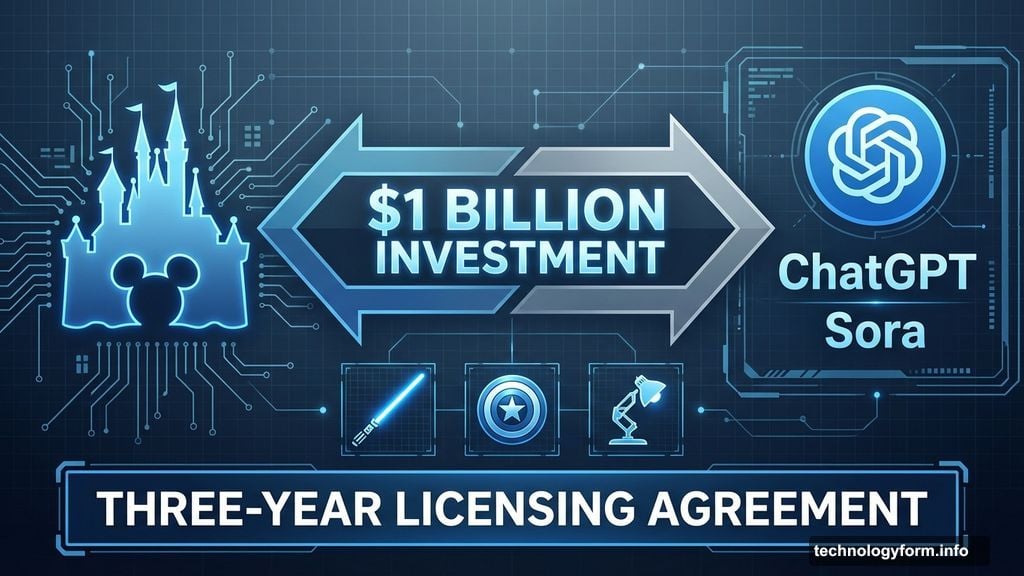
OpenAI users can now prompt ChatGPT to create images using Disney intellectual property. The deal covers more than 200 characters from Star Wars, Marvel, and Pixar universes.
Want to generate an image of Darth Vader battling Black Panther? You’ll be able to do that starting early 2026. Need Captain America in a specific costume for your fan project? ChatGPT Images will handle it.
But here’s the crucial limitation. The agreement excludes voices and “talent likenesses.” So you can’t generate Scarlett Johansson as Black Widow. Instead, you’ll get animated and illustrated versions only.
That restriction matters more than it seems. Disney clearly wants to protect its actors while monetizing its animated intellectual property. Smart move, actually. Avoids the messy legal battles other studios face over AI-generated actor likenesses.
Sora Changes the Fan Content Game
OpenAI’s video generation tool Sora gets access to the same character library. Users can create short video clips featuring Disney characters in custom scenarios.
Think about what that enables. Fan films just became dramatically easier to produce. Previously, creating animation required specialized skills and expensive software. Now? Type a prompt, wait a few minutes, get your Disney-character video.
Disney plans to stream “curated selections” of these fan videos on Disney+. That’s wild. The company that aggressively protected its intellectual property for decades now wants to showcase fan-made AI content on its premium streaming service.
Of course, “curated selections” means Disney controls what appears. They’re not opening the floodgates to everything. But even selective showcasing represents a massive philosophical shift.
The Money Behind the Deal
Disney isn’t just licensing characters. The company invested $1 billion in OpenAI with options to purchase additional equity later.
Plus, Disney becomes an OpenAI customer. They’ll use OpenAI’s APIs to build new products, tools, and experiences. Translation: expect AI features throughout Disney’s ecosystem soon.
This three-year agreement gives both companies significant runway. OpenAI recently restructured as a traditional profit-seeking corporation. They’re positioning for a potential IPO within the next year. Landing Disney as both an investor and customer strengthens that story considerably.
For Disney, the investment hedges their bets. If AI-generated content becomes the next big thing in entertainment, they’ve positioned themselves as early adopters rather than late followers.
What You Can’t Do With This
The restrictions matter as much as the permissions. No talent likenesses means no photorealistic Harrison Ford as Han Solo. No Scarlett Johansson as Black Widow. Only illustrated and animated versions.
That limitation protects actors from unauthorized AI reproductions. Good. The alternative creates nightmare scenarios where anyone can generate videos starring actual performers without consent or compensation.
Disney also maintains control over what fan content gets showcased. Your Darth Vader comedy sketch might get generated. But whether it appears on Disney+ depends entirely on Disney’s approval.
And obviously, this doesn’t mean OpenAI can freely commercialize Disney content. Users can create for personal projects and fan content. Commercial use remains tightly controlled by Disney’s existing licensing framework.
The Bigger Picture Nobody’s Discussing
Disney just validated AI-generated content as legitimate entertainment. That matters enormously for the entire industry.
Other studios watch Disney’s moves carefully. If this partnership succeeds, expect similar deals between major entertainment companies and AI platforms. If it flops, everyone retreats to traditional production methods.
Sam Altman called Disney “the global gold standard for storytelling.” True. But more importantly, Disney carries cultural weight. When they embrace a technology, it signals mainstream acceptance rather than fringe experimentation.
However, this also accelerates the timeline for traditional animators and VFX artists facing AI disruption. Disney essentially said “we believe AI generation has a place in our creative pipeline.” That’s not comforting if your job involves the skills AI replicates.
Why Early 2026 Launch Date Matters
Users won’t get access until early 2026. That’s over a year away. Why the delay?
Probably technical refinement. Sora still struggles with consistency and quality. Disney won’t accept subpar character reproductions damaging their brand. So OpenAI gets time to improve their models specifically for Disney content.
Also gives Disney time to build infrastructure. Curating fan content for Disney+ requires systems, review processes, and legal frameworks. None of that exists yet.
Plus, the delay allows both companies to monitor public reaction. If backlash intensifies, they can adjust strategy before launch. If enthusiasm builds, they can expand the program faster.
What This Means for Fan Creators
Fan content just became dramatically more accessible. Previously, creating quality animations with Disney characters required professional-grade skills. Now it requires prompting ability.
That democratizes fan creation. More people can participate. But it also floods the space with content. Standing out becomes harder when everyone can generate Disney character videos.
Quality matters more than ever. Just because you can generate a video doesn’t mean it tells a compelling story. The best fan creators will combine AI tools with genuine storytelling ability and creative vision.
And Disney’s curation creates a new goal for fan creators. Getting your Sora-generated video on Disney+ becomes a legitimate achievement. That’s unprecedented access to an official platform for fan work.
The Real Test Comes Later
This deal succeeds or fails based on what actually gets created. If users generate amazing fan content that delights audiences, Disney looks brilliant. If the output is mediocre or controversial, they look desperate.
OpenAI benefits regardless. Landing Disney validates their technology for entertainment applications. Other studios and production companies will take meetings. Investment flows easier with Disney’s endorsement.
But for Disney, the stakes are higher. They’re putting their most valuable intellectual property into AI generation tools. That IP took decades to build. One viral controversy involving misused AI-generated Disney content could damage brands worth billions.
So watch what happens in early 2026. The content quality, user adoption, and public reaction will determine whether other entertainment giants follow Disney’s lead or learn from their mistakes.
Disney just made the biggest bet yet on AI-generated entertainment. Now we’ll see if audiences actually want it.