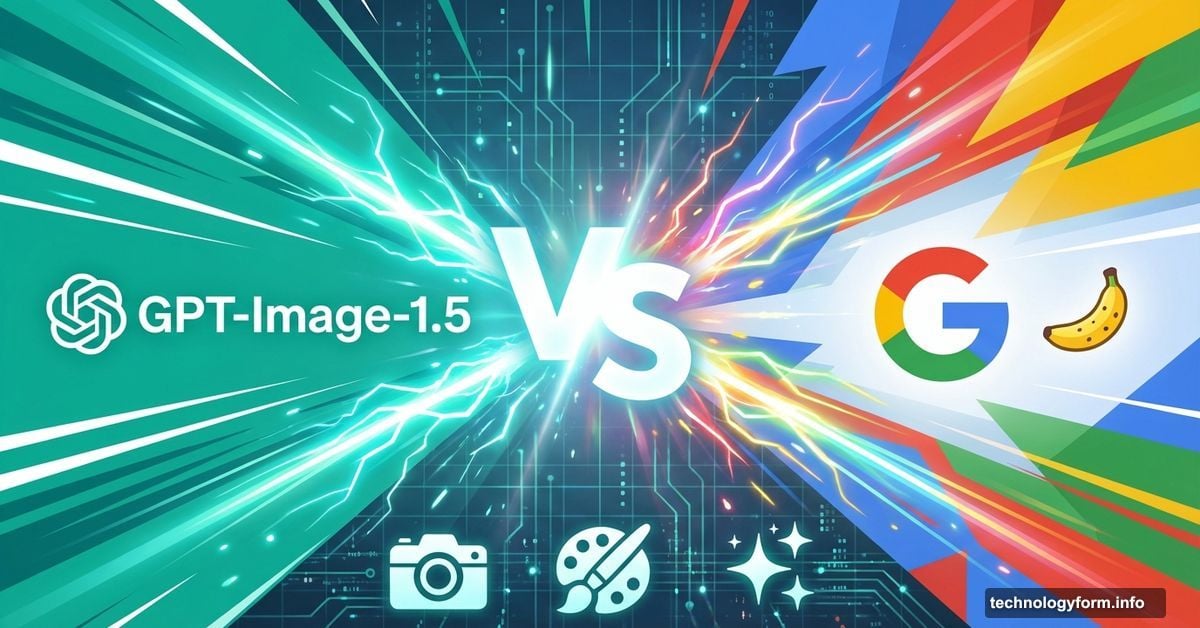
OpenAI Drops GPT-Image-1.5 to Combat Google’s Nano Banana Dominance
OpenAI just launched GPT-Image-1.5, its newest AI image generator. The timing isn’t subtle.
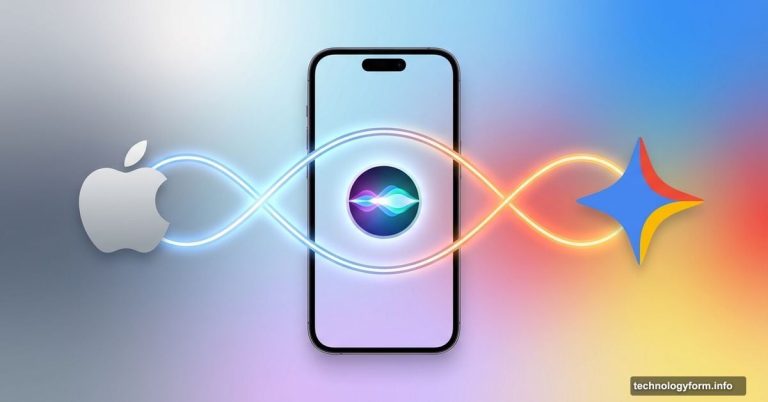
Google’s Nano Banana Pro went viral last month with hyper-realistic images and readable text. OpenAI clearly felt the pressure. So they responded with a model that’s four times faster and way better at following instructions.
But speed improvements alone won’t win this race. The real question is whether OpenAI can match Google’s recent leap in image quality while addressing mounting copyright concerns.
A Dedicated Space for Image Creation
ChatGPT now has a sidebar specifically for images. No more awkward conversations with a chatbot to generate pictures.
The new interface includes preset styles and trending designs. Plus, you get actual editing tools instead of repeatedly reprompting until something works.
“The chat interface wasn’t originally designed for this,” wrote Fidji Simo, OpenAI’s CEO of applications. She’s right. Creating images in a chat window always felt clunky.
Now you can add objects, change styles, try on clothing, and remove elements. These are basic features that should have existed from day one. Better late than never.
Text Generation Still Struggles
OpenAI claims GPT-Image-1.5 finally generates legible text in images. We’ve heard this before.
The first model promised readable text but failed spectacularly. Test images from the new version look better. However, real-world testing will reveal whether this improvement actually holds up.
Text in AI images remains notoriously difficult. Even Google’s Nano Banana Pro occasionally produces garbled letters. So OpenAI’s claims deserve healthy skepticism until users can verify the results themselves.
Speed Boost Matters More Than You Think
Four times faster processing changes everything. The original model took forever compared to competitors like Midjourney and Stable Diffusion.
Slow generation kills creativity. You lose momentum waiting for each iteration. Faster speeds mean more experimentation and better final results.
This speed improvement alone might bring users back who abandoned ChatGPT images for quicker alternatives. Speed isn’t sexy, but it’s essential for practical use.
Disney Characters Coming in 2026
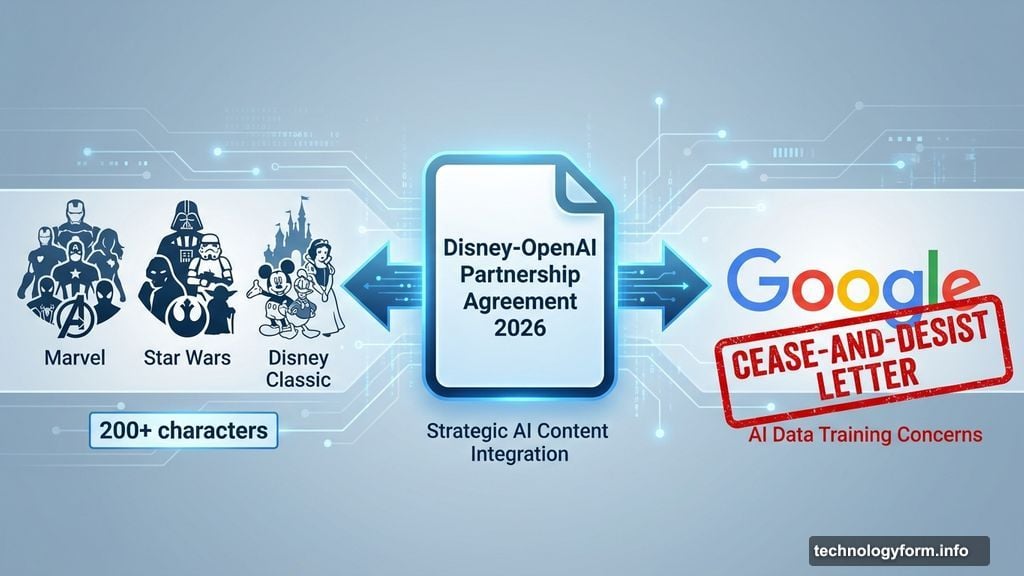
OpenAI struck a deal with Disney last week. More than 200 iconic characters will arrive in early 2026.
You’ll be able to generate Marvel superheroes, Star Wars characters, and classic Disney figures. That’s a massive library of recognizable IP that competitors can’t touch legally.
But here’s the irony. Disney served Google a cease-and-desist letter one day before announcing this OpenAI partnership. The message is clear: License our characters or face legal action.
This move highlights how major copyright holders are choosing sides in the AI wars. Some strike deals. Others file lawsuits. Disney is doing both strategically.
The Google Problem OpenAI Can’t Ignore
OpenAI issued an internal “code red” after Google released Gemini 3 and Nano Banana Pro. That panic was justified.
Google demonstrated AI capabilities that made OpenAI’s offerings look dated. Nano Banana Pro creates images so realistic they’re genuinely concerning for misinformation risks.
Last week’s GPT-5.2 release was another attempt to close the gap. Now GPT-Image-1.5 follows the same defensive strategy. OpenAI is reacting rather than leading.
That’s a dangerous position for a company that defined the public AI race. Google has deeper resources and better infrastructure. Playing catch-up against those advantages rarely ends well.
Copyright Battles Are Just Beginning
The “Studio Ghibli” trend from the first image model angered many artists. Hayao Miyazaki called AI tools “an insult to life itself.”
He wasn’t alone. Authors, writers, actors, and visual artists have vocally opposed AI tools trained on their work without permission or compensation.
OpenAI faces multiple lawsuits, including one from CNET’s parent company Ziff Davis. Reddit and Encyclopedia Britannica filed suits this year too. The legal landscape is hostile and getting worse.
Meanwhile, OpenAI is simultaneously signing licensing deals with publishers like Axel Springer and Future. This two-track approach might work. Or it might just delay inevitable regulatory crackdowns.
The Sora video generator inflamed these debates further this fall. Each new release brings renewed criticism about using human creativity to train AI without consent or fair payment.
The Real Cost of the AI Arms Race
OpenAI and Google are locked in a dangerous spiral. Each company drops new models to outdo the other. Quality control and ethical considerations get rushed.
Faster models are great. Better text generation helps. But neither company has solved the fundamental problem of using copyrighted material without clear legal authority.
Disney’s split approach perfectly captures the confusion. They’re suing Google while partnering with OpenAI. That contradiction reveals how uncertain major copyright holders are about the right strategy.
Artists and creators deserve fair compensation when AI uses their work. So far, most AI companies have prioritized speed and features over addressing that concern properly.
The technology is advancing faster than the legal and ethical frameworks needed to govern it responsibly. That’s a recipe for problems that speed improvements and feature additions can’t fix.