Apple’s Gemini-Powered Siri Arrives Next Month. Here’s What Changed
Apple just set a date for Siri’s biggest upgrade ever. February marks the moment when Google’s AI finally powers your iPhone assistant.
This isn’t a minor update. Apple ditched years of going solo to partner with its biggest rival. So what forced this dramatic shift? And what does Gemini actually bring to Siri that Apple couldn’t build alone?
Let’s break down why this matters and what you’ll actually get.
Google Won the AI Race Apple Couldn’t Finish
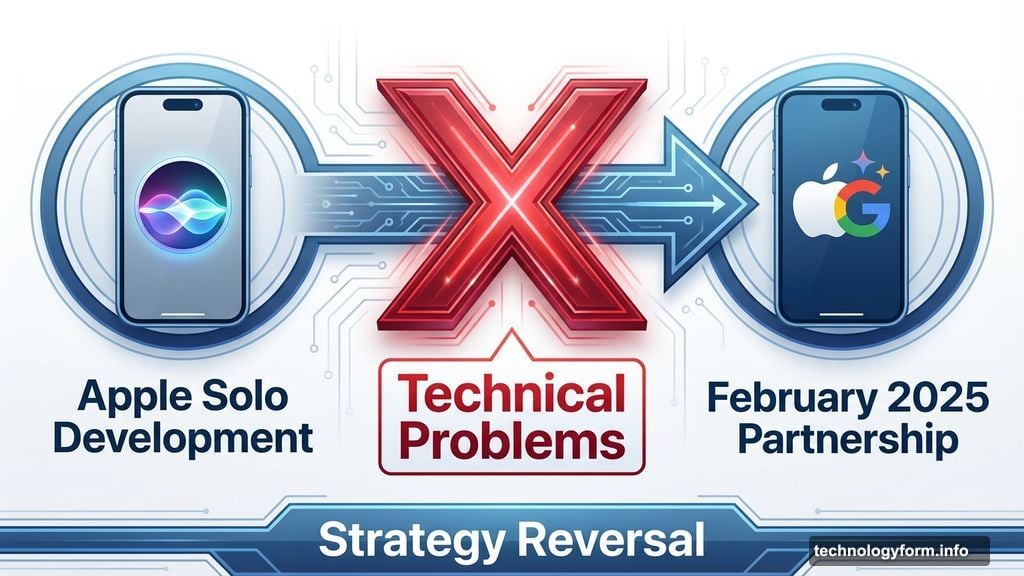
Apple promised a smarter Siri back at WWDC 2024. That was over 18 months ago. But technical problems kept pushing the launch back.
Meanwhile, ChatGPT and Google’s Gemini kept improving. Users got frustrated. Siri couldn’t handle basic requests that rival assistants solved easily. Apple’s internal AI development clearly hit walls it couldn’t break through fast enough.
So Apple made a call. Instead of delaying further, they partnered with Google. The deal gives Siri access to Gemini’s language models and reasoning capabilities. It’s a massive strategy reversal for a company that usually builds everything in-house.
What Gemini Actually Adds to Siri
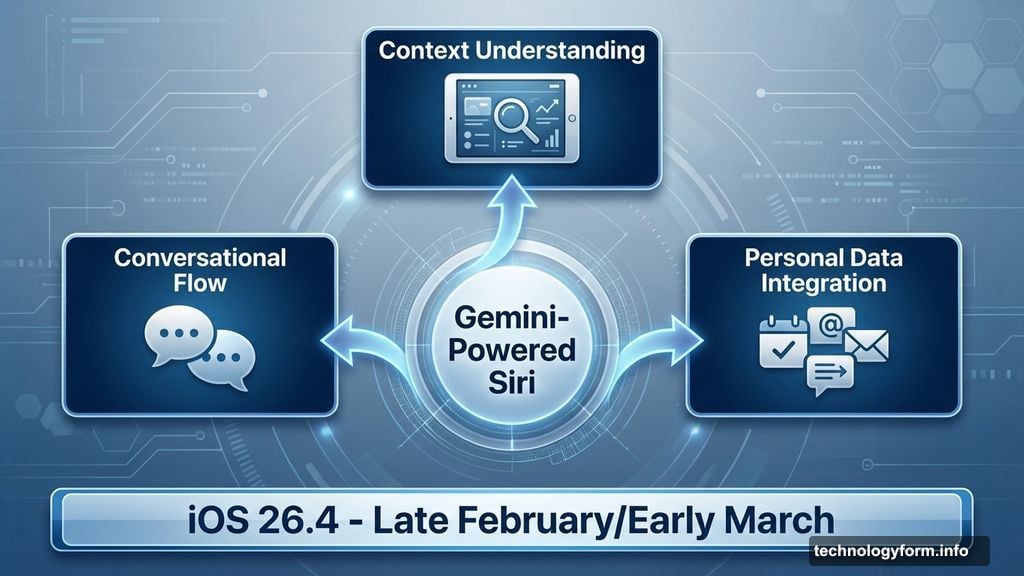
The new Siri should finally understand context. That means recognizing what’s on your screen and using that information to help you. Previous versions struggled with this basic task.
Plus, Gemini brings better conversational flow. Current Siri feels robotic. You ask a question, get an answer, then start over. The upgraded version should maintain context across multiple questions, more like talking to a person.
Personal data integration improves too. Siri will pull from your messages, emails, and calendar to give relevant responses. For instance, ask “When am I meeting Sarah?” and it’ll check your calendar automatically instead of making you search manually.
Bloomberg’s Mark Gurman, who tracks Apple rumors accurately, reports these features arrive with iOS 26.4 in late February or early March. Beta testing starts soon for developers.
Apple Bought Time, Not a Solution
Here’s the uncomfortable truth. This partnership solves Apple’s immediate problem but creates long-term questions.
Relying on Google’s AI means Apple doesn’t control the core technology powering Siri. That goes against everything Apple stands for. They’ve always valued owning their software stack completely. Now they’re dependent on a competitor for one of their most visible features.
Moreover, Apple’s already planning to replace this solution. Gurman says an even bigger Siri overhaul comes later in 2026, possibly at WWDC in June. That version might use Apple’s own AI models more heavily as part of iOS 27.
So Gemini-powered Siri is a stopgap. Apple needed something now while they finish building what they actually want. Users get a better assistant temporarily. But Apple’s paying Google and accepting outside control they’d rather avoid.
Privacy Gets Murkier
Apple built its brand on privacy. Google built its business on data collection. Those philosophies clash fundamentally.
Apple promises user data stays protected even with Gemini integration. Processing happens on-device when possible. Cloud requests get anonymized. But Google’s AI models power the intelligence behind the scenes.
How much information flows between Apple and Google? Apple hasn’t disclosed specifics. Users concerned about privacy face difficult questions. Do you trust Apple to protect your data while using Google’s AI? Or does the partnership compromise Apple’s privacy claims?
These concerns won’t stop most users. But privacy-focused customers might hesitate before using the upgraded Siri extensively.
The Real Winner Is Google
Google just gained incredible leverage. Millions of iPhone users will interact with Gemini daily through Siri without realizing it. That’s massive exposure for Google’s AI platform.
Plus, Google gets paid. Apple compensates Google for Gemini access under their multi-year partnership announced earlier this month. The exact financial terms remain private, but deals this size typically involve substantial payments.
Apple gets a functional assistant faster than building alone. Google gets distribution, revenue, and validation that their AI beats Apple’s internal efforts. That’s a win Google can leverage when marketing Gemini to other partners.
Should You Wait for February’s Update?
If you use Siri regularly, yes. The upgrade should finally make Apple’s assistant useful for complex tasks. Current Siri frustrates more than it helps for anything beyond basic commands.
But don’t expect magic. This is still Siri with better AI underneath. The interface remains similar. Voice recognition stays the same. Gemini improves understanding and response quality, not the entire user experience.
Also, remember this is version one of the partnership. Early releases typically have bugs and limitations. Waiting a few weeks after launch might save frustration while Apple patches initial problems.
The bigger question is whether to wait for the second overhaul later in 2026. If Apple delivers a truly conversational assistant with iOS 27, that might be worth holding out for. But we’re talking about waiting potentially six more months beyond February.
Apple Finally Admitted It Needed Help
That’s the real story here. Apple, notoriously secretive and self-reliant, partnered with Google because they couldn’t solve this problem alone fast enough.
It’s smart business. Users needed a better Siri yesterday. Apple bought time to finish their long-term vision while giving customers something improved right now. But it also reveals how far behind Apple fell in the AI race.
Competitors moved faster. Apple’s internal development couldn’t keep pace. So they swallowed their pride and made a deal that keeps them competitive in the short term.
Whether that strategy works long-term depends entirely on what Apple delivers with iOS 27 later this year. If they nail it, the Gemini partnership becomes a footnote. If they don’t, Apple might depend on Google’s AI longer than they’d like to admit.