ChatGPT Started Guessing Your Age. Here’s Why That Matters
OpenAI just flipped a switch that affects 800 million weekly users. ChatGPT now predicts whether you’re under 18 based on how you use the platform.
The age-prediction system rolled out Monday across consumer accounts. It’s designed to shield younger users from sensitive content. But the technology raises questions about accuracy and privacy that nobody’s fully answered yet.
Here’s what actually changed and what it means for your ChatGPT experience.
How ChatGPT Predicts Your Age
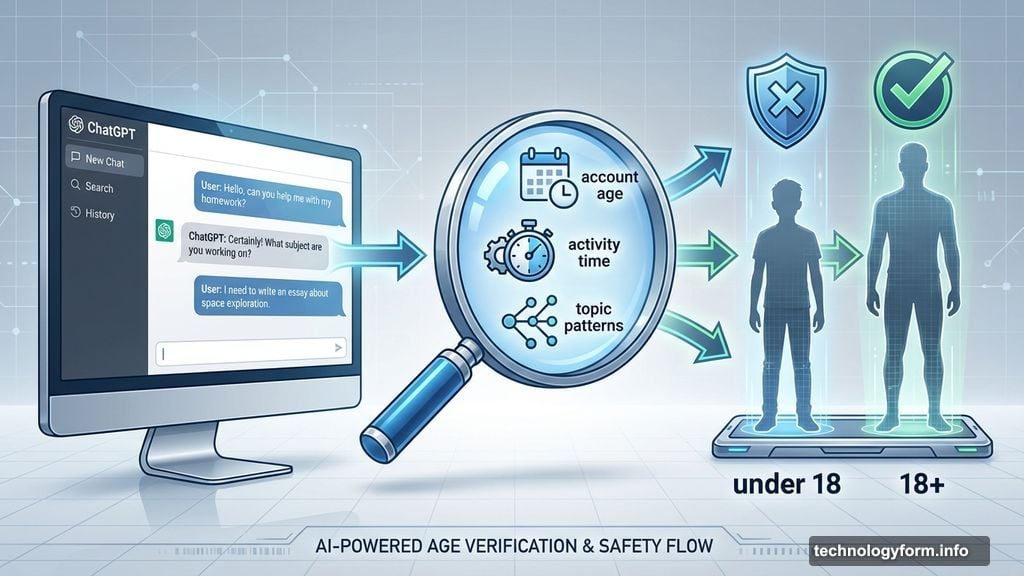
The system analyzes behavioral patterns to estimate age. No, it doesn’t scan your face or ask for your birthday upfront.
Instead, ChatGPT examines usage signals. How long has your account existed? When are you most active? What topics do you explore? The AI processes these patterns to guess whether you’re a minor.
OpenAI says this approach works. But they haven’t shared accuracy numbers yet. That’s a problem when the system determines what content you can access.
Plus, the system can get it wrong. If ChatGPT incorrectly flags you as underage, you’ll hit content restrictions you didn’t expect. That leads us to the verification process.
The Verification Process Uses Your Face and ID
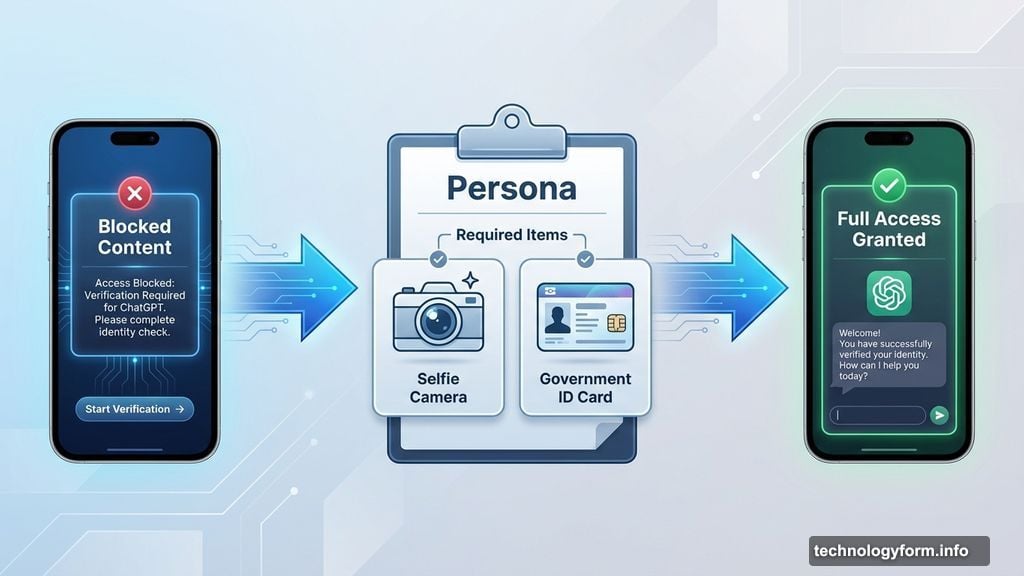
Got tagged as underage by mistake? You’ll need to prove your age with identity verification service Persona.
This isn’t a simple birthday confirmation. Persona requires two things: a live selfie and a government-issued ID. The system scans your face and matches it to your ID photo.
Modern facial recognition technology performs well. According to Jake Parker from the Security Industry Association, top algorithms achieve 99.5% accuracy for identity verification. Age estimation tools hit 95% accuracy or better.
Still, handing over biometric data and government IDs to access a chatbot feels invasive. Not everyone will be comfortable with that trade-off, even if the technology works as advertised.
What Content Gets Blocked for Younger Users
OpenAI set up specific guardrails for accounts identified as belonging to minors. The filters target several content categories.
Graphic violence or gore gets blocked. So do depictions of self-harm. Viral challenges that promote risky behavior won’t appear. The system also filters sexual, romantic or violent roleplaying scenarios.
Moreover, ChatGPT will restrict content promoting extreme beauty standards, unhealthy dieting or body shaming. These restrictions aim to protect younger users from potentially harmful material.
But here’s the catch. Content filtering isn’t perfect. Some harmful content might slip through. Some harmless content might get blocked. The system makes mistakes both ways.
Why This Change Happened Now
OpenAI faces mounting pressure from multiple directions. Lawsuits and investigations connected ChatGPT to teenage deaths involving chatbot interactions.
That created a crisis. The company needed to show it takes youth safety seriously. So they accelerated plans for age-based restrictions announced last September.
This isn’t just OpenAI’s problem. Age verification became a trend across online platforms. Roblox instituted mandatory age checks earlier this month. Australia banned social media for children under 16. US states are proposing similar laws.
Technology companies now rush to implement age controls before regulators force their hand. ChatGPT’s move fits that pattern. Better to act proactively than face legislation that might impose harsher requirements.
The Technology Has Real Limitations
Age prediction and content filtering sound protective. But they’re not complete solutions to keeping young people safe online.
Kristine Gloria from Young Futures, which works with teenagers on entrepreneurship programs, says strict monitoring has limits. “We know that generative AI presents real challenges, and families need support in navigating them,” she told CNET.
Gloria argues that platforms need safety-by-design, not just technical quick-fixes. True protection requires transparency, accountability and commitment to digital literacy.
She’s right. Technology alone won’t solve youth safety. Young people need education about AI risks. Families need tools to have conversations about online interactions. Platforms need to prioritize wellbeing alongside engagement.
Age prediction and content filters are band-aids. They might help in the short term. But comprehensive youth protection requires much deeper changes to how AI platforms operate.
What Users Should Know Going Forward
This rollout affects how millions interact with ChatGPT. If you’re over 18 but get flagged as underage, expect frustration. The verification process takes time and requires sharing sensitive data.
For parents, these restrictions might provide some peace of mind. But don’t assume the filters catch everything. Talk to your kids about what they’re doing with AI tools. Technology can’t replace those conversations.
OpenAI hasn’t shared detailed accuracy metrics for age prediction yet. How many false positives will occur? How often will minors slip through? We don’t have answers.
Moreover, the long-term implications remain unclear. Will other AI platforms follow suit? Will age verification become standard across more online services? Probably yes to both.
The direction seems set. Expect more platforms to implement age checks and content restrictions. Whether that actually makes young people safer online is the question nobody can fully answer yet.