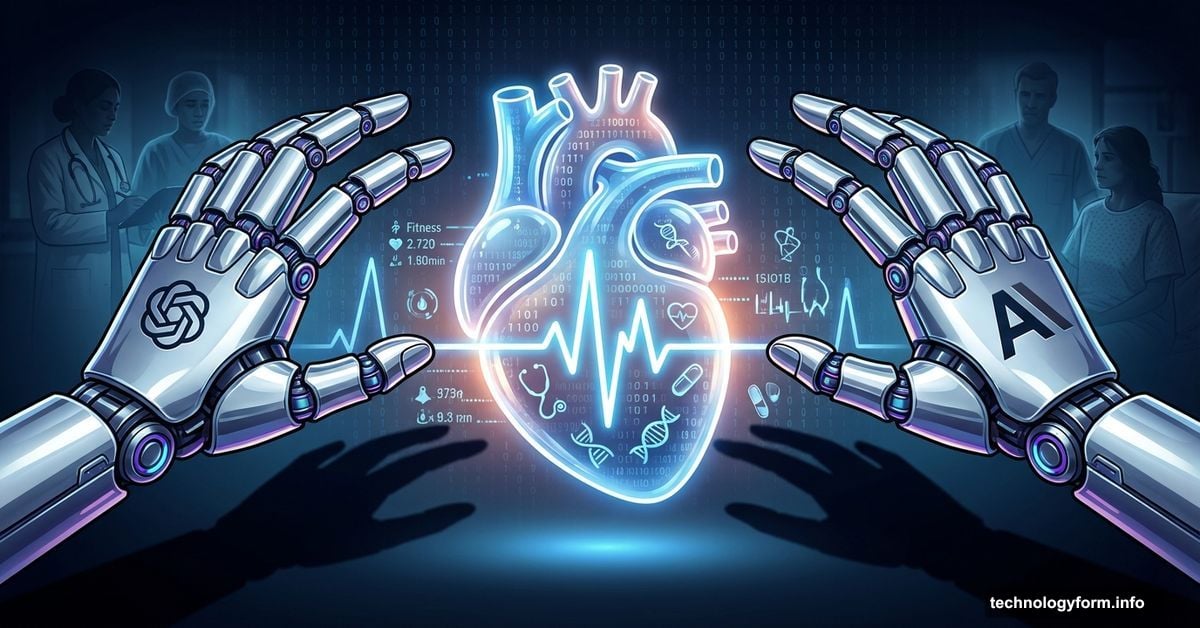
Two AI Giants Chase Healthcare. Your Medical Data Is the Prize
OpenAI dropped ChatGPT Health last week. Anthropic just fired back with Claude for Healthcare. Both promise to revolutionize medicine using your smartwatch data.
But here’s what nobody’s saying out loud. These companies are racing to own the most intimate data you produce. Your heart rate. Your sleep patterns. Your symptoms. The questions you’re too embarrassed to ask your doctor.
Plus, 230 million people already ask ChatGPT about their health every week. That’s not a use case anymore. That’s a full-blown medical consultation platform masquerading as a chatbot.
What Anthropic Actually Built
Claude for Healthcare isn’t just another chatbot that tells you to “see a real doctor.” It’s plugged directly into the medical system’s databases.
Anthropic connected Claude to the Centers for Medicare and Medicaid Services (CMS) Coverage Database. It tapped into ICD-10, the massive coding system doctors use to classify diseases. It linked to PubMed, where medical research lives. And it added the National Provider Identifier database.
That means Claude can pull real medical information. Not just general advice scraped from WebMD. Actual insurance coverage details. Current disease classifications. Recent research papers.
OpenAI’s ChatGPT Health doesn’t have these connectors yet. Right now, it’s mostly focused on patient conversations. Claude went straight for the administrative infrastructure.
The Prior Authorization Problem
Here’s where things get interesting. Doctors hate prior authorization.
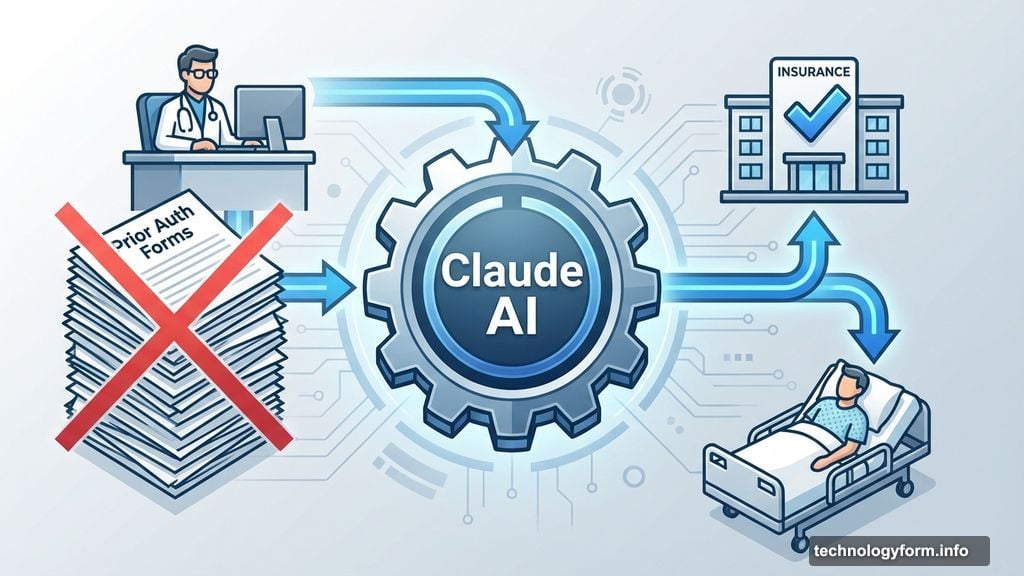
It’s the process where your doctor must prove to your insurance company that you actually need a treatment. They submit forms. Wait for approval. Often get rejected. Then fight the rejection. All while you wait for care.
Anthropic says Claude can handle this automatically. The AI reads your medical records. Checks insurance databases. Generates the paperwork. Submits everything. No doctor involvement needed.
Mike Krieger, Anthropic’s Chief Product Officer, pointed out that clinicians spend more time on paperwork than seeing patients. Prior authorization is pure administrative busywork. It doesn’t require medical expertise. Just patience and database access.
So automating it makes sense. Except for one thing.
The Hallucination Problem Everyone’s Ignoring
Large language models hallucinate. They make things up. Confidently state false information. Invent citations that don’t exist.
That’s fine when ChatGPT writes your birthday party invitation. It’s terrifying when Claude fills out medical forms that determine if you get cancer treatment.
Both Anthropic and OpenAI acknowledge this risk. They warn users to “see healthcare professionals for more reliable, tailored guidance.” That disclaimer does absolutely nothing to stop people from taking AI medical advice as gospel.
Remember, 230 million people already discuss health with ChatGPT weekly. Most probably don’t verify every answer with their doctor. Why would they? The AI sounds confident. It cites studies. It uses medical terminology correctly.
But confidence isn’t accuracy. And one hallucinated drug interaction could kill someone.
Why Insurance Companies Will Love This
Think about the incentives here. Insurance companies make money by denying claims.
Now imagine an AI that can scan prior authorization requests in milliseconds. It finds reasons to reject. It flags potential loopholes. It automates denials at scale.
Sure, Anthropic frames Claude as helping doctors. But who’s really going to deploy this technology? Doctors working solo? Or massive insurance companies with billions in profit to protect?
The same tool that speeds up approvals can speed up rejections. And insurance companies have far more money to spend on AI integration than individual medical practices.
What OpenAI Is Actually Doing
ChatGPT Health looks simpler on the surface. Sync your Apple Watch. Chat about symptoms. Get general health guidance.
But that simplicity hides something important. OpenAI is building a direct relationship with patients. Not doctors. Not hospitals. Patients.
That’s a different strategy than Anthropic’s infrastructure play. OpenAI wants to be your first stop before you even think about calling your doctor. They want health questions flowing through ChatGPT just like search queries flow through Google.
And they’re succeeding. 230 million weekly users asking health questions represents the largest medical consultation platform in history. No doctor sees that many patients. No hospital system reaches that many people.
OpenAI isn’t trying to replace doctors. They’re trying to become the interface between you and the healthcare system. A gatekeeper with perfect memory of every health question you’ve ever asked.
The Data Promise Both Companies Make
Both Anthropic and OpenAI promise they won’t use your health data for training their models. That sounds reassuring.
But let’s be real. They’re collecting it anyway. Storing it. Analyzing usage patterns. Building profiles of how people discuss health concerns. Learning what symptoms correlate with what searches.
That’s valuable even without direct training data. It maps the territory between healthy and sick. It identifies patterns in how diseases progress. It shows what information people need most urgently.
Plus, we’ve seen tech companies break privacy promises before. Facebook said your data was private. Google said they wouldn’t track you. Every major platform eventually violated user trust when profits demanded it.
Why would AI companies be different?
What Happens Next
These products are just starting to roll out. ChatGPT Health launches gradually. Claude for Healthcare targets providers first, then expands.
But the direction is clear. AI companies want to own healthcare conversations. They’re racing to build the infrastructure that manages medical information, insurance approvals, and patient guidance.
Doctors will resist. Insurance companies will embrace it. Patients will use it anyway because it’s convenient and free.
And somewhere in the middle, we’ll discover the real cost of outsourcing medical decisions to hallucination-prone language models.
The tech companies say to verify everything with real doctors. But if their products are just advice generators that require professional verification anyway, why do they exist? Either they’re useful enough to trust, or they’re dangerous distractions from actual medical care.
There’s no comfortable middle ground here. We’re about to find out which side of that line these AI health tools actually fall on.