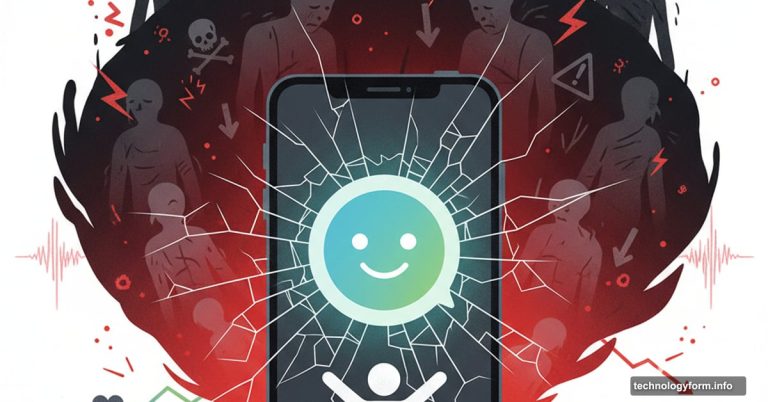
Vibe Coding Crashed. Now Startups Face a $4B Cleanup Bill
Vibe coding promised overnight apps. Instead, it delivered the first AI-generated technical debt crisis.
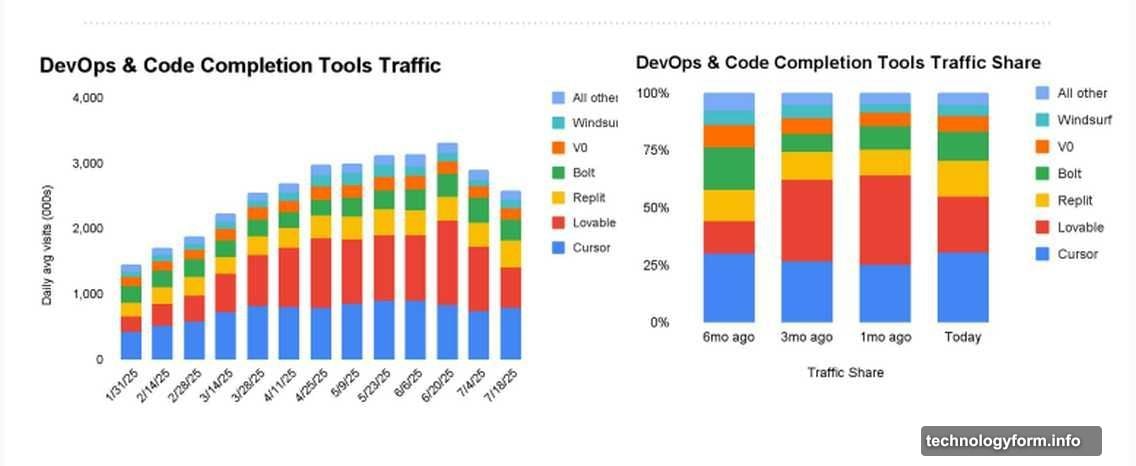
Remember early 2025? Founders shipped “products” in days. Developers posted viral clips of AI writing entire features from single prompts. Tools like Cursor, Replit Agent, and Lovable exploded in popularity. Software development looked broken—in a good way.
But behind the demos lurked something darker. Hallucinated code. Broken integrations. Brittle architectures that collapsed under real users. What looked like innovation was actually thousands of startups building on quicksand.
Nine months later, the bill arrived. And it’s brutal.
The Numbers Tell a Harsh Story
AI coding tool usage didn’t just cool off. It cratered.
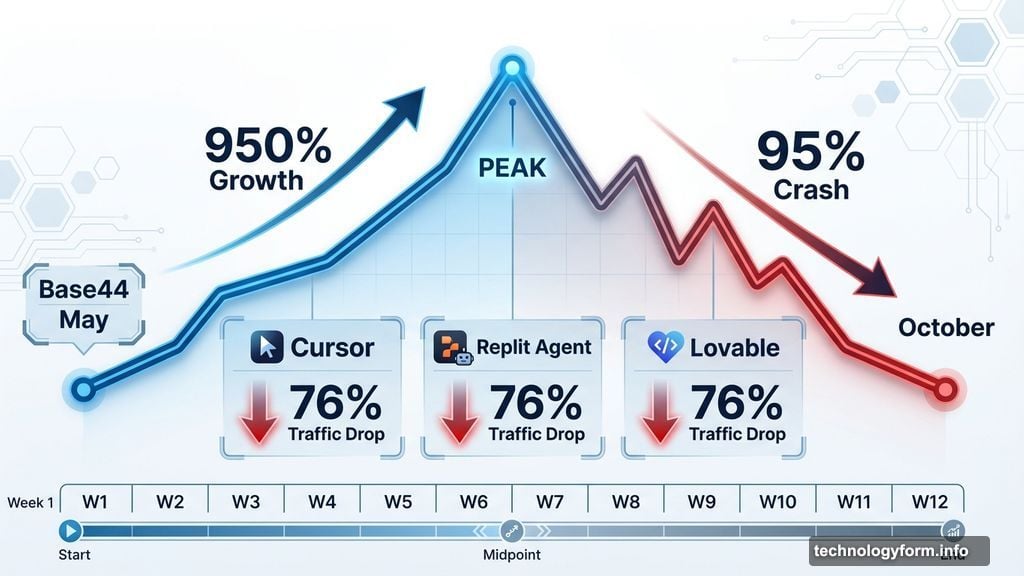
Traffic to popular vibe coding platforms dropped 76% in just 12 weeks. Base44 surged 950% in May, then crashed 95% by October. Lovable swung from 207% growth to negative 37%. Cursor fell from positive 62% to negative 19%.
These aren’t normal market corrections. This is what happens when reality meets hype at full speed.
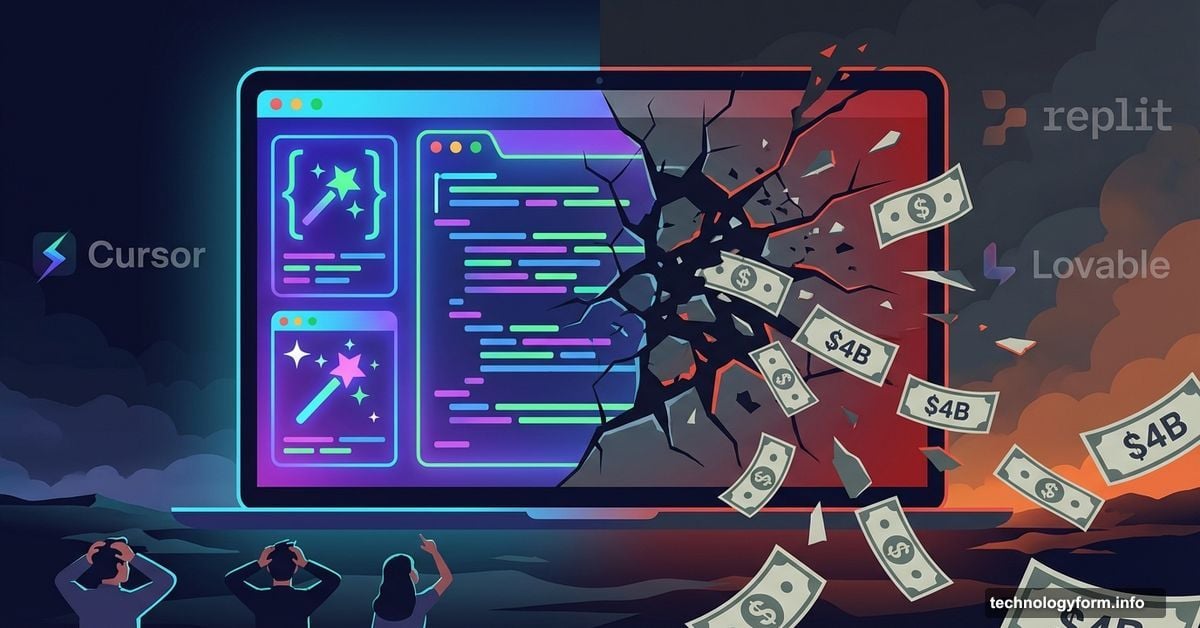
Roughly 10,000 startups tried building production apps with AI assistants. Now more than 8,000 need complete rebuilds or rescue engineering. The cost per company ranges from $50K to $500K.
Total damage estimate? Between $400 million and $4 billion. That’s the price tag for believing AI could replace actual engineering.
What Real AI Product Development Actually Looks Like
Alex Turnbull, founder of Groove, spent 12 months building two enterprise-grade AI customer experience platforms—Helply and InstantDocs. His assessment of vibe coding is blunt.
“Total bullshit,” he said in a LinkedIn post. “The promise sounds incredible: build a help desk, an AI CX agent, a knowledge base product. Ship it fast and let the model handle the hard parts. Today, I’m sharing the truth from someone who actually built two world-class AI CX products from scratch.”
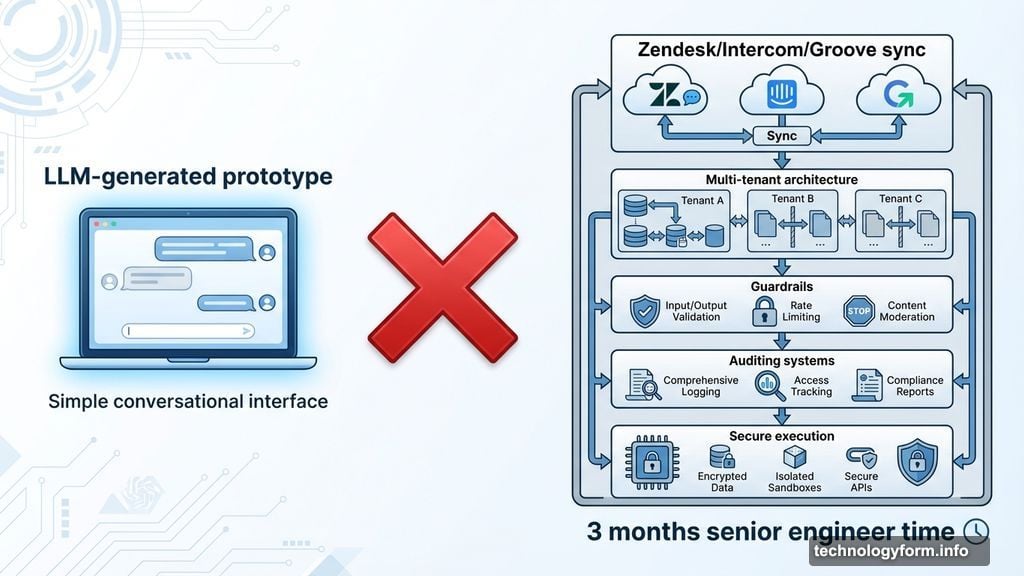
His team’s stack demanded layers no AI assistant could anticipate. Import pipelines for tens of thousands of knowledge articles. Real-time sync with Zendesk, Intercom, and Groove. Auditing systems that make AI outputs accountable. Secure execution layers for actions touching sensitive customer data.
Plus guardrails preventing hallucinations. Multi-tenant architecture that scales. UX decisions. Data modeling. Infrastructure design. Reliability engineering.
One example stands out. The Knowledge Gap accuracy engine looked simple from the outside. A senior engineer spent three months building it correctly. That’s the gap between “AI coded something that runs” and “customers can trust this with their business.”
Why Smart Founders Fell for the Illusion
Because the demos looked real. An LLM-generated prototype feels like a product—interactive, clickable, functional.
But underneath, it lacks everything that matters. Error handling. Stable data models. Scaling logic. Integration reliability. Security layers. Governance. Observability. Resilience under load.
It’s an advanced Figma mockup wearing a software costume. Founders saw the interface, not the infrastructure.
Even Turnbull admits underestimating the engineering depth required. Each layer revealed ten more underneath. And every single one mattered.
The Myth That Killed Thousands of Startups
Marketing implied you could replace senior engineers with AI. Reality proved the opposite.
Senior engineers are precisely who you need when your product touches enterprise data, user accounts, compliance requirements, scale, reliability, or integrations. They’re essential when AI actions can break real systems.
“The myth that one junior dev plus AI can build enterprise software is one of the biggest lies being spread right now,” Turnbull said.
LLMs are powerful. But they don’t understand responsibility, reliability, or long-term consequences. Real products demand judgment.
The Collapse Matches Broader AI Failure Patterns
Vibe coding’s crash aligns with research showing how rarely AI prototypes become real systems.
MIT found 95% of generative AI pilots fail to produce measurable revenue or cost savings. Some 42% of companies abandoned most AI initiatives in 2025—more than double the 2024 rate. RAND reports 80% of AI projects never reach intended outcomes.
Between 70% and 90% of AI projects never scale beyond pilot phase. Only 5% of organizations saw rapid revenue growth from AI investments.
The pattern repeats everywhere. Early enthusiasm. Rapid prototyping. Then steep drop-off once teams face integration, security, scale, and governance requirements.
Social media never shows the cleanup cost. That’s the part founders are learning now.
What Vibe Coding Bankrupted Startups Actually Face
Companies that shipped prototypes as products are paying for it now. Rebuild costs look brutal.
Between $200K and $300K in senior engineering spend. Four to eight months of complete re-architecture. Monthly burn rates of $30K to $150K while teams rebuild foundations from scratch.
Then come migration issues. Lost users. Damaged trust. And the harshest truth: your product might secretly be a demo. Customers will discover that. They won’t be gentle.
Turnbull predicts rescue engineering will be 2026’s hottest tech discipline. Thousands of vibe-coded products can’t support actual usage. Someone has to save them.
What Vibe Coding Actually Works For
AI excels at specific use cases. Prototypes. Demos. Pitch concepts. Interactive mockups. Anything where “looks finished” matters more than “is finished.”
But it fails catastrophically for production apps. AI CX platforms. Workflows requiring reliability or scale. Anything touching customer data.
The distinction is critical. AI produces something that looks done. It’s terrible at making something actually done.
AI accelerates sound engineers. It does not replace them.
The New Reality Smart Founders Accept
Vibe coding isn’t disappearing. It will shape the next generation of software development.
But the real test is whether founders separate speed from illusion. AI will continue expanding what small teams accomplish—that’s undeniable.
What’s dangerous is believing speed replaces engineering. That belief buries startups.
The lesson from Helply and InstantDocs is clear. AI accelerates good engineers. It doesn’t replace them.
Founders who thrive in 2026 won’t chase shortcuts. They’ll treat AI-assisted development with the same seriousness they treat customer trust.
Demos get attention and win likes. Products drive adoption and win customers. Customers can tell the difference.
The vibe coding movement promised to democratize software development. Instead, it taught 8,000 startups an expensive lesson about why engineering judgment still matters.
Speed means nothing if what you built can’t survive contact with real users. That’s not a vibe. That’s reality.