Google’s Budget AI Plan Hits the U.S. at $8 Monthly
Google just opened its cheaper AI subscription to American users. The $7.99 monthly plan launched Tuesday after testing in emerging markets since last September.
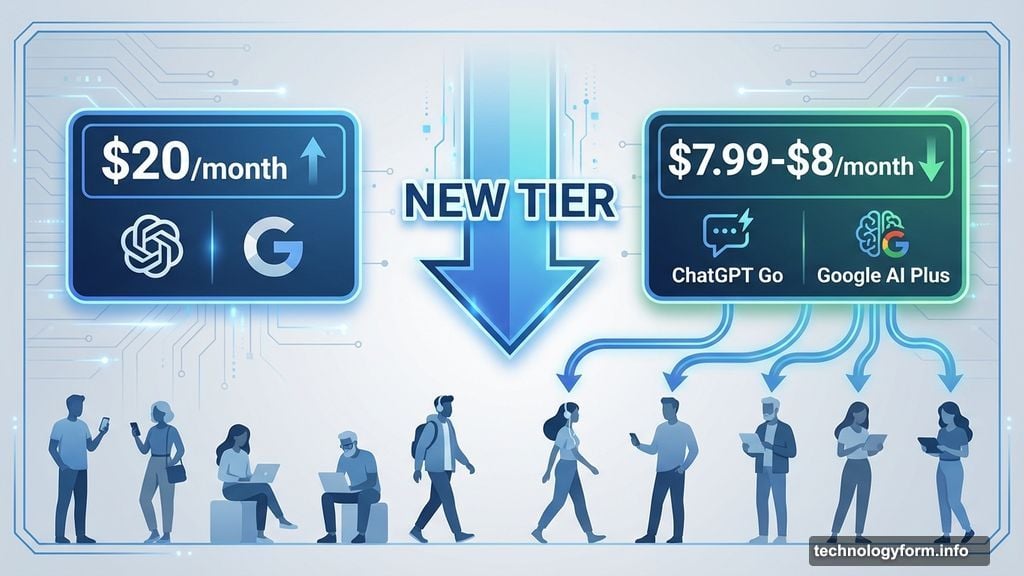
This matters because AI subscriptions typically cost $20 monthly. Now Google offers a middle ground between free Gemini access and the premium tier. It’s a direct shot at OpenAI’s $8 ChatGPT Go plan.
The move signals something bigger. Tech giants are fighting for casual AI users who want more than free tools but can’t justify premium pricing. That’s a massive audience worth billions in recurring revenue.
What You Actually Get
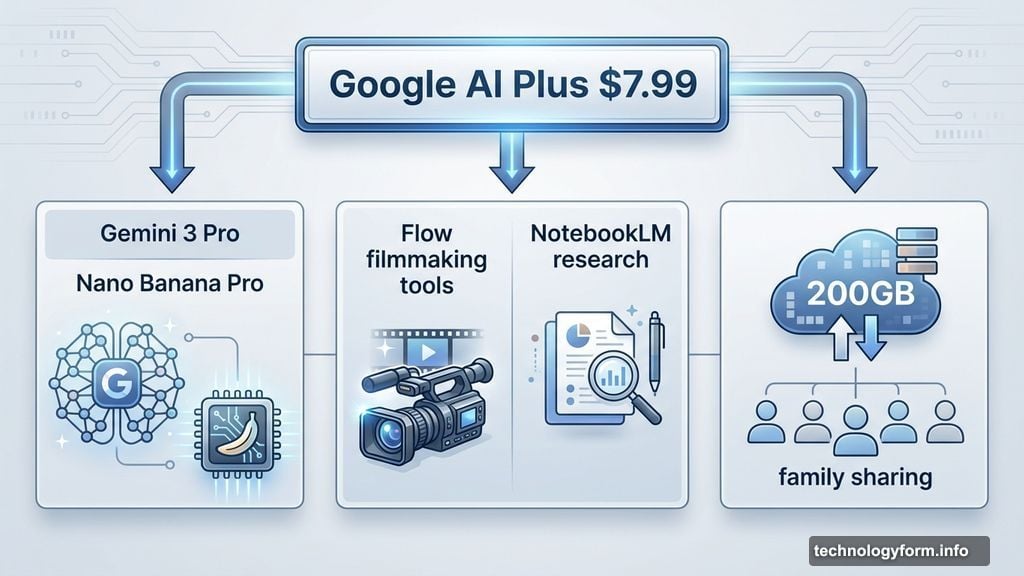
The Google AI Plus plan includes access to Gemini 3 Pro and Nano Banana Pro models through the Gemini app. Plus, you get Flow’s AI filmmaking tools and research assistance in NotebookLM.
Beyond AI features, the plan bundles 200GB of cloud storage. You can also share benefits with up to five family members. That’s solid value considering many people already pay for Google storage separately.
Current Google One Premium subscribers (the 2TB tier) automatically gain these AI features over the next few days. No action required. Google just adds the benefits to existing subscriptions.
But here’s the catch. The plan launched in 35 additional countries Tuesday, bringing total availability to dozens of markets worldwide. However, pricing varies wildly by region.
The Price Game Across Markets
U.S. users pay $7.99 monthly. That’s standard Western market pricing. Yet India charges just ₹399 ($4.44 USD) for identical features.
Why the gap? Google targets emerging markets with aggressive pricing to build AI adoption. Those regions represent billions of potential users who might never subscribe at Western prices.
This strategy mirrors mobile app pricing. Companies charge what markets can bear rather than flat global rates. Smart business. But it creates weird disparities for identical digital products.
Plus, Google runs a launch promotion cutting 50% off the first two months. So Americans pay $4 monthly initially. After that, full price kicks in at $7.99.
The Real Competition
OpenAI launched ChatGPT Go at $8 monthly last year. Google’s AI Plus plan matches that price point almost perfectly in the U.S.
Both companies want the same thing. Millions of casual users who’ll pay small amounts monthly rather than commit to $20 premium plans. That audience dwarfs hardcore AI enthusiasts willing to spend more.
Think about it. Free AI tools attract hundreds of millions of users. Premium $20 plans convert maybe 1-2% of them. But an $8 middle tier? That could pull 5-10% conversion rates.
At scale, those percentages mean massive revenue. If Google converts just 5% of Gemini’s free users to $8 monthly subscriptions, that’s potentially billions annually. The math works even at lower price points.
So expect more AI companies to introduce budget tiers. This becomes the new standard pricing structure. Free for basic access. $8-10 for casual users. $20-30 for professionals and power users.
Storage Sweetens the Deal
Here’s where Google gets clever. The 200GB storage inclusion makes this more valuable than pure AI subscriptions.
Many people already pay for cloud storage. Google One’s 200GB plan normally costs $2.99 monthly standalone. So effectively, you’re paying $5 monthly for AI features once you account for storage value.
That pricing makes sense for people who need both storage and occasional AI assistance. OpenAI’s ChatGPT Go offers zero storage benefits. It’s purely an AI subscription.
Moreover, family sharing spreads costs across six accounts. If a household splits one subscription, per-person cost drops to roughly $1.33 monthly. That’s absurdly cheap for AI access and cloud storage combined.
Google’s banking on this bundling strategy to differentiate from competitors. It works if you value storage. But if you only want AI features, ChatGPT Go might suit you better since it focuses entirely on that experience.
Emerging Markets First Made Sense
Google launched in Indonesia, India, and other developing nations before the U.S. That’s backwards from typical tech rollouts.
But it’s smart. Emerging markets have massive online populations but low spending power. Test pricing there first. Build adoption. Then expand to wealthy markets with proven demand.
Plus, emerging markets accept lower-quality AI outputs more readily. Users there often compare against no AI access rather than premium alternatives. So satisfaction rates run higher even if technology hasn’t reached peak performance.
The strategy also builds global user numbers quickly. Tech investors love growth metrics. “AI Plus reaches 100 million users” sounds impressive even if most pay $4 monthly rather than $8.
Now Google brings the same plan to the U.S. at Western pricing. They’ve validated market fit internationally. Expect similar launches in Europe and other developed markets soon.
What This Means for AI Pricing
Budget AI subscriptions are here to stay. Every major AI company will offer similar tiers within months.
Why? The economics work. Monthly subscriptions create predictable revenue. Even small fees add up at massive scale. And subscription models lock users into ecosystems longer than one-time purchases.
Expect Microsoft, Anthropic, and others to launch $8-10 plans soon. They’ll bundle AI features with existing services like storage, productivity tools, or entertainment content. Pure AI subscriptions struggle to justify $8 monthly. Bundled offerings make the value obvious.
This pricing tier also accelerates enterprise adoption. Companies hesitate to buy $20 monthly AI subscriptions for every employee. But $8 plans? Much easier to justify rolling out organization-wide.
So we’re entering an era where AI access becomes commoditized. Free tiers attract users. Budget tiers convert casual fans. Premium tiers serve power users. That’s the new standard structure.
Google’s U.S. launch of AI Plus marks the moment this pricing model went mainstream. Other companies were testing similar approaches. Now everyone will follow.
The real question isn’t whether budget AI plans succeed. It’s how low prices eventually drop as competition intensifies. $8 monthly might seem cheap now. But wait until someone offers similar features for $5. Then $3. Race to the bottom begins.
For users, that’s excellent news. AI access gets cheaper and more widespread. For AI companies, it means thinner margins and harder monetization challenges. Welcome to the commodification phase.