Airtable Bets Big on AI Agents While Valuation Bleeds $7.7 Billion
Most companies would hunker down after losing two-thirds of their paper value. Airtable’s doing the opposite.
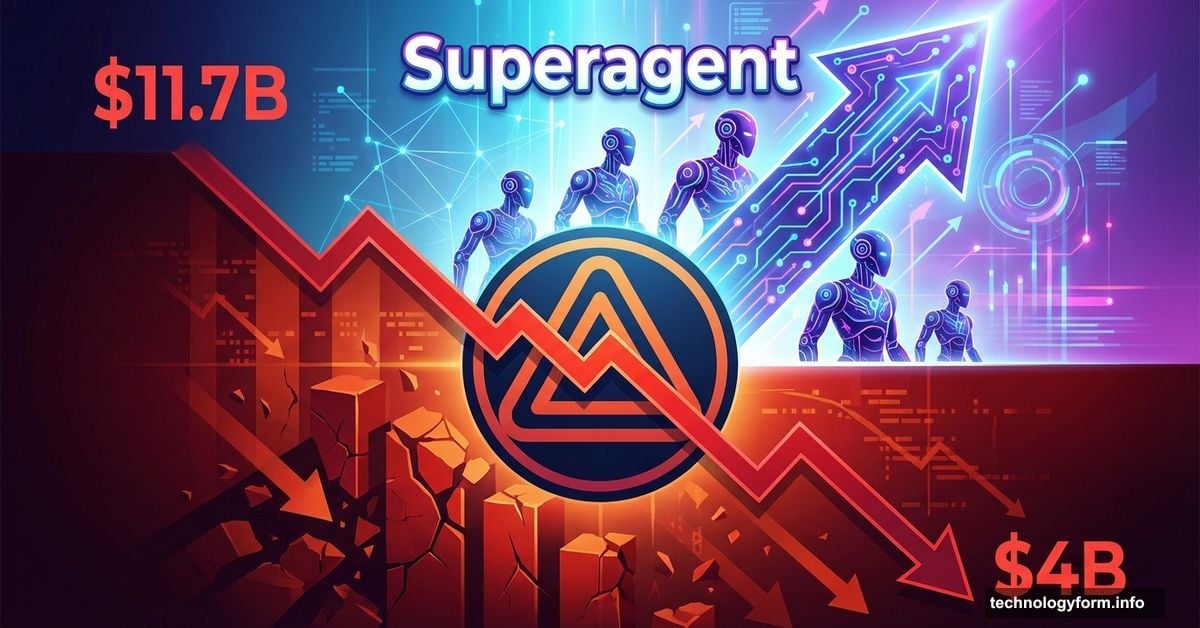
The no-code platform once worth $11.7 billion now trades around $4 billion on secondary markets. But CEO Howie Liu isn’t cutting back. Instead, he just launched Superagent, a standalone AI product he thinks could eventually dwarf Airtable itself.
That’s either brilliant or reckless. Let’s examine why Liu thinks this gamble makes sense.
Why Launch Now During a Valuation Collapse
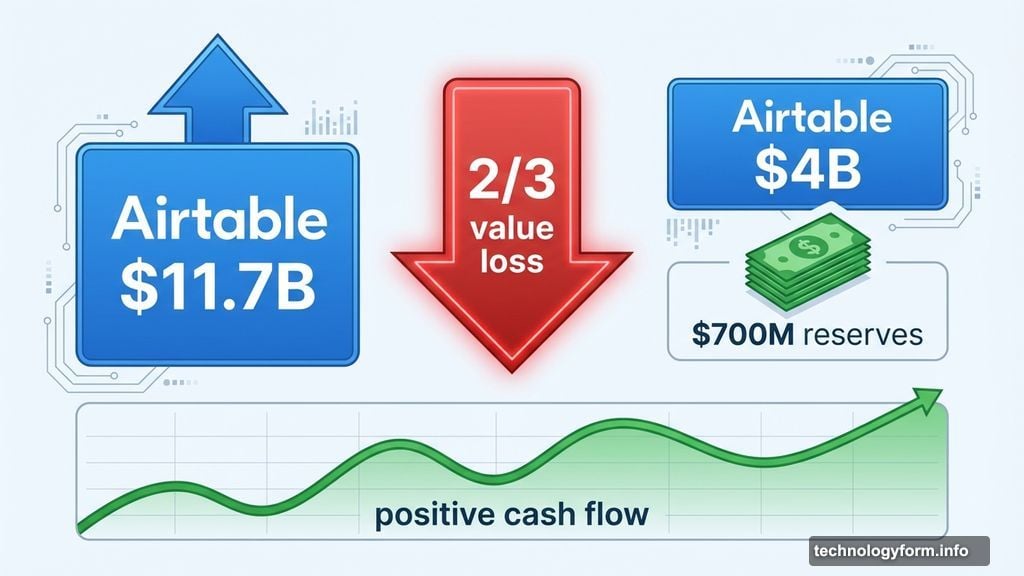
Here’s the twist. Airtable’s valuation crashed, but the business didn’t.
The company raised $1.4 billion total. Half of that still sits in the bank. Plus, Airtable generates positive cash flow. So while investor returns took a beating and employee stock options underwater, the core business keeps humming along.
Liu employs over 700 people serving 500,000 organizations. That includes 80% of the Fortune 100. Those numbers don’t scream “struggling startup desperately pivoting.”
Instead, this looks like a mature company with cash to spare making a calculated bet. The valuation drop actually gave Liu a recruiting advantage. He tells employees they’re getting “equity that’s actually much more attractively priced” with massive upside potential.
Moreover, he doesn’t need to raise another round. That means he can take risks without investor pressure to show immediate returns.
Multi-Agent Coordination Beats Single AI Assistants
Superagent represents Liu’s bet on what he calls “multi-agent coordination.”
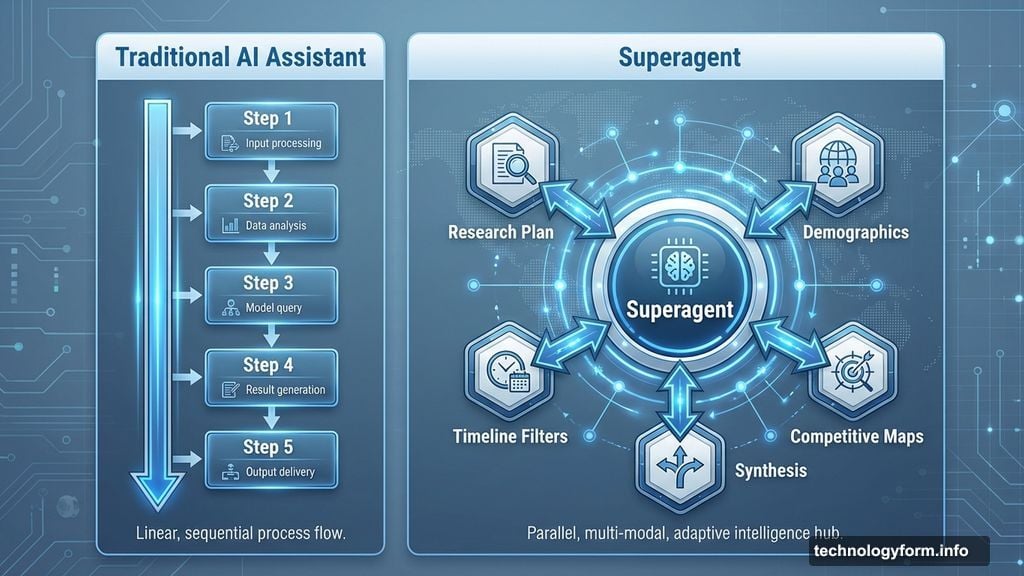
Traditional AI assistants handle tasks sequentially. You ask a question. The AI processes it step-by-step. Each task waits for the previous one to finish.
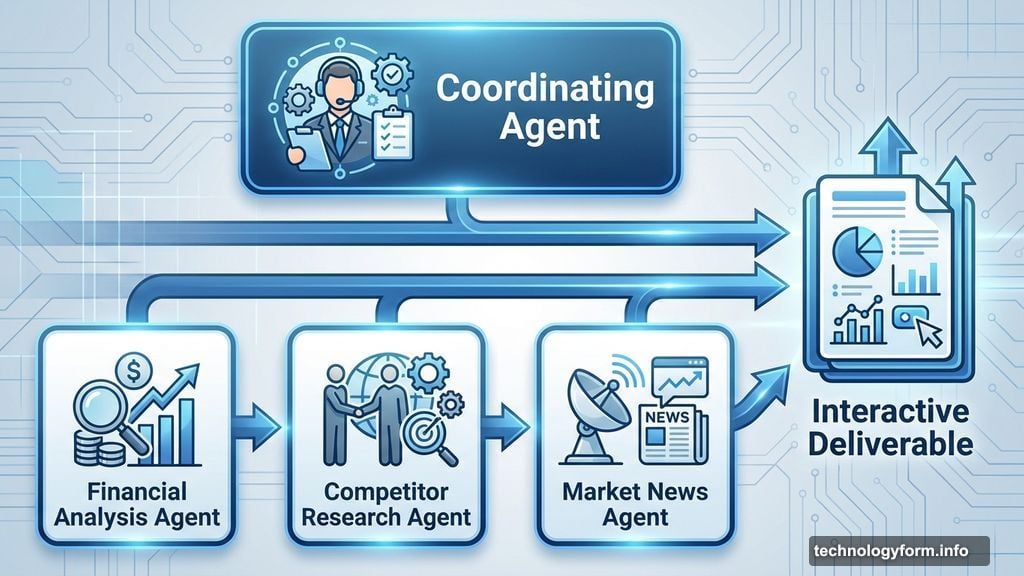
Superagent works differently. It deploys specialized agents working in parallel. A coordinating agent orchestrates the team like a project manager assigning work.
Here’s a concrete example. Ask Superagent about expanding your athleisure brand into Europe. First, it builds a research plan identifying what needs investigation. Then it deploys specialists simultaneously—one analyzing financials, another studying competitors, another reviewing management and news.
Finally, it synthesizes everything into an interactive deliverable. Not a text wall. An actual market analysis with demographic breakdowns, competitive positioning maps, and filterable expansion timelines.
“What if every person could have New York Times-quality data visualization built for every task they have?” Liu asks. That quality of output was impossible even five years ago.
Real Agents Versus LLM-Powered Workflows
Liu draws a sharp distinction between “real agents” and competitors he dismisses as “LLM-powered workflows.”
He name-checks only two products with “true, generally capable, long-running and really smart agent architecture.” Those are Anthropic’s Claude and Manus (which Meta is acquiring).
Everything else? Just predetermined steps with AI calls mixed in. They follow scripts. They can’t course-correct when plans go sideways or backtrack when they hit dead ends.
That’s a bold claim in a market drowning in agent announcements. OpenAI launched new agent-building tools in January. Notion added agent functionality. Harvey did too. Hundreds of companies suddenly have “AI agents.”
Whether customers care about this technical distinction remains unclear. If a “fake” agent delivers adequate results faster and cheaper, the architecture might not matter.
Premium Data Sources Power Research Quality
Superagent pulls from premium data sources most competitors can’t access.
The system taps FactSet for financial data. Crunchbase for startup intelligence. SEC filings for regulatory information. Earnings transcripts for company insights.
That gives it an advantage for business research tasks. Ask about Google as a three-year investment opportunity. You get structured assessment with citations to earnings calls, defensibility analysis against OpenAI and Anthropic, and risk factors you hadn’t considered.
Or ask it to brief you on Wells Fargo’s AI strategy before pitching them. You get their regulatory posture, recent AI investments, and specific pain points your product addresses.
The data access matters. An AI agent without quality sources just hallucinates with confidence.
Strategic Moves Signal AI-Native Transformation
Superagent caps a broader transformation for Airtable.
Last fall, the company hired David Azose as CTO. He previously led engineering for ChatGPT’s business products at OpenAI. That’s not a hire you make unless AI represents your future.
Plus, Airtable acquired DeepSky (formerly Gradient), an AI agent startup that raised $40 million. DeepSky’s founding trio now helms Superagent, operating semi-independently from the core Airtable business.
The pricing follows the emerging AI products playbook. Entry tier costs $20 per month per user. Power users pay up to $200. Generous inference credits included.
“We’re not trying to optimize for profit margin right now,” Liu admits. That’s smart. In a land grab moment, market share matters more than margins.
Wartime Leadership Means Betting on Optionality
Liu frames this moment as “wartime leadership.”
He admits he once rejected that term as needlessly violent. But now he embraces it as accurate. Markets shift fast. Technology evolves faster. The companies that adapt quickest win.
“Being very fast on the draw to be able to adapt is the most value-creative way to run things right now,” he says.
But here’s what caught my attention. When asked if Superagent could become bigger than Airtable, Liu doesn’t dismiss the possibility.
“Airtable will probably be larger for at least the near term,” he hedges. “But I also like being able to bet on Superagent. Optionality is a good thing.”
That’s the real story. A CEO who lost $7.7 billion in paper valuation isn’t protecting his core business. He’s making aggressive bets on the future.
The Competition Won’t Wait
The challenge for Airtable is that everyone else is moving too.
OpenAI pushes agent capabilities aggressively. Anthropic improves Claude constantly. Microsoft integrates agents across its stack. Google does the same.
Hundreds of startups are building specialized agents for specific verticals. Some will fail. But some will succeed by going deep in narrow use cases rather than broad like Superagent.
Whether Superagent becomes the trillion-dollar market Liu envisions depends on execution. The technical architecture might be superior. But superior technology doesn’t always win.
Distribution matters. Pricing matters. Time to value matters. Integration with existing workflows matters.
Airtable has advantages. It already serves 80% of the Fortune 100. Those relationships provide distribution. The cash in the bank provides runway. The talent from OpenAI and DeepSky provides expertise.
But momentum in AI shifts weekly, not yearly. Six months from now, the competitive landscape could look completely different.
Liu’s betting he can move fast enough to capture meaningful market share before others catch up. Given Airtable’s cash position and his willingness to invest aggressively, it’s not a crazy bet.
Whether it pays off determines if this looks brilliant or reckless in hindsight. The next 12 months will tell the story.