Texas App Store Age Law Blocked Hours Before Launch
A federal judge just killed Texas’s sweeping app store law. The state planned to force Apple, Google, and every digital storefront to verify ages starting January 1st. That’s not happening now.
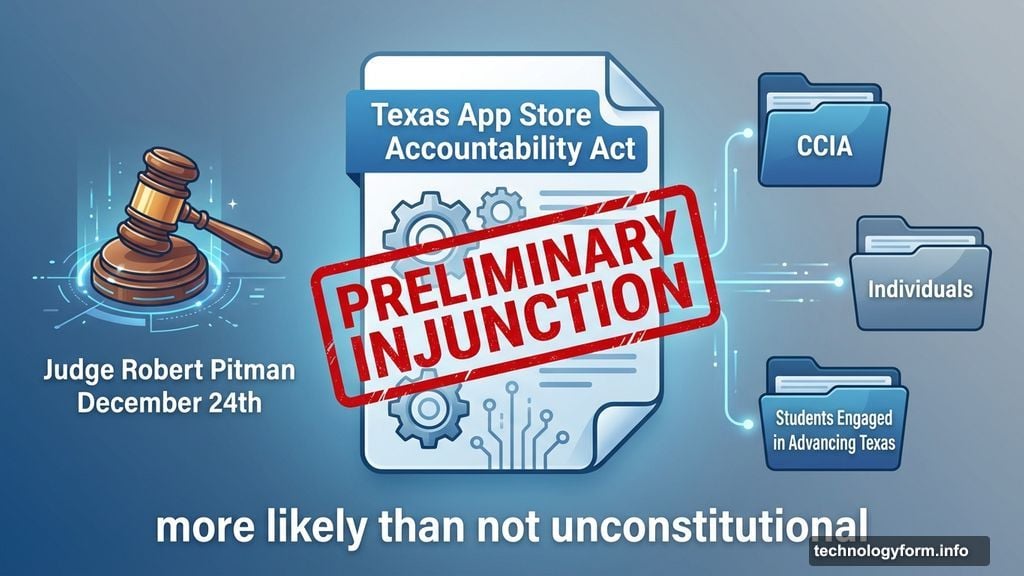
US District Judge Robert Pitman issued a preliminary injunction on December 24th. His ruling? The Texas App Store Accountability Act is “more likely than not unconstitutional.” So the law sits frozen while courts decide its fate.
But this fight reveals something bigger. States are scrambling to regulate tech platforms. Meanwhile, companies argue these laws trample free speech rights. Plus, nobody agrees on how to protect kids online without breaking the internet.
What Texas Tried to Do
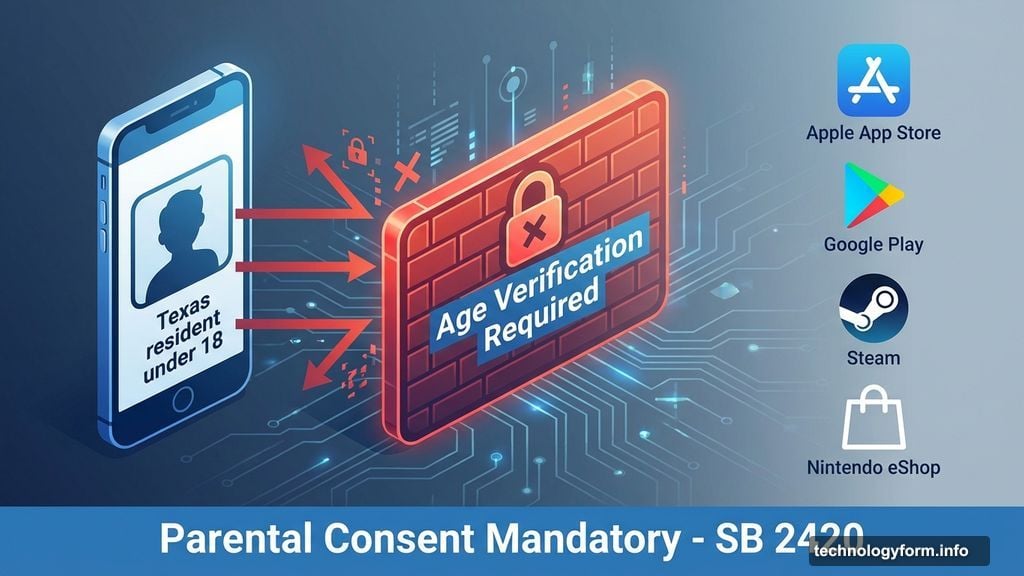
Senate Bill 2420 would have changed how app stores work. Every platform distributing software to Texas residents would need age verification systems. That includes obvious targets like Apple’s App Store and Google Play. But the law’s language swept up way more.
Gaming consoles with download stores? Covered. Websites offering browser games? Yep, those too. Any “electronic service that distributes software applications” falls under the rules. So Steam, Nintendo’s eShop, and countless smaller platforms faced compliance by January 1st.
The parental consent requirement created another headache. Anyone under 18 would need an account linked to their parent or guardian. No exceptions. Even for free apps or games rated for all ages.
State Senator Angela Paxton authored the bill. She called it “common sense tools” for parents. Yet critics saw massive overreach that would break existing systems and violate constitutional protections.
The Court Steps In
Three separate lawsuits challenged the Texas law. The Computer & Communication Industry Association filed first in October. Then individuals and Students Engaged in Advancing Texas joined the fight.
Judge Pitman sided with the challengers. His preliminary injunction found the law too broad and vague. However, he acknowledged “the importance of ongoing efforts to better safeguard children when they are on their devices.”
That’s the tension nobody’s solved. Everyone wants to protect kids online. But how do you write laws that actually work without crushing legitimate speech and commerce?
CCIA senior vice president Stephanie Joyce celebrated the decision. She said it “stops the Texas App Store Accountability Act from taking effect in order to preserve the First Amendment rights of app stores, app developers, parents, and younger internet users.”
The injunction only pauses enforcement while litigation continues. Texas could revise the law. Or appeal the decision. Or try again with different language. This battle isn’t over.
Why This Law Was Probably Doomed
The definition of “mobile device” alone created problems. Phones and tablets obviously qualify. But the law included “any other handheld device capable of transmitting or storing information wirelessly.” That’s incredibly broad.
E-readers with app stores? Covered. Handheld gaming devices? Yep. Maybe even smartwatches if they run apps. Nobody could say for sure where the boundaries were.
Then there’s the app store definition. The language doesn’t specify size or business model. So a developer hosting their own game downloads might technically operate an “app store” under Texas law. That would require age verification infrastructure they can’t afford.
Constitutional issues run deeper. The First Amendment protects software as speech. Courts have repeatedly ruled that governments can’t restrict access to protected speech based on age without very narrow, carefully written laws. Texas’s version failed that test.
Plus, enforcement would have been a nightmare. How do you verify ages across millions of users? Third-party services exist but they collect sensitive data. That creates new privacy risks for the exact kids these laws claim to protect.
The Bigger Age Verification Wave
Texas isn’t alone in this fight. States nationwide are passing age restriction laws. Most target adult websites. Texas already enforces one requiring porn sites to age-gate content. The Supreme Court upheld that law in June 2025.
Other US states followed with similar rules. The UK enacted age restrictions for adult sites too. But extending those requirements to general app stores represents a massive escalation.
Australia went even further. In December, the country restricted social media access to users 16 and older. Reddit immediately challenged that law. The precedent could reshape internet access globally if it stands.
Gaming platforms face mounting pressure too. Roblox rolled out stricter age verification after investigations exposed safety problems. The platform has a huge underage audience. So verifying ages became necessary to rebuild trust with parents.
Yet every age verification system creates tradeoffs. Collect less data and you can’t verify accurately. Collect more data and you create security risks. There’s no perfect solution.
What Happens Next
The preliminary injunction blocks enforcement for now. Texas could appeal to the Fifth Circuit Court of Appeals. That court tends to favor state authority over federal intervention. So the law might eventually take effect in some form.
Or Texas could rewrite the legislation. Narrow the definitions. Specify clearer boundaries. Address the constitutional concerns Judge Pitman identified. Then try again with a revised version.
Meanwhile, other states are watching closely. If Texas succeeds, expect copycat laws nationwide. If the courts strike it down completely, states will need different approaches to regulate app stores and protect minors online.
Tech companies prefer self-regulation. They argue existing parental controls and age ratings work fine. Just enforce them better. But critics say voluntary measures aren’t enough when platforms profit from keeping kids engaged.
Parents sit caught in the middle. They want tools to protect their children. But they don’t want governments mandating clunky systems that collect family data or restrict legitimate access.
The debate will rage for years. Every solution creates new problems. Every law faces constitutional challenges. And technology moves faster than legislation ever can.
For now, Texas app stores operate as usual. No age gates. No mandatory parental consent. The status quo survives at least until courts settle the lawsuits. That could take months or years depending on appeals.
Choose your battles carefully when regulating technology. Broad laws that sound good politically often fail in practice. Meanwhile, real solutions require nuance, compromise, and accepting imperfect tradeoffs. Texas learned that lesson the hard way.