Benchmark Just Dumped $225M Into Cerebras. Here’s Why That’s Huge
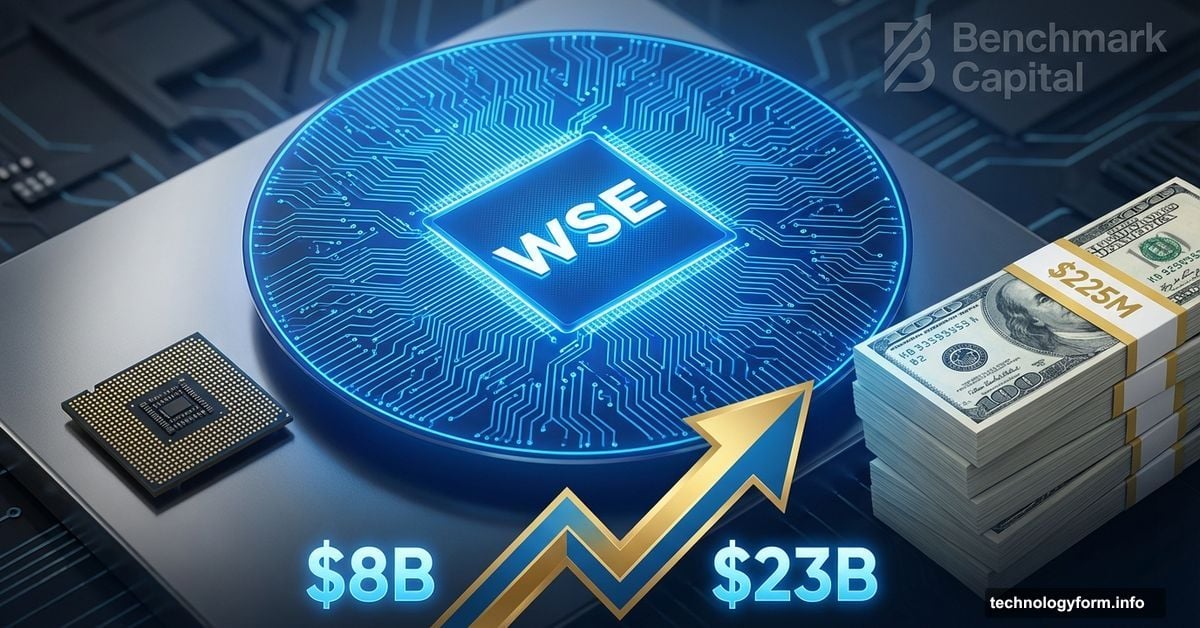
Venture capital firms don’t typically write nine-figure checks. Yet Benchmark Capital just invested at least $225 million into AI chipmaker Cerebras Systems.
That’s not pocket change. In fact, it’s more than half the size of Benchmark’s entire standard fund. So when a disciplined VC firm breaks its own rules, something interesting is happening.
Let’s unpack why Benchmark went all-in on a company making refrigerator-sized computer chips.
The Deal That Broke Benchmark’s Playbook
Cerebras raised $1 billion this week at a $23 billion valuation. That’s nearly triple the $8.1 billion price tag from just six months ago.
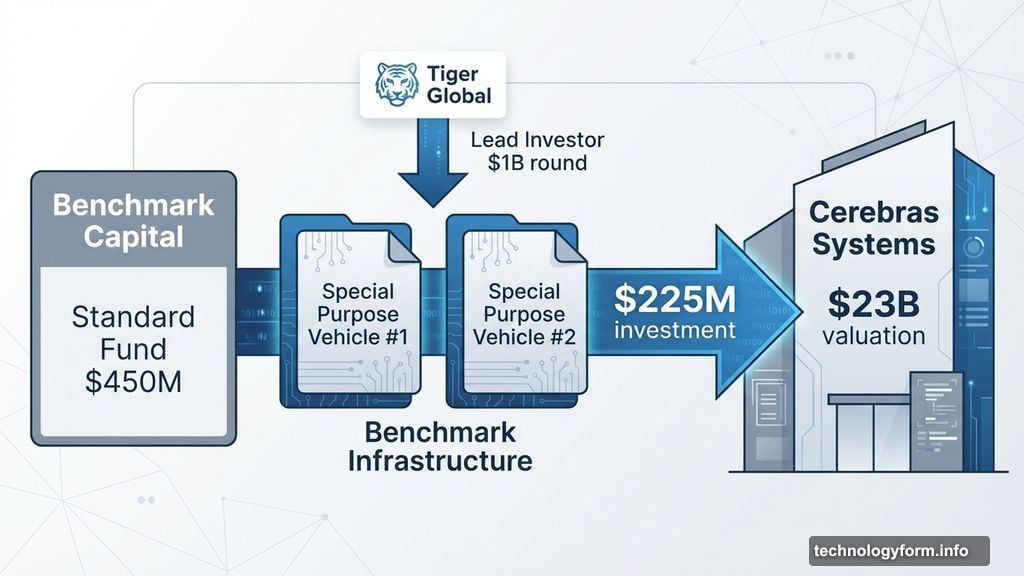
Tiger Global led the round. But Benchmark contributed the most eye-catching piece. The firm raised two separate special-purpose vehicles called “Benchmark Infrastructure” specifically to fund this investment.
Why does that matter? Benchmark deliberately caps its main funds under $450 million. The firm believes smaller funds force better discipline and prevent lazy capital deployment.
Yet here they are, raising special vehicles worth $225 million combined. That’s how strongly they believe in Cerebras.

What Makes Cerebras Different From Nvidia
Most AI chips are tiny rectangles smaller than your thumbnail. Cerebras builds chips the size of dinner plates.
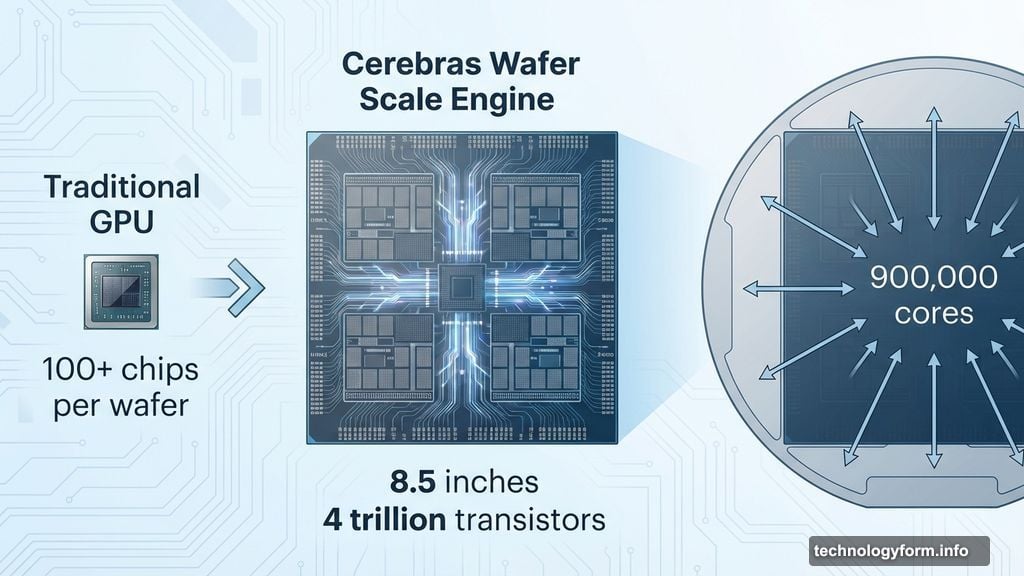
The company’s Wafer Scale Engine measures roughly 8.5 inches per side. It packs 4 trillion transistors into a single piece of silicon. For context, that’s manufactured from nearly an entire 300-millimeter silicon wafer.
Traditional chipmakers cut dozens or hundreds of small chips from each wafer. Cerebras uses almost the whole thing as one massive processor.
This architecture delivers 900,000 specialized cores working simultaneously. Data doesn’t need to shuffle between separate chips, eliminating a major performance bottleneck in conventional GPU clusters.
Cerebras claims its systems run AI inference tasks more than 20 times faster than competing solutions. That includes Nvidia’s industry-standard offerings.
OpenAI Signed a $10 Billion Deal Last Month
Speed matters when you’re running AI models. Especially for companies like OpenAI serving millions of daily users.
Last month, Cerebras signed a multi-year agreement worth over $10 billion with OpenAI. The partnership runs through 2028 and provides 750 megawatts of computing power.
That’s a massive commitment. Plus, OpenAI CEO Sam Altman personally invested in Cerebras, signaling confidence beyond just the corporate partnership.
The deal aims to deliver faster response times for complex AI queries. When ChatGPT users ask difficult questions, Cerebras hardware will crunch the calculations.
The G42 Problem Almost Killed Their IPO
Cerebras tried going public before. Things got complicated fast.
G42, a UAE-based AI firm, accounted for 87% of Cerebras revenue through the first half of 2024. That’s dangerously concentrated customer risk.
Worse, G42 had historical ties to Chinese technology companies. The Committee on Foreign Investment in the United States launched a national security review. Cerebras withdrew its initial IPO filing in early 2025.
By late last year, G42 disappeared from Cerebras’ investor list entirely. The company cleared that obstacle but lost its biggest revenue source in the process.
Now Cerebras plans a fresh IPO attempt for Q2 2026. Whether public markets will embrace a company so dependent on a few massive customers remains uncertain.
Benchmark Doubled Down Anyway
Most VCs would run from that level of customer concentration risk. Benchmark did the opposite.
The firm first backed Cerebras in 2016, leading a $27 million Series A when the company was just starting. Now, 10 years later, they’re writing checks 8x larger into the same company.
That shows conviction. Benchmark clearly believes Cerebras solved fundamental AI infrastructure problems that justify both the risks and the valuation.
Plus, the OpenAI partnership demonstrates customer diversification is happening. If Cerebras lands a few more deals of that magnitude, the G42 concentration issue becomes yesterday’s problem.
Why Physical Chip Size Actually Matters
Bigger isn’t always better in technology. But for AI workloads, Cerebras’ massive chip architecture solves real problems.
Traditional AI systems link together hundreds or thousands of small GPUs. Managing communication between all those separate processors creates overhead. Data transfer between chips consumes time and energy.
Cerebras eliminates most of that overhead. With 900,000 cores on a single piece of silicon, calculations happen locally without constant data shuffling.
The result? Faster inference, lower latency, and more efficient power usage. Those advantages matter enormously at scale, especially for companies serving millions of AI requests daily.
The $23 Billion Question
Is Cerebras actually worth $23 billion? That depends entirely on execution.
The company has proven technology. The OpenAI deal validates market demand. Benchmark’s massive investment signals smart money believes in the business model.
But Cerebras still faces brutal competition from Nvidia, which dominates AI hardware. Plus, the company’s IPO journey has been messy, raising questions about operational maturity.
Still, when a disciplined VC firm like Benchmark breaks its own investment rules to pour $225 million into a single company, the rest of the market should pay attention.
Something big is happening in AI infrastructure. Cerebras might be building the picks and shovels everyone else needs to mine AI gold.