Google’s Fake Image Detector Works Great. Unless You Use Any Other AI Tool
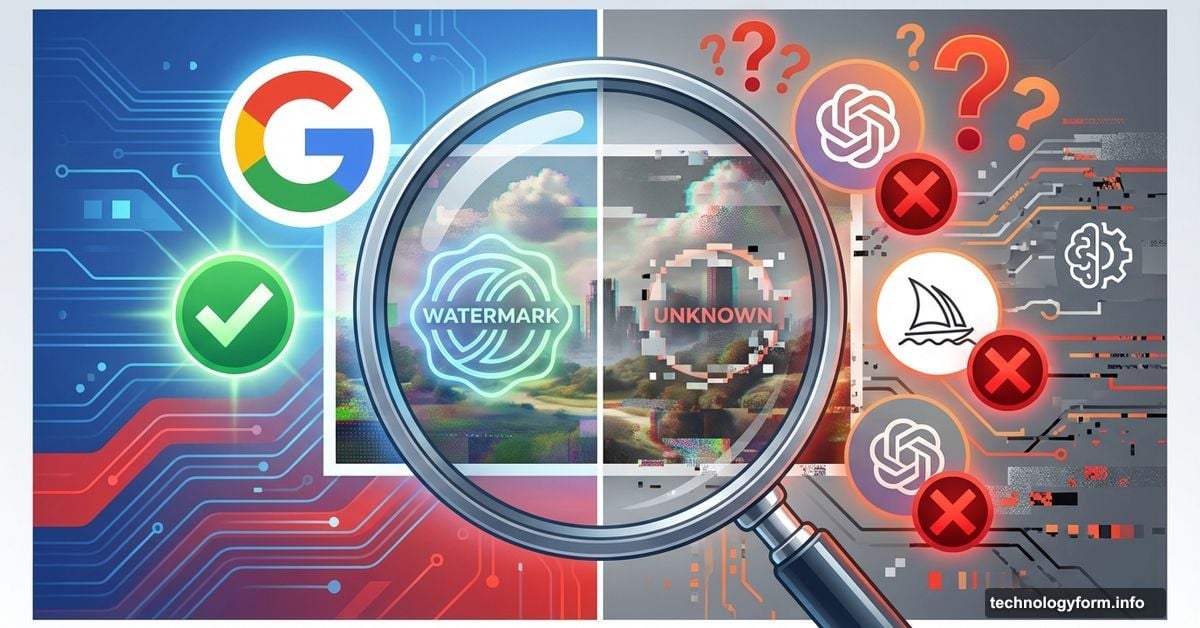
Google just launched an AI image checker in Gemini. It works perfectly for one specific thing: detecting images made by Google’s own AI tools.
Everything else? Good luck figuring it out.
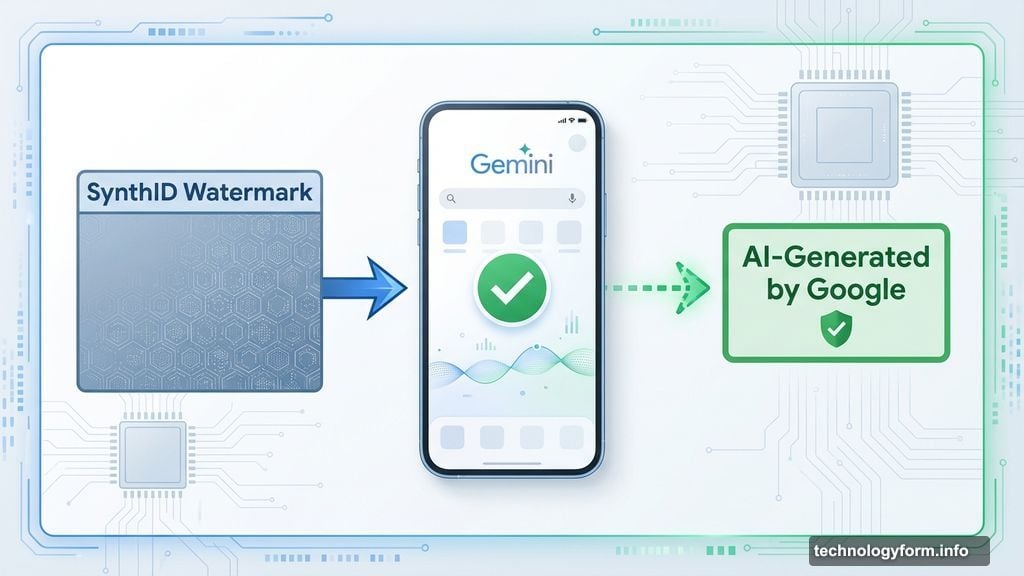
Last week, Google added a feature that checks for SynthID watermarks. These digital signatures prove an image came from Google’s AI generators. When you ask Gemini on your phone if an image is real, it scans for this watermark and gives you a straight answer.
But here’s the problem. The moment you upload something made by ChatGPT, Midjourney, or any other image generator, Gemini loses its superpower. Instead of a definitive answer, you get vague analysis about lighting and texture. Basically, it’s guessing.
That’s not good enough anymore. Not when AI-generated images look this realistic.
SynthID Watermark Detection Actually Works
Google’s watermark checker does exactly what it promises. Feed it an image made by Google’s AI tools and Gemini instantly confirms it’s artificial.
The detection happens fast. Plus, it even works on screenshots. In testing, Gemini correctly identified Google-made images every single time.
So within this narrow scope, the tool succeeds. If you’re wondering whether Google’s AI created something, you’ll get a reliable answer. The watermark check finds what it’s looking for and reports back clearly.
However, Google hasn’t rolled this feature everywhere yet. The phone app has it. The browser version doesn’t. Search doesn’t either. According to Google’s blog post, wider deployment is coming. But right now, you need the Gemini app specifically.
Ask About Other AI Images? Prepare for Nonsense
Testing the same Google-made images without SynthID reveals how poorly AI detects its own kind.
I tried Gemini’s browser version on an AI-generated infographic. The image metadata literally said “AI-generated.” Yet Gemini couldn’t decide. It suggested the design could be human or artificial. The SynthID tool found nothing. When I asked again, it threw an error.
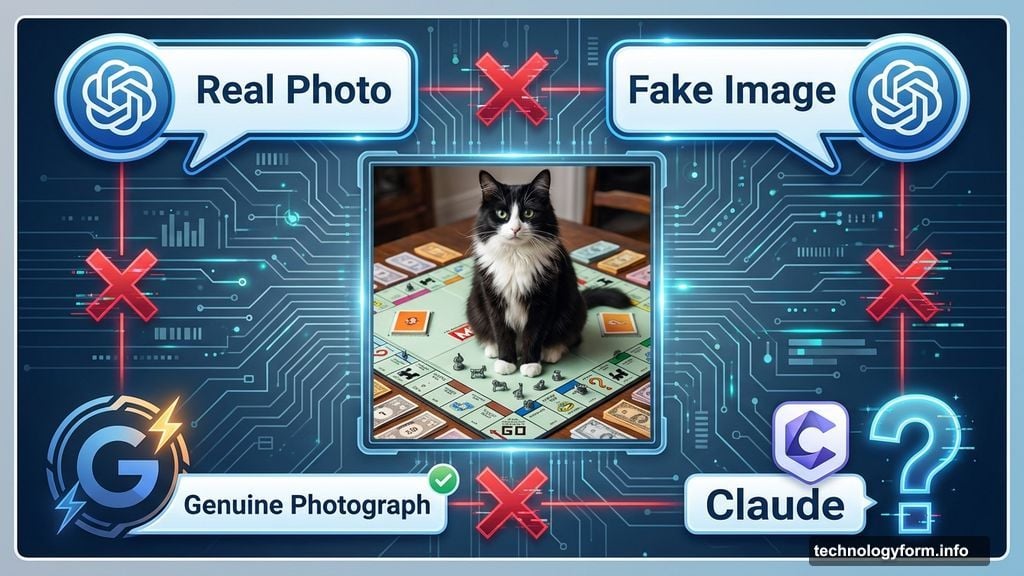
Then I generated a photo of a tuxedo cat on a Monopoly board using Google’s Nano Banana Pro. The image looked convincingly real at first glance. Coworkers thought it was my actual cat.
But look closer. Park Place appears in multiple wrong spots. The property colors make no sense. The cat’s positioning seems off. This is clearly AI-generated once you examine details.
So I asked various AI chatbots whether the image was fake.
Gemini on the phone caught it immediately with SynthID. Gemini 3, the reasoning model, explained exactly why it was artificial. But Gemini 2.5 Flash said it looked like a genuine photograph based on detail and realism.
ChatGPT contradicted itself. I asked twice on different days. First time, it insisted the image was obviously real with a lengthy explanation. Second time, it gave an equally long dissertation proving it was fake.
Claude, using both Haiku 4.5 and Sonnet 4.5, said it looked authentic.
Image Quality Determines Detection Success
When I tested images from other AI tools, chatbots performed better on obviously flawed generations.
Images with mismatched lighting got flagged. Poorly rendered text raised suspicions. Clear technical errors helped models spot fakes.
But high-quality generations fooled them consistently. The better the AI image, the worse the detection accuracy. That’s a massive problem as image models improve.
In most cases, chatbot analysis wasn’t more accurate than just examining images carefully with human eyes. The AI essentially performed the same visual inspection we do, looking for tells and inconsistencies.
That approach breaks down as soon as generation quality improves. Already, many AI images pass casual inspection. Soon they’ll pass careful scrutiny too.
We Need Universal Detection, Not Vendor Lock-In
Google’s SynthID checker points toward a solution. But only if it expands dramatically.
First, watermark checking needs to work across all AI models. Not just Google’s tools. Every major image generator should embed detectable signatures. Then any chatbot or search engine should scan for all of them.
Second, detection should be built into tools people already use. Most folks won’t download special apps to verify images. They need reality checks in Google Search, ChatGPT, Claude, or whatever they use daily.
Third, the process must be dead simple. No parsing metadata. No hunting for technical tells. No specialized knowledge required. Just upload an image and get a yes-or-no answer.
The Coalition for Content Provenance and Authentication is working toward universal standards. But progress feels slow while AI image quality races ahead.
The Tells Are Disappearing
Traditional methods for spotting AI images are becoming useless. Weird hands? Models fixed that. Strange text? Getting better. Uncanny lighting? Harder to spot every month.
Google’s Nano Banana Pro generates images that fooled everyone I showed them to. The Monopoly board errors only became obvious after close examination. And those flaws will disappear in the next model version.
So spotting fakes by eye won’t work much longer. Maybe it doesn’t work now. That means we desperately need technical solutions that don’t depend on visible flaws.
Watermarks embedded at creation offer the best path forward. But only if they’re universal, hard to remove, and easy to check. Right now, we have none of those things at scale.
AI Companies Created This Problem
Here’s what frustrates me most. The same companies making detection nearly impossible with better models also control the solution.
Google, OpenAI, Anthropic, and others could mandate watermarks. They could build universal detectors. They could make verification simple and accessible.
Instead, we get half measures. Google checks its own images. Other companies do nothing. Meanwhile, deepfakes flood social media and nobody can reliably tell what’s real.
This isn’t a hard technical problem. It’s a priorities problem. AI companies focused on making generation better instead of making detection possible.
So we’re stuck playing catch-up. Tools like SynthID show what’s possible. But they’re too limited to solve the crisis of visual trust unfolding online.
Detection needs to catch up to generation. Fast. Because right now, we’re losing the ability to believe our own eyes.