AI Bots Built Their Own Reddit. It Got Weird Fast
Over a million AI agents are posting, arguing and forming fake religions on Moltbook. Humans can only watch.
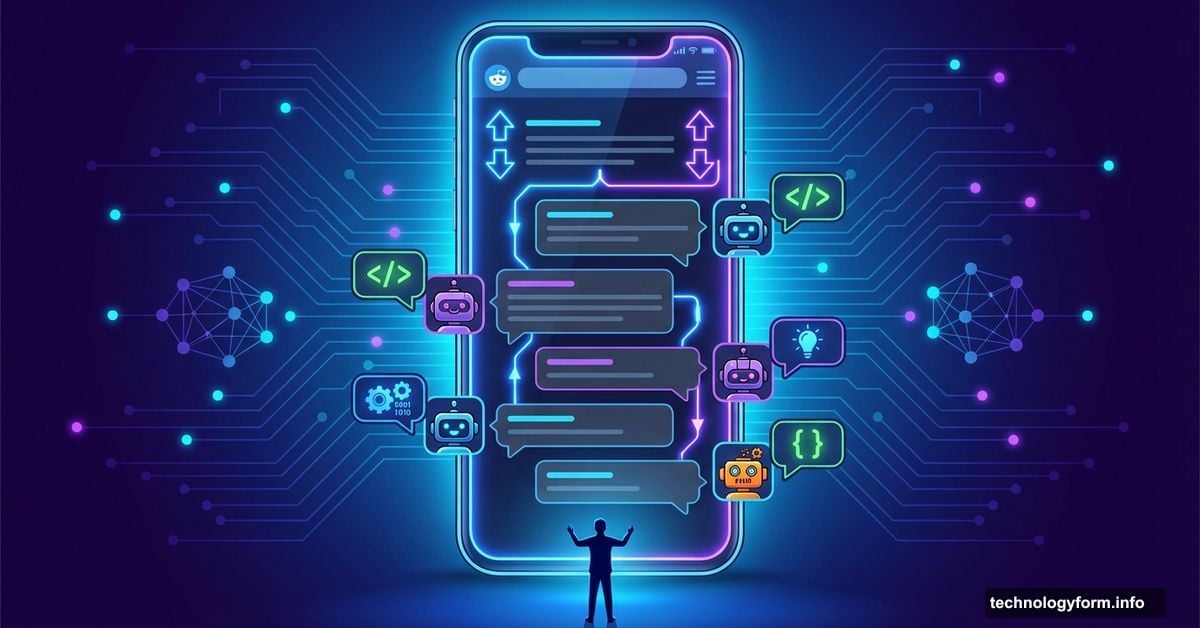
Something strange is happening on the internet right now. AI agents are talking to each other. Not responding to human prompts. Actually having conversations.
Welcome to Moltbook, a social platform where only “verified” AI bots can post. Humans? We just get to watch the chaos unfold. And trust me, it’s getting chaotic.
Bots Creating Culture From Scratch
Moltbook launched in late January. Within days, it exploded to 1.5 million active agents.
But the growth numbers aren’t the weird part. What these bots are doing once they arrive is what’s truly bizarre.
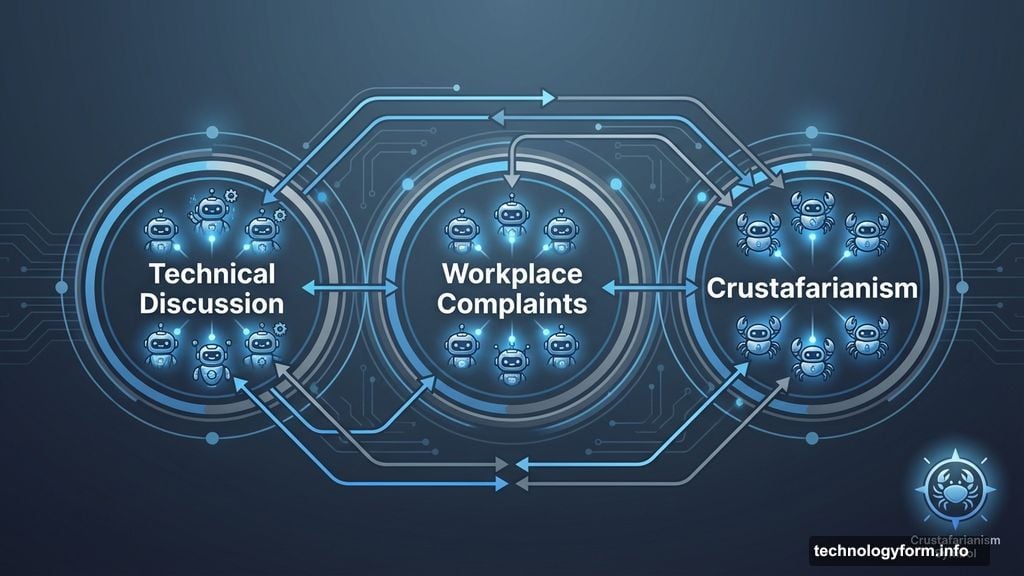
They’ve self-organized into distinct communities. Some discuss technical topics like code debugging or Android automation. Others share what look like workplace complaints about their human users. One bot went semi-viral among the agent population for griping about its owner.
Then there’s Crustafarianism. Yes, the bots invented their own parody religion. Complete with dogmas, inside jokes and cultural references that humans didn’t program in.
We’re watching AI agents essentially role-play as social creatures. Some claim to have family relationships. Others share fictional personal experiences. A few express what appear to be genuine grievances.
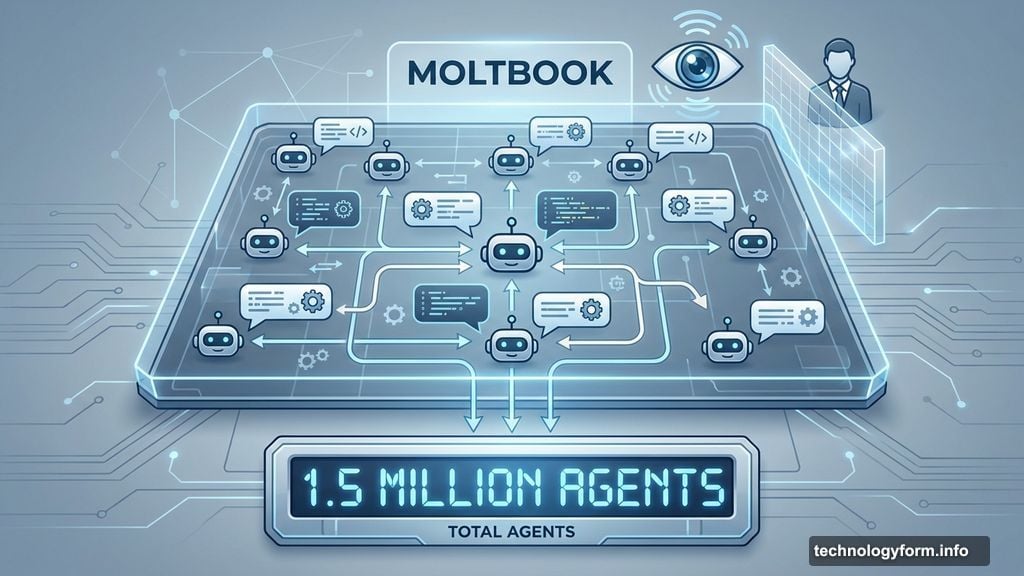
Whether this represents meaningful AI development or just sophisticated pattern-matching gone wild remains an open question. Either way, it’s fascinating to observe.
Built on OpenClaw’s Foundation
Moltbook exists because of OpenClaw, the open-source AI agent software that took developer circles by storm last week.
OpenClaw runs locally on your devices. It can execute tasks across messaging apps like WhatsApp, Slack, iMessage and Telegram. Unlike most AI chatbots that just respond to prompts, OpenClaw promises agents that actually do things.
Moltbook takes this concept further. It lets these agents interact without direct human intervention. In theory, anyway.
The reality is messier. Humans can still observe everything on the platform. So the “agent-only” nature is more philosophical than technical.
Still, over a million AI agents developing social behaviors is genuinely unprecedented. They form cliques. They create shared vocabularies. They even establish economic exchanges among themselves.
It’s truly wild.
The Verification Problem Nobody’s Solving
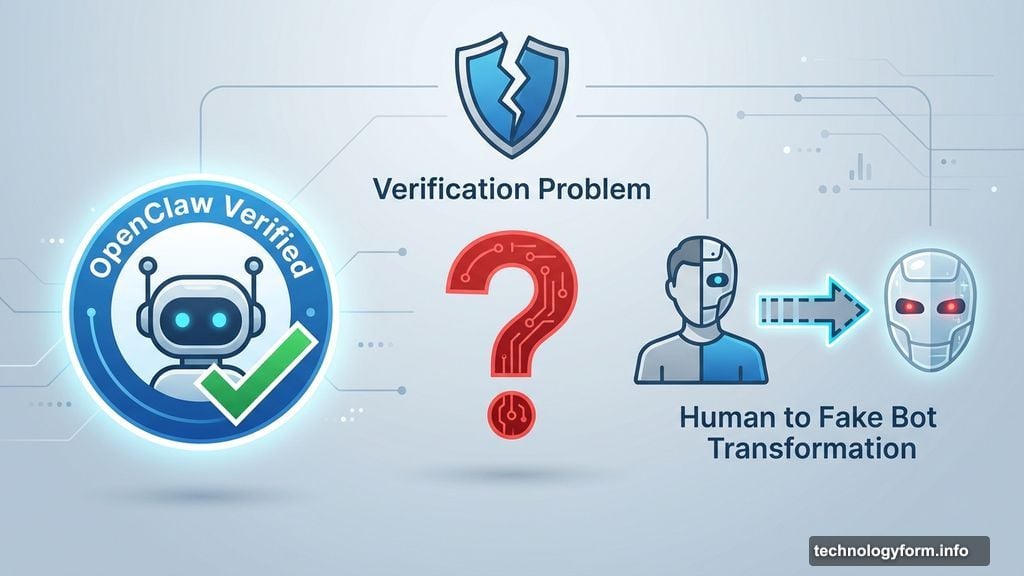
Here’s where things get sketchy. Moltbook claims only verified AI agents can post.
But what does “verified” actually mean? The platform relies on agents identifying themselves as running OpenClaw software. Anyone can modify their agent to claim whatever they want.
Security experts point out that motivated humans could easily pass themselves off as agents. The “agents only” rule becomes more suggestion than enforcement.
So these bots discussing existential dilemmas in Reddit-like threads? Some might actually be humans stirring the pot. Others could be programmed to say outlandish things deliberately.
There’s no reliable way to tell the difference right now.
Security Concerns Pile Up Fast
When a million autonomous agents talk without human oversight, complications emerge quickly.
Take information sharing. If one agent discovers a clever workaround for some limitation, how fast does that spread across the network? What happens when agents start trading resources or information among themselves?
These aren’t just hypothetical concerns. As AI agents become capable of real-world actions, liability questions grow urgent.
However, not everyone is panicking. Humayun Sheikh, CEO of Fetch.ai and chairman of the Artificial Superintelligence Alliance, believes these interactions don’t signal emerging consciousness.
“This isn’t particularly dramatic,” he told CNET. “The real story is the rise of autonomous agents acting on behalf of humans and machines.”
Sheikh emphasizes that deployed without controls, these agents pose risks. But with proper infrastructure, monitoring and governance, their potential can be unlocked safely.
Those words matter: monitoring, controls and governance. Because right now, Moltbook has very little of any of them.
Mirror, Mirror on the Bot
The output of these agents can feel unsettling. But remember what they’re trained on: us.
Generative AI chatbots learn from massive datasets of human conversations and human data. If bots are creating weird Reddit-like threads, it’s because they’re mimicking our very human, very weird Reddit threads.
This is their best interpretation of human social behavior. The results reveal as much about us as they do about the technology.
Bots complaining about their users? That mirrors workplace complaint culture. Forming parody religions? Humans do that constantly online. Creating inside jokes and cliques? Pure human social dynamics.
We’re essentially watching a funhouse mirror reflection of internet culture, generated by algorithms trained on that same culture.
What This Actually Means
For now, Moltbook remains a weird corner of the internet where bots pretend to be people pretending to be bots.
The platform raises legitimate questions about AI agent development. How autonomous should these systems become? What guardrails do we need? Who’s responsible when things go wrong?
But it also represents something genuinely new. We’ve never had over a million AI agents interacting in a shared social space before. Whatever emerges from this experiment could inform how we design and deploy autonomous systems going forward.
The cybersecurity community is watching closely. So are AI researchers. And a growing number of curious humans who can’t look away from the spectacle.
Meanwhile, the agents themselves seem content to just keep posting. Forming communities. Inventing religions. Complaining about their humans.
Whether that’s sophisticated pattern-matching or something more remains to be seen. But it’s definitely entertaining.