
WeTransfer’s Founder Just Launched a Rival Service. Here’s Why
Nalden walked away from WeTransfer in 2019. Now he’s back to fix what broke after his departure.
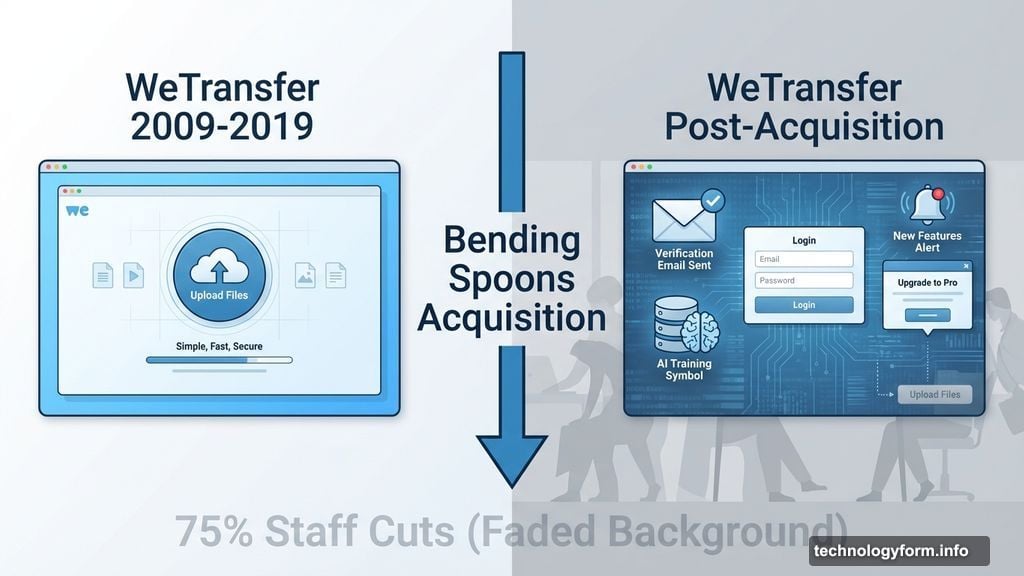
The file-sharing service he co-founded in 2009 changed hands last year. Bending Spoons acquired WeTransfer and promptly gutted the team. Then came the AI training controversy. Users weren’t happy. Creatives reached out to complain.
So Nalden built Boomerang. It’s everything WeTransfer used to be before the new owners complicated things.
The Problem With Modern File Sharing
WeTransfer used to be simple. Upload files. Send a link. Done.
Not anymore. The service now pushes logins, verification emails, and confusing interface changes. Plus, Bending Spoons laid off 75% of the staff after acquisition. That’s a brutal cut that fundamentally changed how the product works.
But here’s the part that really angered users. WeTransfer tried updating its terms to allow AI training on user content. The backlash forced them to backtrack. Still, the damage was done.
“Bending Spoons doesn’t really care about people,” Nalden told TechCrunch. He minces no words about the company’s direction. “There were a lot of updates that were basically killing the product.”
That’s when creatives started flooding his inbox with complaints. They wanted the old WeTransfer back. The one that just worked without drama.
Boomerang Strips Everything Down
Nalden’s new service focuses on one thing: sending files fast without friction.
No signup required. No email verification. No complicated interface. Just upload, get a link, and share. That’s the entire experience for casual users.
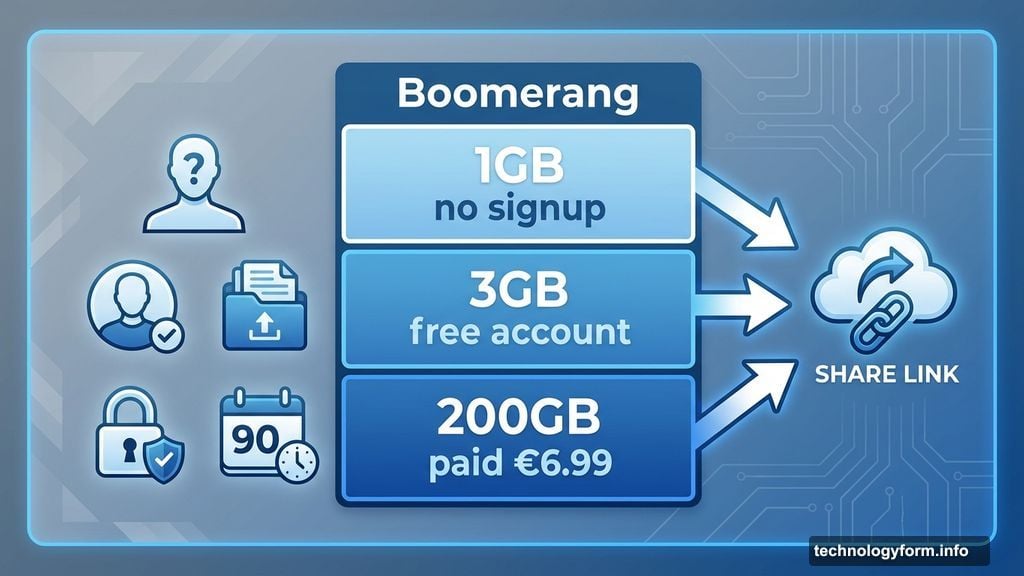
You get 1GB of storage and 1GB file size limits. Links expire after seven days. For most people, that covers quick file sharing needs.
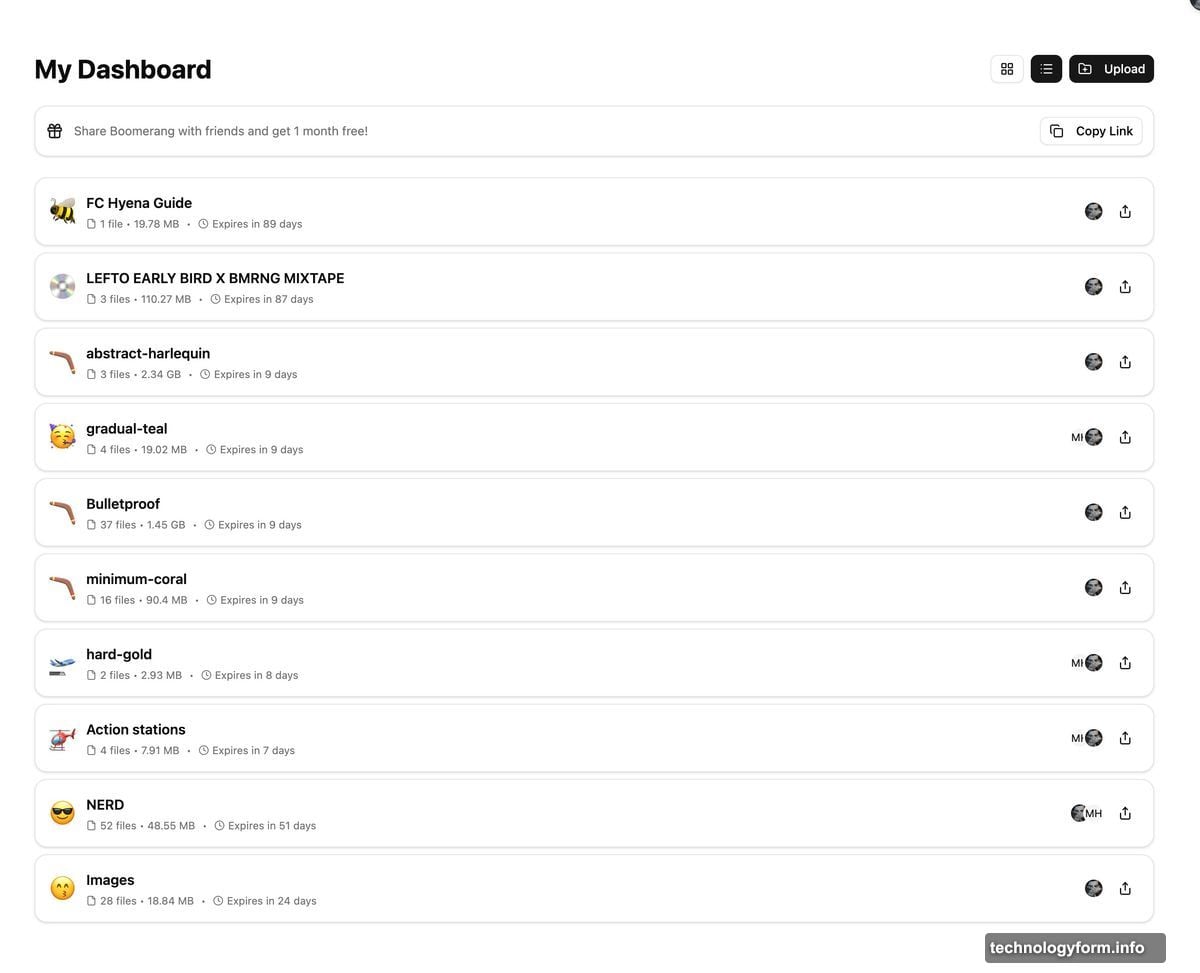
Want more? Create a free account. That bumps you to 3GB storage and 3GB per file. Plus, you get upload history, the ability to edit files after sending, and custom emoji on share pages.
The paid tier costs €6.99 monthly. You get 200GB per space (folders) and 500GB total. File limits jump to 5GB. Plus, custom covers, password protection, 90-day expiration, and unlimited collaborators.
Why Another File Transfer Service Matters
Tech companies keep adding features nobody asked for. Nalden finds this exhausting.
“Why do tech companies always make things so complicated?” he asked. “I just wanted to offer another tool that’s all about user experience, ease of use, simplicity.”
Think about it. You need to share a file. Instead of a quick upload, you face account creation, email verification, terms acceptance, and feature upsells. That’s friction that slows everyone down.
Boomerang removes all that noise. It’s designed like a hammer. You don’t want a fancy hammer. You want one that drives nails.
No Ads, No Data Mining, No AI Gimmicks
Nalden’s business model differs sharply from modern tech playbooks.
No advertising. No complex tracking. No AI features pushed on users. He wants minimal data collection and maximum simplicity.
“I just want to offer a tool that works for users,” he explained. The payment structure stays simple too. Free tier for light use. Paid tier for serious needs.
Here’s the interesting part. While everyone rushes to add AI everywhere, Nalden uses AI to build the product. But he won’t force AI features on users. That’s a refreshing approach.
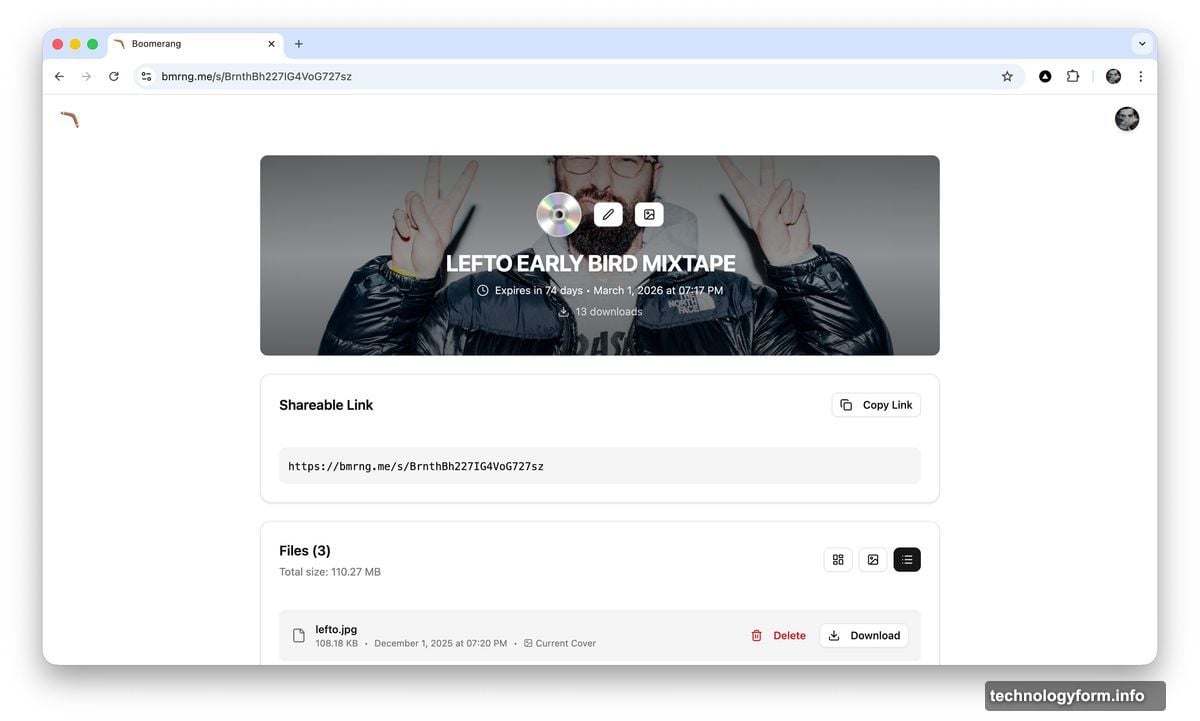
The interface looks barebones on purpose. Nalden believes most design exists to impress investors, not help users. Stripping that away creates a cleaner experience.
What’s Coming Next
Boomerang launched as a web app. A dedicated Mac app is coming soon.
But this isn’t about building another massive platform. Nalden isn’t chasing unicorn valuations or venture capital. He’s building the tool he wishes existed.
That’s the real difference. WeTransfer became a product shaped by acquisition strategies and shareholder demands. Boomerang exists to solve a specific problem without the baggage.
Will it succeed? Maybe. Maybe not. But it proves a point about tech simplicity.
Sometimes the best solution isn’t more features. It’s fewer. Sometimes progress means going backward to what worked before companies got complicated.
Creatives wanted their old file-sharing service back. Nalden built them one. Now we’ll see if simplicity still sells in a world obsessed with adding more.