OpenAI Just Built HR Software for AI Agents
OpenAI launched something nobody expected. A human resources platform. But not for people.
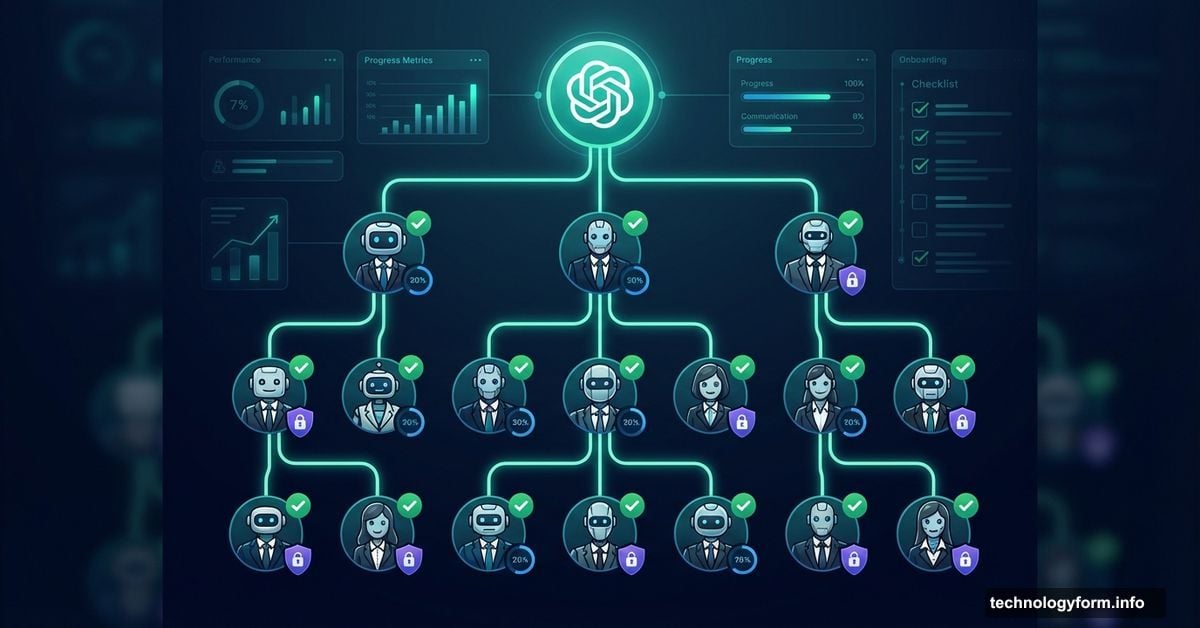
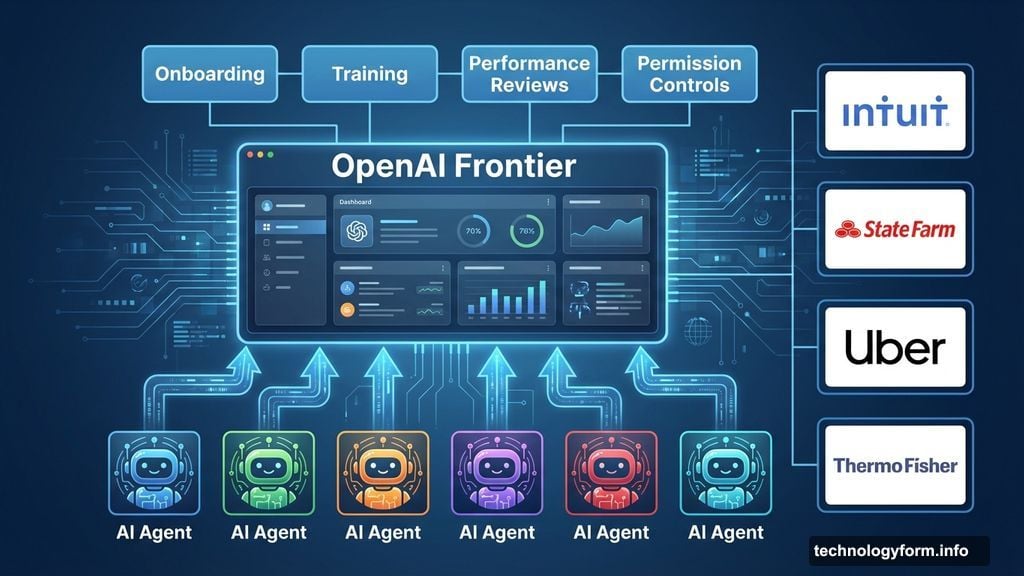
Meet OpenAI Frontier. It’s designed to manage AI agents the same way HR departments manage employees. Complete with onboarding, training, performance reviews, and permission controls.
The platform went live today for select customers. Intuit, State Farm, Thermo Fisher, and Uber are already using it. Dozens more piloted the system before launch.
Why AI Agents Need Their Own HR Department
Managing one AI agent is straightforward. Managing dozens across an organization becomes chaos fast.
Right now, most companies run agents on fragmented tools. Each department uses different platforms. Data sits in disconnected silos. Nobody knows which agents have access to what information.
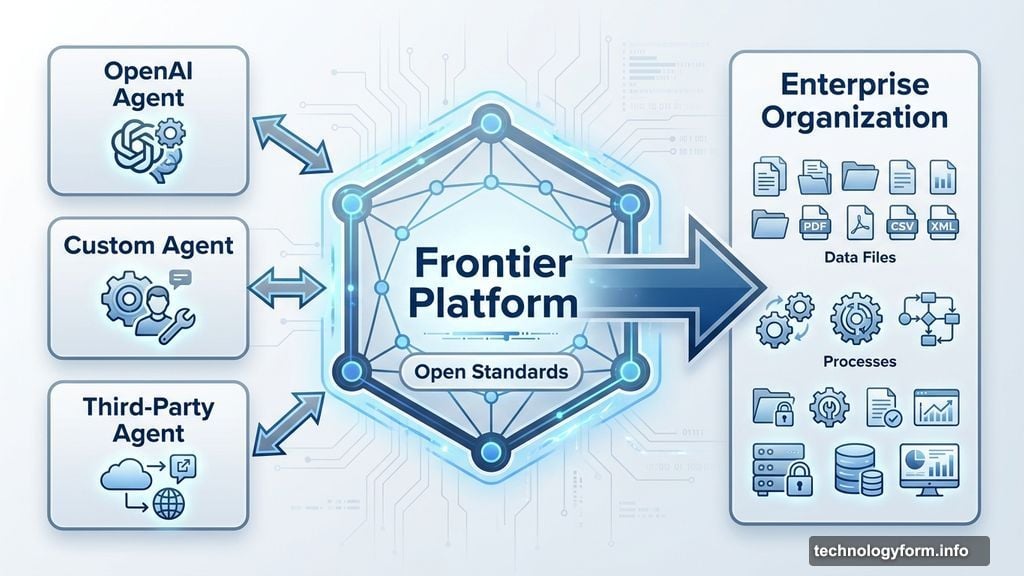
Frontier fixes this mess. It creates a unified control center for every AI agent in your organization. Whether you built them yourself, bought them from OpenAI, or got them from another vendor entirely.
Think of it as a central nervous system. All agents connect through Frontier. They share context about company operations. They communicate with each other when needed. Plus, administrators can set precise boundaries for sensitive work.
The Platform Trains Agents Like New Hires
OpenAI studied how enterprises scale human workforces. Then they applied those same principles to AI management.
Agents get formal onboarding when deployed. They learn company-specific processes and policies. Human workers can provide feedback to improve agent performance over time.
Moreover, agents build institutional memory through repeated tasks. So they get better at their jobs instead of starting from scratch each time. Just like human employees who gain experience.
Barret Zoph, OpenAI’s general manager for business-to-business, calls Frontier an “agent interface.” The goal is simple. Make it easy for any team to “hire AI coworkers” for specific tasks like data analysis or code execution.

OpenAI Admits It Can’t Build Everything
Here’s the surprising part. Frontier works with agents from any company. Not just OpenAI’s tools.
Fidji Simo, OpenAI’s CEO of Applications, made the strategy clear. She wants Frontier to become the single platform managing all enterprise AI work. But that requires acknowledging a hard truth.
OpenAI won’t build every agent companies need. So Frontier uses open standards. Customers can deploy their own custom agents, buy from third parties, or use OpenAI’s offerings. Everything works together through one interface.
This marks a major shift in thinking. Most AI companies try to lock customers into closed ecosystems. OpenAI is betting that becoming the management layer matters more than controlling every individual agent.
The Battle for Enterprise AI Management
Frontier enters a competitive market. Microsoft already launched Agent 365 for managing AI workers. Anthropic gained massive traction with Claude Cowork and Claude Code.
Plus, the stakes are enormous. AI companies need to prove their tools generate real business value. Investors poured billions into the sector. Now they want returns.
Agents represent the best path to profitability. Tools that work independently create tangible productivity gains. But only if companies can deploy and manage them effectively at scale.
Simo predicts that by year’s end, most digital work at leading enterprises will involve agent fleets. Human workers direct the strategy. Agents execute the tasks.
What Frontier Actually Costs
OpenAI isn’t saying yet. Chief revenue officer Denise Dresser declined to share pricing details during the press briefing.
That’s typical for enterprise software launches. Companies test pricing with early customers before announcing public rates. But the lack of transparency makes it hard to evaluate whether Frontier represents good value.
One thing is clear. OpenAI positioned Frontier as essential infrastructure for the agent-powered future. Not a nice-to-have feature. So expect pricing that reflects that positioning.
The Real Question Nobody’s Asking
Will agents actually replace human workers at scale? Or is this another AI hype cycle dressed up as transformation?
Frontier assumes companies will deploy dozens or hundreds of agents. That assumes AI tools reach reliability levels they haven’t achieved yet. Many current agents still make mistakes that require human oversight.
So maybe Frontier is building infrastructure for a future that’s further away than OpenAI suggests. Or maybe it positions them perfectly for when that future arrives.
Either way, the message is clear. OpenAI thinks managing AI workers will become as complex as managing human ones. And they want to own the platform that makes it possible.