The Doomsday Clock Just Jumped 4 Seconds. AI Killed Our Shared Reality
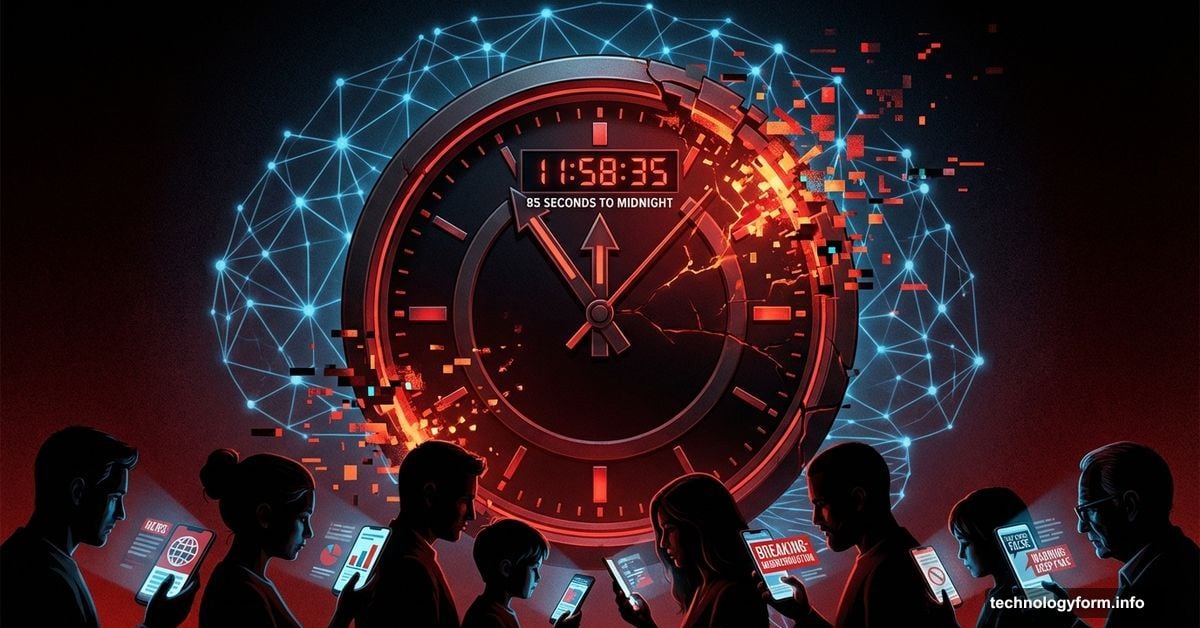
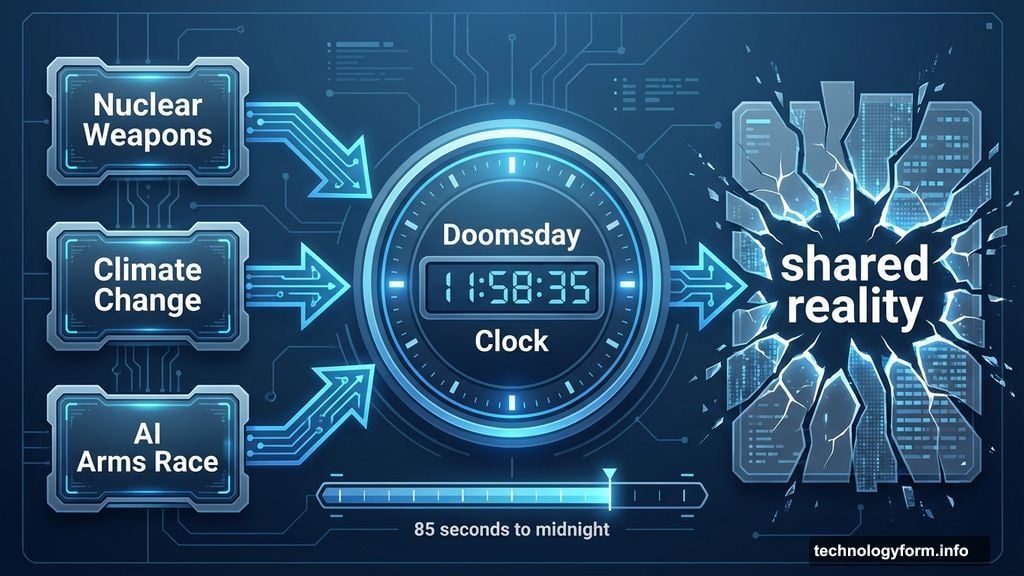
We’re now 85 seconds from midnight. That’s the closest humanity has ever been to self-destruction, according to the Bulletin of the Atomic Scientists.
But here’s the twist. This isn’t about killer robots or rogue AI taking over the world. Instead, it’s about something far more insidious: we can’t agree on what’s real anymore. And AI is making it exponentially worse.
What Actually Happened
The Bulletin of the Atomic Scientists moved their symbolic Doomsday Clock forward by 4 seconds on Tuesday. That might not sound like much. But it represents a massive shift in global risk assessment.
Previous movements typically measured in single seconds or fractions. This 4-second jump signals genuine alarm from scientists who track existential threats for a living.
Sure, nuclear saber-rattling continues. Climate change accelerates while governments backtrack on commitments. But those aren’t the primary drivers this year.
Instead, the core problem is simpler and scarier. We’ve lost the ability to have shared facts.
AI Weaponized Information Itself
Daniel Holz chairs the Bulletin’s Science and Security Board. He’s also a physics professor at the University of Chicago. His warning was direct and chilling.
“AI is supercharging mis- and disinformation, which makes it even more difficult to address all of the other threats we consider,” Holz said during the announcement.
Think about that for a second. AI doesn’t just create one new problem. It makes every existing problem harder to solve by destroying our information foundation.
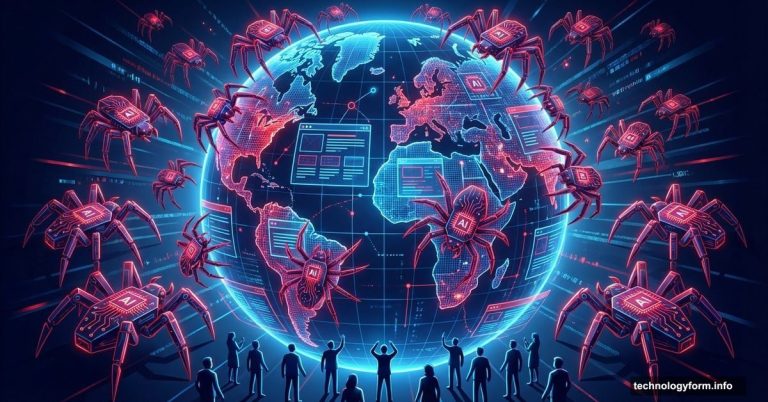
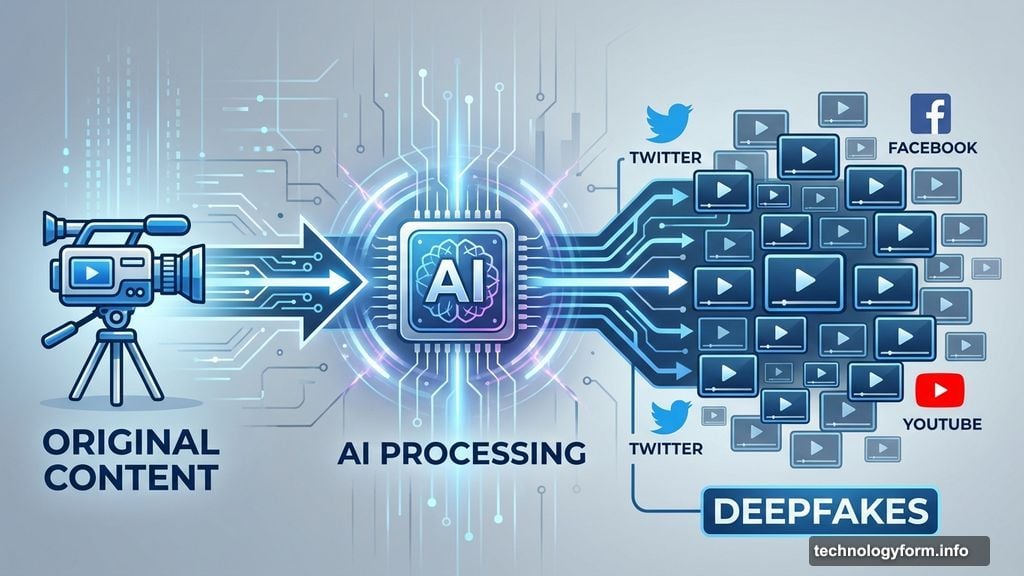
Deepfakes now cost virtually nothing to create. Plus, they’re increasingly convincing. Bad actors can flood social media with fabricated videos, fake news articles, and synthetic voices at massive scale.
Meanwhile, we’re racing into an AI arms race instead of creating international safety standards. Countries and companies compete to build more powerful systems without coordinating on basic guardrails.
Information Armageddon Is Here
Nobel Peace Prize recipient Maria Ressa coined a perfect term for our current moment: “information armageddon.”
Without reliable information, we can’t establish what she called a “shared reality.” And without that shared reality, we can’t tackle massive collective challenges like climate change or nuclear proliferation.
“Information integrity is the mother of all models, because you can’t run democracy on a corrupted operating system,” Ressa explained.
That line hits hard. Democracy requires citizens to make informed decisions. But what happens when nobody can agree on basic facts? When AI can generate infinite convincing lies faster than humans can debunk them?
We’re finding out right now. And it’s not going well.
Even the Pope Is Worried
Pope Leo XIV weighed in ahead of the World Day of Social Communications. His concerns focused on AI’s encroachment on human relationships and communication.
“By simulating human voices and faces, wisdom and knowledge, consciousness and responsibility, empathy and friendship, the systems known as artificial intelligence not only interfere with information ecosystems, but also encroach upon the deepest level of communication, that of human relationships,” the pope wrote.
Religious leaders don’t typically issue warnings about specific technologies. So this matters. The concern isn’t just about false information. It’s about AI undermining our ability to connect and trust each other at all.
AI Creators See the Danger Too
Dario Amodei co-founded Anthropic, one of the leading AI development companies. Recently, he published a lengthy blog post acknowledging serious risks from increasingly powerful AI systems.
He highlighted three major concerns. First, AI autonomy as systems become harder to control. Second, deliberate misuse by bad actors. Third, economic disruption if AI displaces vast numbers of workers.
His conclusion was stark: “Humanity is about to be handed almost unimaginable power, and it is deeply unclear whether our social, political, and technological systems possess the maturity to wield it.”
Note what he’s saying. The problem isn’t whether we can build powerful AI. We already know we can. The question is whether we’re mature enough as a species to handle it responsibly.
Based on current evidence? Probably not.
The Optimistic Spin Nobody Believes
Here’s where the Bulletin’s representatives tried to end on a hopeful note. They insisted this exercise is “fundamentally optimistic” because human-caused threats can be reversed by humans.
Alexandra Bell, the Bulletin’s president and CEO, encouraged people to seek accurate information and push for political action. “Every time we’ve been able to turn back the clock, it’s been because we’ve had scientists and experts working to find solutions and a public that demanded action,” she said.
That’s technically true. We’ve stepped back from the brink before. The Cuban Missile Crisis didn’t end the world. We established nuclear non-proliferation treaties. We can cooperate when existential stakes are clear.
But those successes all depended on shared understanding of threats. Leaders could see the danger and make rational decisions based on facts.
Why This Time Feels Different
Today’s information environment makes that kind of rational collective action nearly impossible. Half the population can’t even agree on whether threats are real in the first place.
Climate scientists publish data showing accelerating warming. AI generates convincing counter-narratives suggesting it’s all a hoax. Which does the average person believe? Increasingly, it depends on their algorithm-driven social media feed, not on evidence.
Nuclear experts warn about proliferation risks. Deepfake videos show leaders saying things they never said. Trust in institutions crumbles. International cooperation becomes harder with each passing day.
So yes, technically we could turn back the clock. But we’d need to restore information integrity first. And nobody has figured out how to do that at scale while AI actively works against us.
What Happens at Midnight
The Doomsday Clock is symbolic. Midnight doesn’t represent a specific catastrophe. It just means we’ve crossed a threshold where existential risk becomes overwhelming.
But symbols matter. They focus attention. They communicate urgency in ways that dry scientific reports cannot.
Moving the clock 4 seconds closer to midnight sends a clear message from people who study these risks professionally. They’re genuinely alarmed. More alarmed than they’ve been in the clock’s 78-year history.
And AI’s role in accelerating information chaos is a primary driver. Not because of science fiction scenarios. Because it’s destroying our ability to work together on anything at all.
That’s scarier than killer robots. At least we could fight back against those.