This New Music App Wants to Bridge Spotify, Apple Music, and Bandcamp
What if you could share a song with a friend, regardless of which streaming service they use? What if a DJ’s Instagram feed automatically became a playlist in your library? What if AI filtered your music recommendations to only surface tracks you’ve genuinely never heard before?
Those are the questions driving Parachord, a new music app built by a solo developer using AI coding tools. And the story of how it came to exist says a lot about where independent software is heading.
One Developer, No Coding Background, Two Weeks
J. Herskowitz isn’t your typical app developer. His career was in product management, including stints at Spotify, LimeWire, and AOL Music. He describes himself as someone who never “wrote real code.”
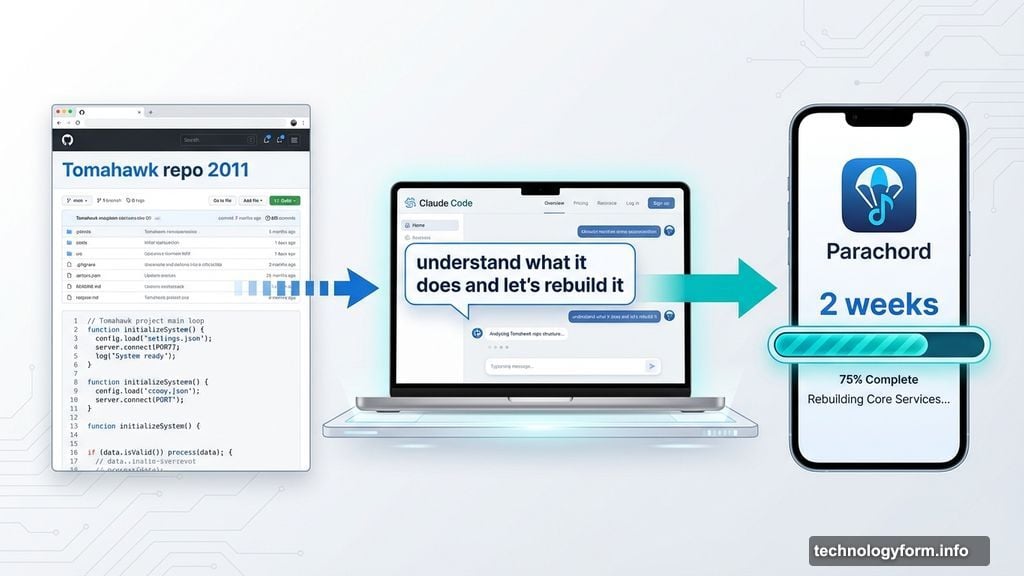
So when he decided to build Parachord, he didn’t hire a team. Instead, he opened Claude Code, pointed it at an old GitHub repository, and got to work.
“I fired up Claude Code, pointed it at the Tomahawk repo on GitHub, and said: Look at this, understand what it does, and let’s see if we can rebuild it.”
Within a couple of weeks, he had a working app.
The Ghost of Tomahawk Lives On
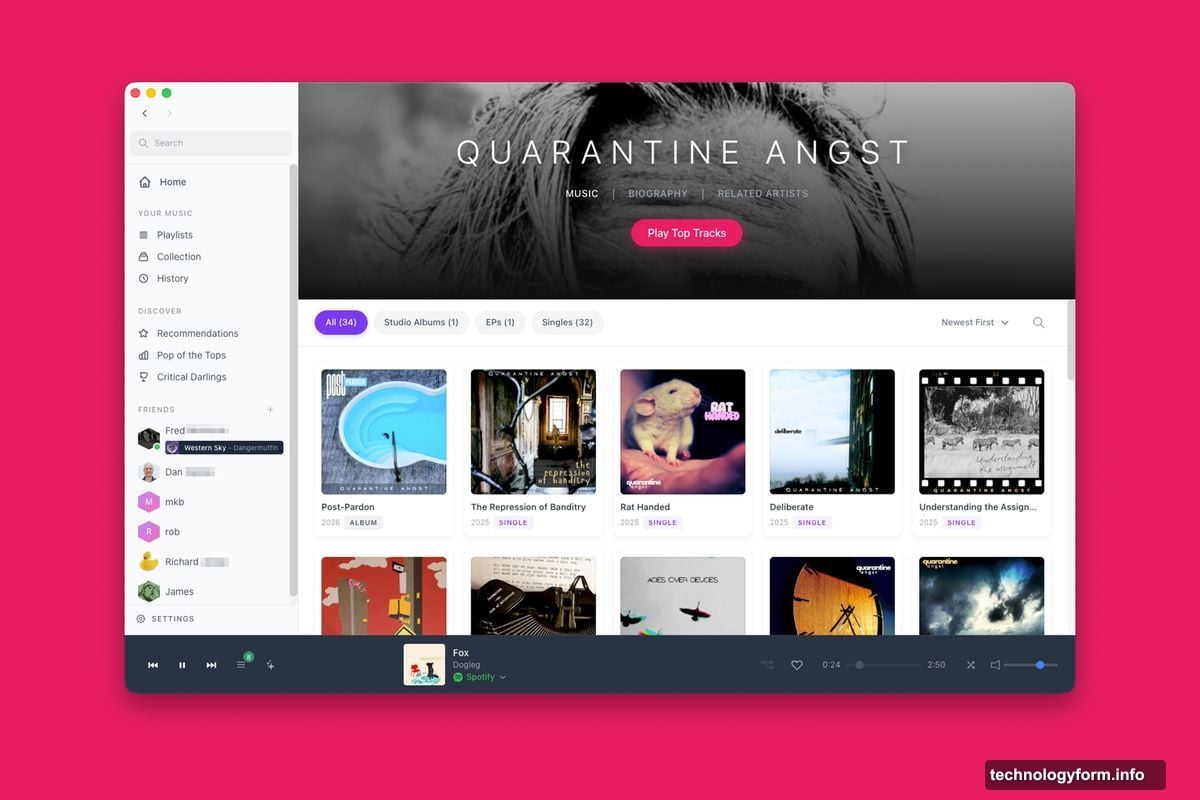
Parachord isn’t exactly a new idea. It’s a spiritual successor to Tomahawk, an open-source music app Herskowitz co-built back in 2011.
Tomahawk used a plug-in architecture to tap into multiple streaming services simultaneously, including Rdio, Grooveshark, and Beats Music. It also offered a social layer for music fans and let bands share tracks with universal links. For its time, it was genuinely ahead of the curve.
But without a business model, it couldn’t survive. Development wound down in 2015. “We all needed to get jobs,” Herskowitz says. “I was very sad when Tomahawk went away.”
The code never disappeared though. As an open-source project, it stayed on GitHub, quietly waiting. About a month ago, Herskowitz decided to revisit it, this time with AI as his coding partner.
Breaking Free From Streaming Service Silos
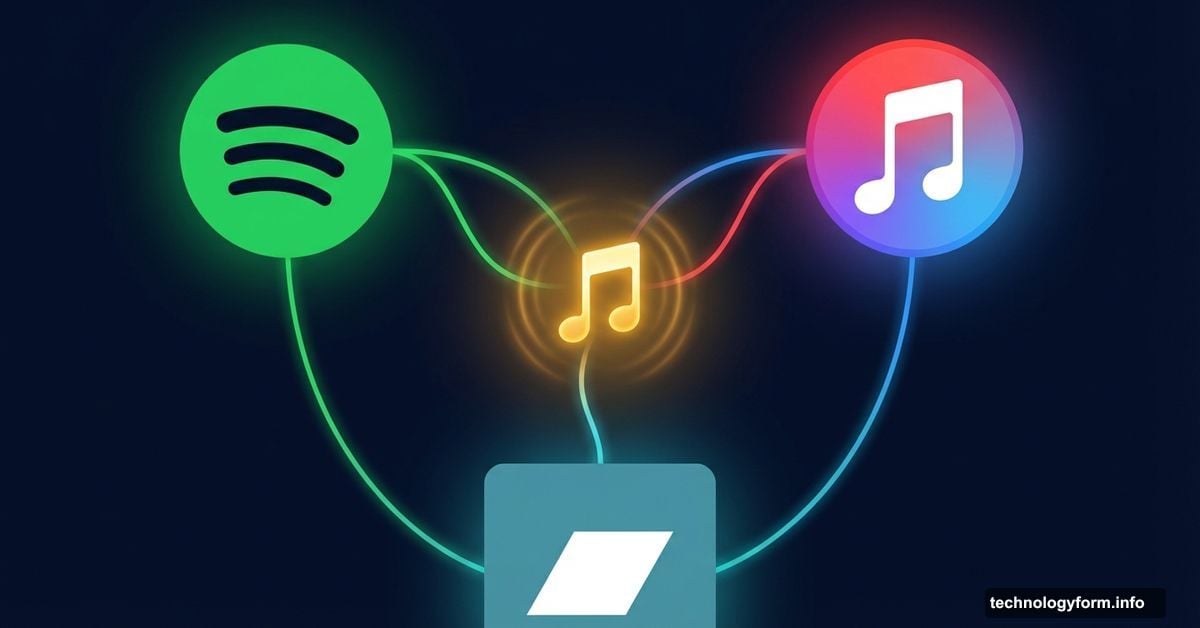
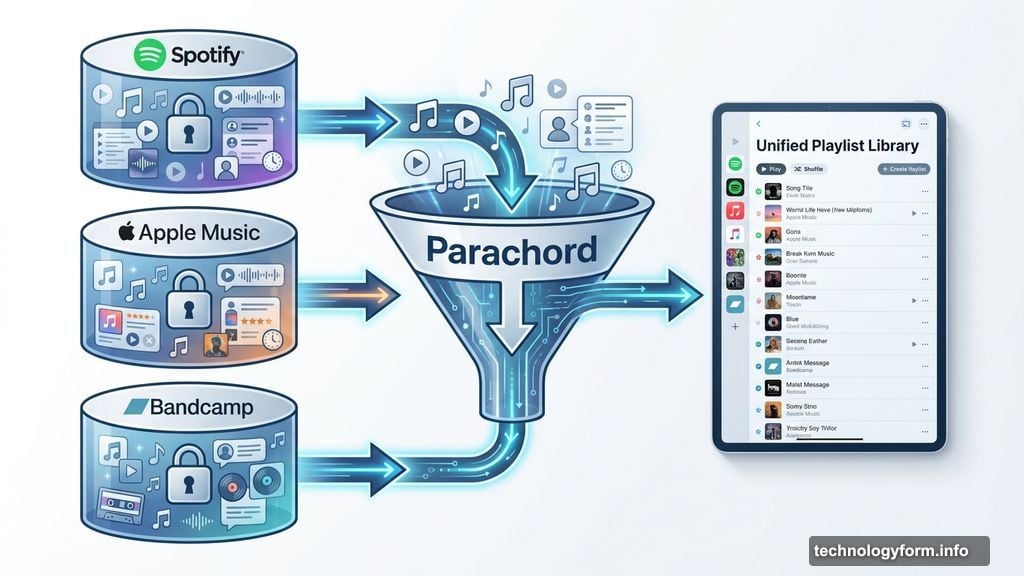
The core idea behind Parachord is simple but ambitious. Music metadata, meaning song titles, artist information, listening history, and recommendations, is currently locked inside individual streaming service silos. Spotify knows what you’ve listened to on Spotify. Apple Music knows what you’ve played there. Bandcamp tracks your purchases separately. None of them talk to each other.
Parachord wants to change that by sitting on top of all of them. The goal is to make songs universally playable and shareable, no matter which services you subscribe to.
Right now, the app is still very early, with unstable experimental builds gradually laying the groundwork for a proper beta release. But the vision is clear.
Who Is This App Actually For?
Herskowitz is honest about the target audience, and about how small it might be. Parachord isn’t built for casual Spotify users who just want their Discover Weekly.
It’s built for a specific kind of music fan. Someone who buys records on Bandcamp, tracks their listening history through Last.fm, and follows bands religiously on Bluesky. Someone who thinks about music infrastructure the way audiophiles think about speaker cables.
“When it comes to subscriptions, Spotify won,” Herskowitz acknowledges. But the people Parachord is aimed at aren’t satisfied with what Spotify alone offers.
He admits he sometimes wonders if anyone other than himself actually cares about this stuff. But he’s building it anyway.
“That’s the beauty of where we are today,” he says. “Technologically speaking, I can build an app for [just] me.”
The Streaming API Problem
There’s a practical complication worth knowing about. The major streaming services have grown significantly more restrictive about data sharing over the past decade.
To connect Parachord with Spotify, users need to register it as a personal app in Spotify’s developer portal and generate their own API key. The same personal-key model applies to AI service integrations, including Claude, Gemini, and ChatGPT.
That sounds complicated, and honestly, it is. But there’s an upside. Because Parachord runs on users’ own API keys rather than a central server, Herskowitz doesn’t need to pay for third-party API access or heavy hosting. No massive bills means no need to restrict features behind paid tiers.
As he wrote on LinkedIn: “I’m building Parachord as a personal app because music listening is personal. Your taste, your library, your preferred sources, your friends, your desired social experiences around listening to music, your history — these aren’t things that should live inside someone else’s walled garden.”
Vibe-Coding and the Return of Passion Projects
Parachord fits into a broader and genuinely interesting trend. Vibe-coding, building apps through AI-assisted development rather than traditional programming, is most often discussed in the context of productivity tools.
But the music and media space has its own rich history of passion projects that lived and died as niche experiments. Songbird turned MP3 blogs into playlists. Boxee tried to create universal movie and TV libraries across streaming services. Miro experimented with peer-to-peer video distribution. All of them were fascinating. Most of them failed.
The common thread was that a niche audience wasn’t enough to sustain a real business back then. Building and maintaining software required a team, and teams required money.
AI-assisted development changes that math. A single person with a clear vision and the right tools can now build and maintain something that would have previously required a full engineering team. The financial threshold for “sustainable” drops dramatically.
Is There a Business Model Here?
Herskowitz hasn’t completely abandoned the idea of Parachord becoming something commercially viable someday. He just isn’t expecting it to compete with Spotify head-on.
“Nobody’s going to start a streaming business from the ground up to compete with Spotify,” he says. But he sees potential in a different direction. Building experiences and tools on top of content people are already paying for could support a small, sustainable business. Think of it as a cottage industry that operates in the spaces the big platforms leave empty.
Whether Parachord gets there is still an open question. The app is unfinished, the audience is niche, and the technical hurdles around streaming service APIs aren’t going away.
But something about seeing a product manager with no formal coding background rebuild a decade-old open-source project into a working app in two weeks, with an AI as his only collaborator, feels genuinely significant. The barriers that killed Tomahawk in 2015 are lower now. Not gone, but lower.
And sometimes that’s enough to try again.