Paramount Beats Netflix in the Battle for Warner Bros. Discovery
The bidding war for Warner Bros. Discovery just ended. And Netflix lost.
Late Thursday, Netflix officially stepped back from its planned acquisition of HBO, HBO Max, and the Warner Bros. studio business. The decision clears the path for Paramount Skydance to take control of one of Hollywood’s most iconic entertainment empires.
Netflix Walks Away From the Table
Netflix co-CEOs Ted Sarandos and Greg Peters kept it blunt. “At the price required to match Paramount Skydance’s latest offer, the deal is no longer financially attractive,” they said in a joint statement.
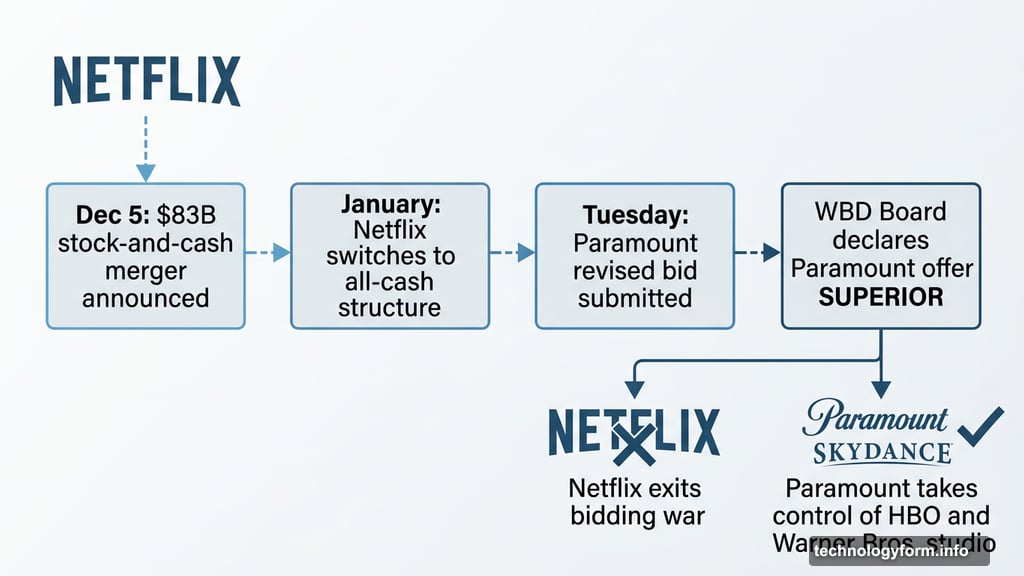
The trigger? Paramount submitted a revised all-cash bid of $31 per share on Tuesday, covering all of Warner Bros. Discovery. WBD’s board reviewed the offer and declared it “superior” to the existing Netflix agreement. That declaration put Netflix in a tough spot: match the price or walk.
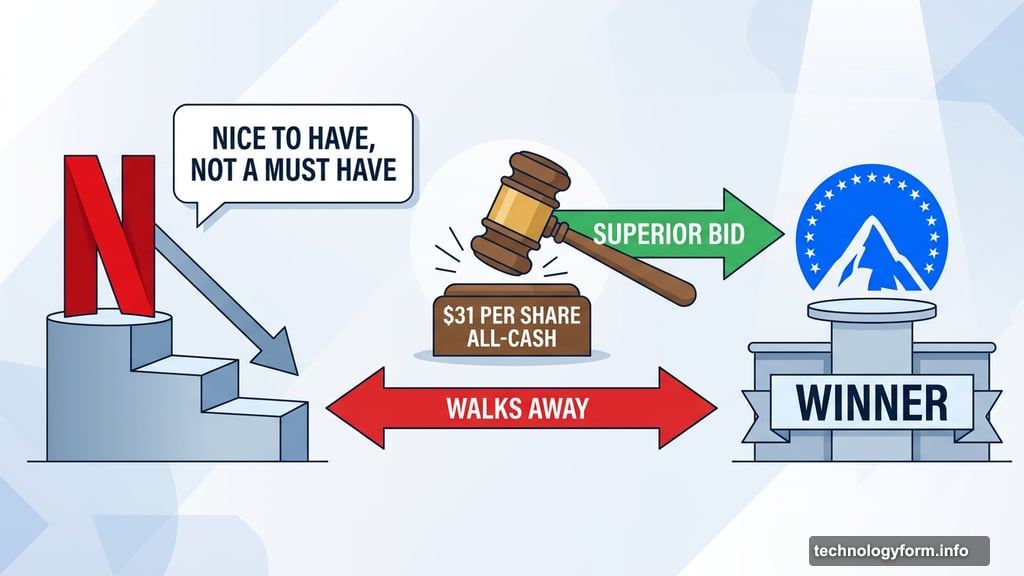
They walked.
Still, Netflix didn’t exit quietly. The co-CEOs added that they “believed we would have been strong stewards of Warner Bros.’ iconic brands” and that the deal would have strengthened the entertainment industry while protecting production jobs in the US. But then came the real kicker — Netflix described the acquisition as more of a “nice to have” than a “must have” at any price. That’s a telling line from a company that spent months in a heated bidding war.
What Paramount Is Actually Paying
Winning this deal isn’t cheap. Paramount’s $31-per-share all-cash bid is just the starting point.
On top of that, Paramount takes on a $2.8 billion termination fee — the penalty WBD owes Netflix for backing out of their existing agreement. Then there’s a daily ticking fee of $0.25 per share per quarter, which kicks in after September 30, 2026. And if the deal fails to clear regulatory hurdles, Paramount is on the hook for $7 billion.
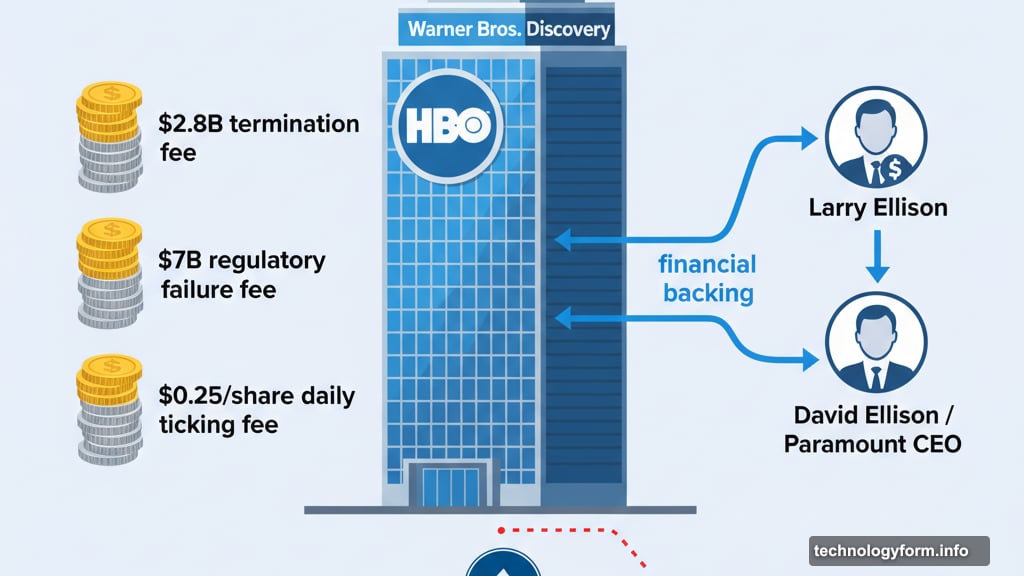
That’s a significant pile of financial risk. The money backing Paramount’s bid comes largely from Larry Ellison, the billionaire tech mogul and father of Paramount CEO David Ellison.
How This Bidding War Started
The original Netflix-WBD merger was announced on December 5 for a combined $83 billion in stock and cash. It seemed like a done deal at the time — Netflix absorbing HBO’s legendary content library alongside Warner Bros.’ studio operations.
But Paramount had other ideas. Several takeover bids followed, pushing Netflix to switch to an all-cash structure in January. From there, both sides went back and forth until Paramount’s revised Tuesday offer finally convinced WBD’s board to change course.
Notably, the announcement landed on the same day as WBD’s Q4 earnings call. It also coincided with Netflix’s Sarandos making a trip to Washington, DC, to meet with officials — right in the middle of the Paramount bid negotiations.
What This Means for Streaming
This outcome reshapes the streaming landscape in a big way. Paramount Skydance would bring together two major entertainment players, combining Paramount’s content with WBD’s HBO and Warner Bros. assets under one roof.
For Netflix, the loss stings on paper but may not hurt much in practice. The company was candid about treating this as an opportunistic deal, not a survival move. Netflix already has a massive content library and a global subscriber base that doesn’t depend on owning HBO to stay competitive.
For viewers, the bigger question is what happens to Max, HBO, and Paramount+ if this deal closes. Will they remain separate services? Merge into one? That part of the story is still unwritten.
The deal still needs regulatory approval, and Paramount’s timeline now stretches into late 2026 at minimum. A lot can change between now and then — but right now, Paramount Skydance is in the driver’s seat.