
You Say You Hate AI Frames. A Blind Test Says Otherwise.
There’s a fascinating gap between what gamers claim to want and what they actually choose when nobody’s watching.
German tech publication ComputerBase ran a clever experiment. They pulled scenes from six different games, rendered each one three ways — using Nvidia’s DLSS 4.5, AMD’s FSR 4, and native rendering — then stripped all the labels. They asked their community to vote for whichever version looked best.
The results are uncomfortable reading for anyone who’s spent time ranting about “fake frames” online.
DLSS 4.5 Wins More Often Than You’d Expect
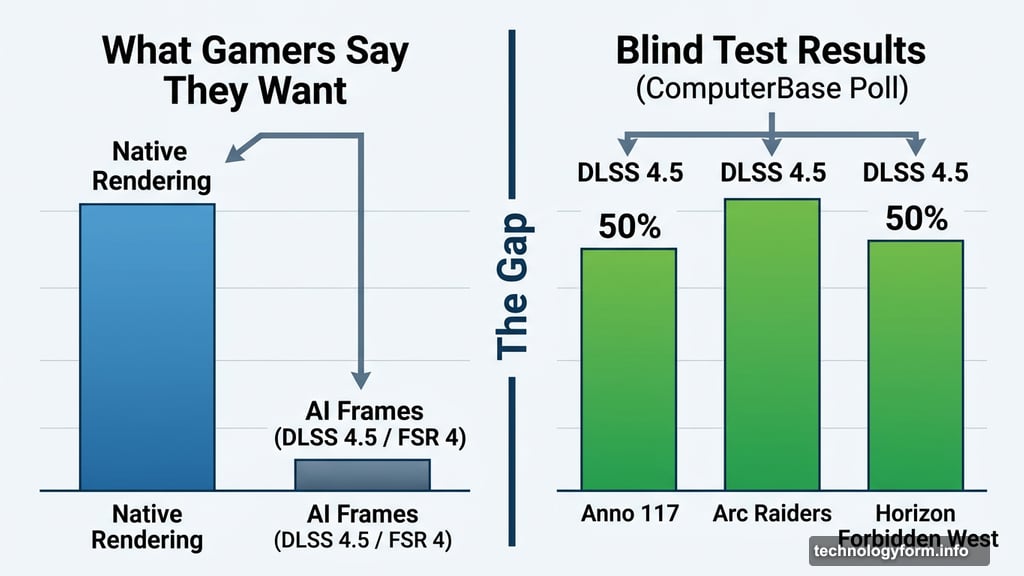
In three of the six games tested — Anno 117, Arc Raiders, and Horizon Forbidden West — DLSS 4.5 took more than 50 percent of the community vote. In two additional games, Arc Raiders and The Last of Us Part II, AI-generated frames pulled over 40 percent of votes.
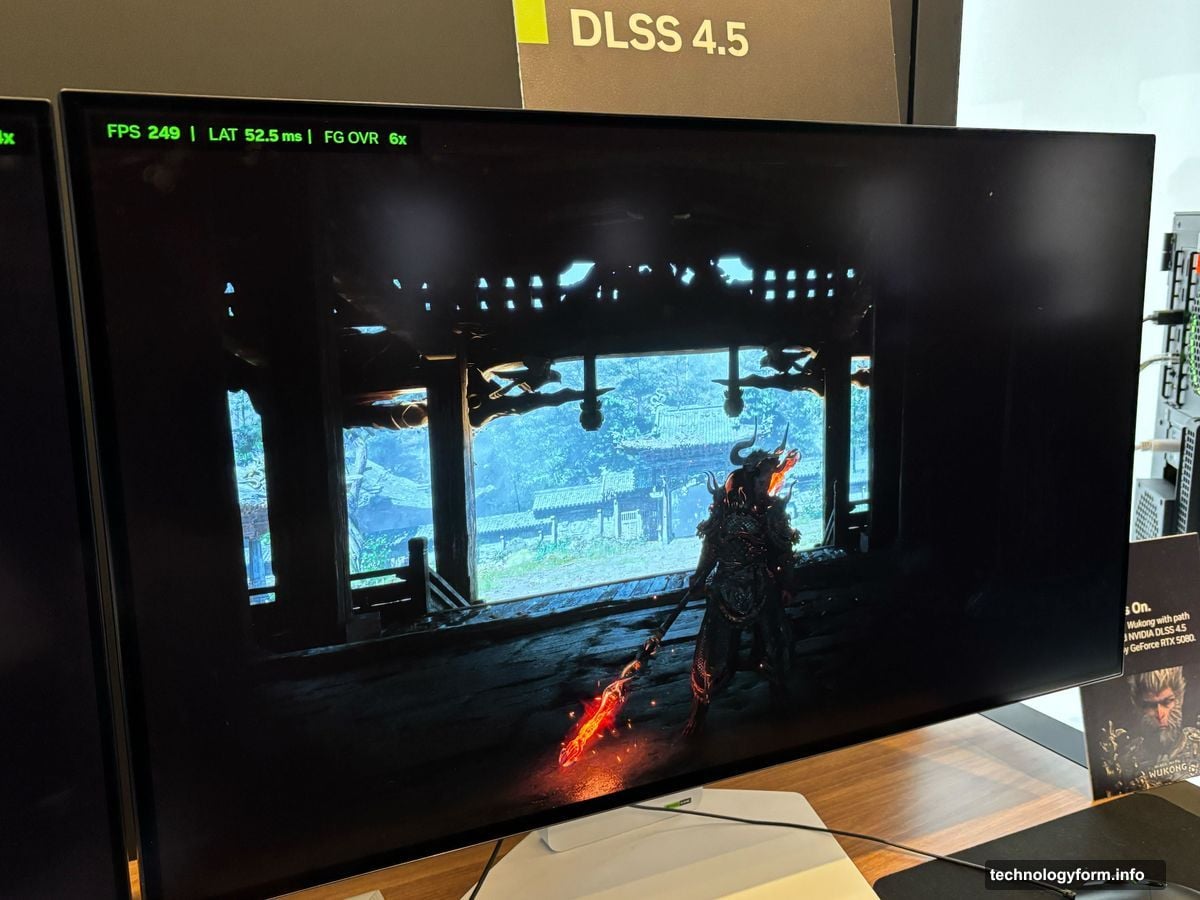
So in blind testing, a majority of real gamers kept picking the option that includes AI-upscaled, interpolated frames. The very thing many of those same gamers vocally oppose online.
That’s a striking disconnect between stated preferences and actual behavior. People say they want native rendering. Then they vote with their eyes for something else.
Why This Feels Like a Grift to Some Gamers
It’s worth understanding where the frustration comes from. For decades, raw raster performance was the gold standard for measuring GPU progress. You bought a new graphics card, you got more real pixels pushed to your screen. Simple.
Now GPU makers are leaning harder on AI upscaling instead of brute-force rendering improvements. Meanwhile, prices keep climbing. So the skepticism isn’t irrational — it genuinely looks like paying more for less actual hardware progress, with software tricks filling the gap.
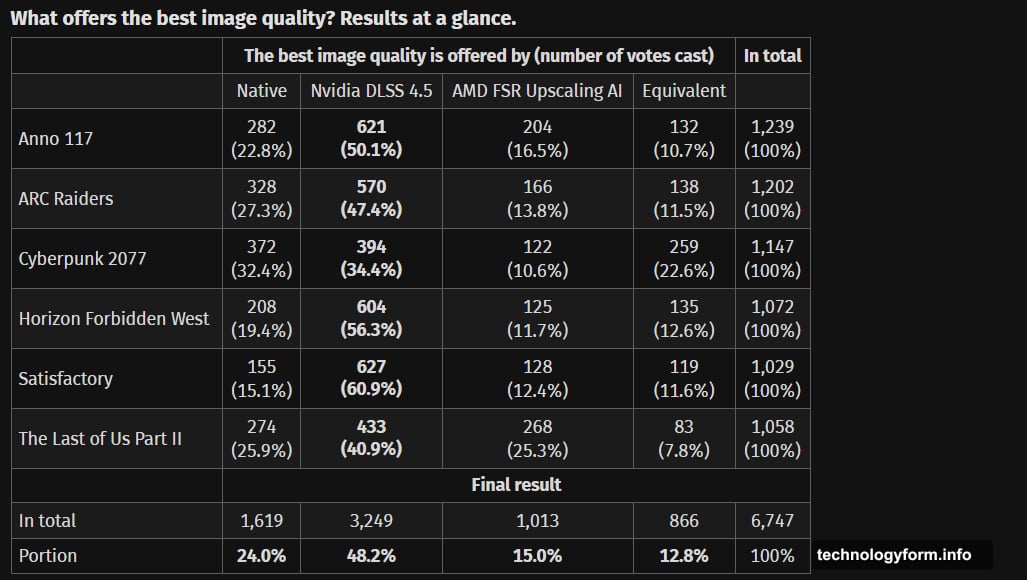
But ComputerBase’s poll complicates that story. If the AI-generated output consistently looks better to the average eye, what exactly is the grift?
What the Numbers Don’t Capture
The raw vote percentages miss some nuance. PCWorld senior editor Alaina Yee, who analyzed the ComputerBase results, noticed something specific when watching the Assassin’s Creed Shadows comparison.
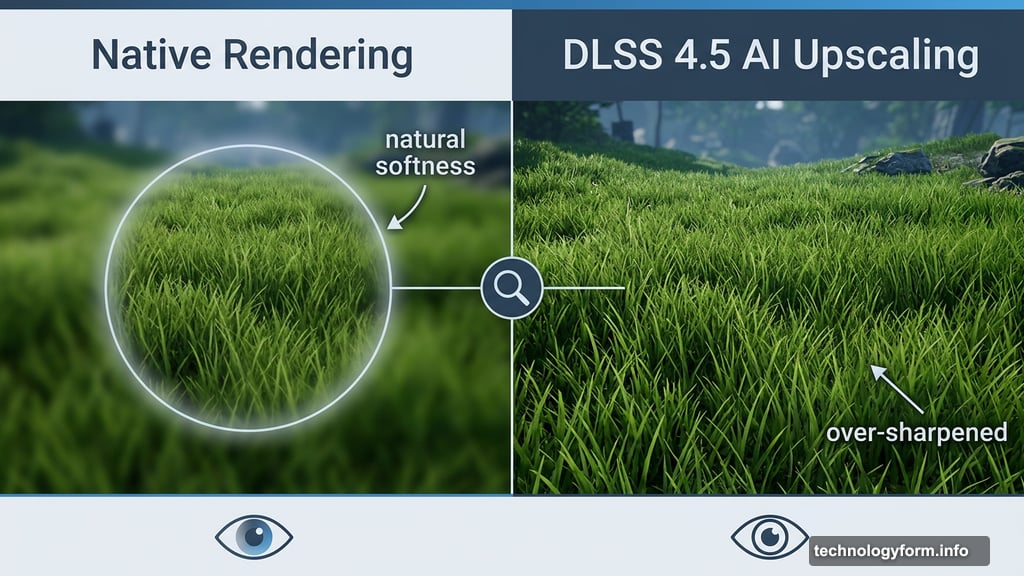
With DLSS 4.5, grass looked sharper and more defined. Technically impressive. But the human eye doesn’t work like a camera capturing every pixel equally. It focuses on a specific area while everything else naturally softens. Good native rendering can approximate that hierarchy of attention. Over-sharpened AI output sometimes doesn’t.
So the debate isn’t really “AI frames vs. no AI frames.” It’s about what kind of visual accuracy you personally value most. Sharpness and detail everywhere? Or a more natural distribution of focus and softness? Those are genuinely different preferences, and neither is wrong.
Jensen Huang’s Vision Is Already Winning
Nvidia CEO Jensen Huang has been saying for months that neural rendering is “the way graphics ought to be.” He’s betting the company’s GPU roadmap on that belief.
With Nvidia holding over 90 percent of the consumer GPU market, this isn’t really a debate gamers get to win or lose. DLSS is coming regardless. The question is whether it gets better or stays where it is.
That’s actually the more productive framing. If you have specific visual preferences — if you want AI upscaling to better simulate depth of focus rather than just cranking up detail everywhere — say so clearly. Leave feedback. Participate in blind tests when publications run them. Articulate what “better” means to you specifically.
The technology responds to demand signals. But only if those signals are precise.
What This Means Going Forward
Blind testing keeps proving that most gamers can’t reliably identify “fake frames” when labels are removed. That doesn’t mean all AI upscaling is perfect, or that native rendering doesn’t have real advantages in certain scenarios. It means the conversation needs to get more specific.
Saying you hate AI frames is less useful than explaining exactly what AI frames currently get wrong for your eyes. Do they over-sharpen background detail? Do motion artifacts bother you in fast scenes? Does something feel slightly off even if you can’t name it?
Those are useful data points. “Fake frames bad” is not.
The shift toward neural rendering isn’t a question anymore. How good it gets, and how well it matches what gamers actually want from their visuals — that part is still being written.