OpenAI’s Pentagon Deal Just Cost Them Their Hardware Chief
Caitlin Kalinowski walked away from one of the most coveted jobs in tech. And she did it in under 16 months.
The executive who led OpenAI’s hardware team resigned on March 7, 2026, citing the company’s recently announced deal with the Department of Defense. Her departure signals something deeper than a personnel change — it shows real cracks forming inside one of Silicon Valley’s most powerful organizations.
A Pentagon Deal That Moved Too Fast
OpenAI’s agreement with the Pentagon came together quickly. Almost suspiciously quickly.
The deal followed a breakdown in negotiations between the Pentagon and Anthropic, which had pushed for explicit safeguards against mass domestic surveillance and fully autonomous weapons. The Pentagon responded by designating Anthropic a supply-chain risk — a striking escalation that rattled the entire AI industry.
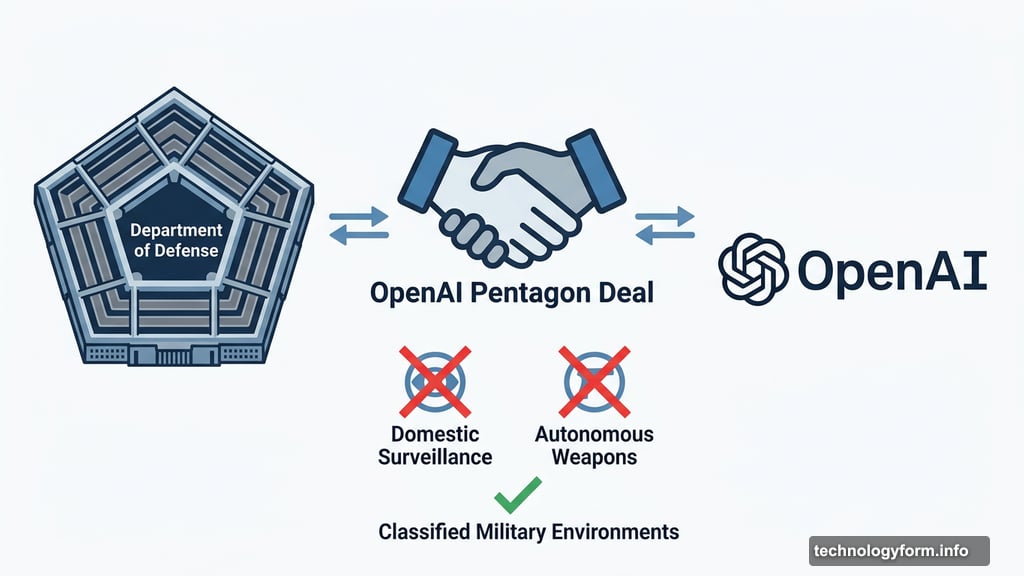
OpenAI stepped in fast. The company announced its own agreement allowing its technology in classified military environments. Executives took to social media to explain the move, describing what they called a “more expansive, multi-layered approach” that combines contract language with technical safeguards.
But for Kalinowski, the speed of that announcement was exactly the problem.
“These Are Too Important to Rush”
Kalinowski didn’t mince words in her public resignation statement. “AI has an important role in national security,” she wrote. “But surveillance of Americans without judicial oversight and lethal autonomy without human authorization are lines that deserved more deliberation than they got.”
She later clarified her position on X. “My issue is that the announcement was rushed without the guardrails defined. It’s a governance concern first and foremost.”
That framing matters. She wasn’t rejecting the idea of AI in national security outright. She was rejecting a process she felt cut corners on questions that could affect millions of people. For someone who joined OpenAI in November 2024 after building augmented reality glasses at Meta, this was a principled stand with real professional consequences.
She also made a point of calling the decision “about principle, not people,” adding that she holds deep respect for CEO Sam Altman and the broader OpenAI team. That kind of careful phrasing suggests she thought hard about how to leave without burning bridges — while still making her values absolutely clear.
OpenAI Pushes Back
OpenAI confirmed Kalinowski’s departure to TechCrunch and issued a statement defending the deal. “We believe our agreement with the Pentagon creates a workable path for responsible national security uses of AI while making clear our red lines: no domestic surveillance and no autonomous weapons,” the company said.
The statement acknowledged that “people have strong views about these issues” and promised continued engagement with employees, government, civil society, and communities globally.
That’s a measured response. But it may not be enough to calm the concerns spreading both inside and outside the company.
Users Are Already Voting With Their Fingers
The fallout from the Pentagon deal isn’t staying inside boardrooms. Consumer reaction has been swift and measurable.
ChatGPT uninstalls surged 295% following the controversy. Meanwhile, Claude climbed to the top of the App Store charts. As of last weekend, Claude and ChatGPT held the number one and number two spots among free U.S. apps — but Anthropic’s rise tells its own story about where user trust is shifting.
That’s a remarkable swing in a short window. It suggests the Pentagon deal touched something many ChatGPT users care deeply about, even if they couldn’t articulate the governance nuances Kalinowski laid out so precisely.
The Bigger Picture Here
This story isn’t really about one executive leaving one company. It’s about where the AI industry draws its lines — and who gets to draw them.
Anthropic refused to sign a deal without defined safeguards, paid a real price for it, and is now fighting the supply-chain designation in court. Microsoft, Google, and Amazon said they’ll keep offering Claude to non-defense customers in the meantime, a quiet but meaningful show of support.
OpenAI went the other direction. Whether that ends up being the smarter strategic call depends entirely on what happens next — which safeguards actually hold, how the military uses the technology, and whether independent oversight ever materializes.
Kalinowski’s resignation won’t change the deal. But it raises exactly the kind of questions that should follow a decision like this. How much deliberation is enough when the stakes involve surveillance and lethal autonomy? Who inside these companies has the standing to slow things down?
Those aren’t comfortable questions. But they’re the right ones to be asking right now.