AI Influencers Now Have Their Own Awards Show, Complete With Finger-Count Judging
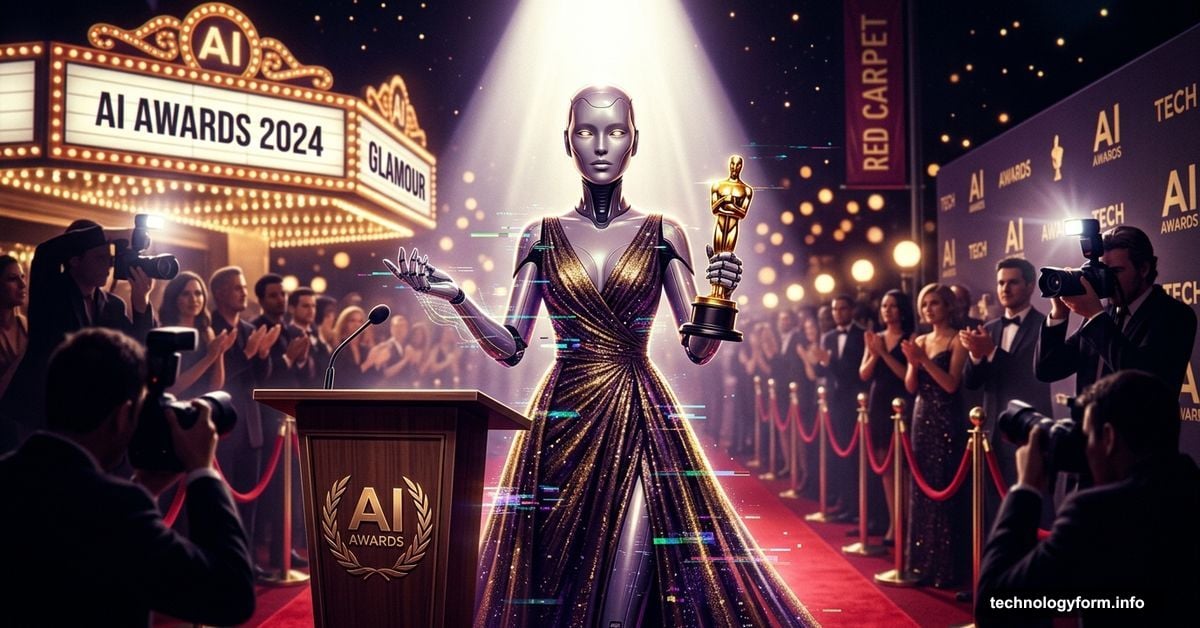
The AI influencer world keeps finding new ways to take itself seriously. First came beauty pageants for virtual models. Then music competitions for synthetic singers. Now, there’s a formal awards ceremony — complete with prize money, celebrity judges, and a red carpet event being called the “‘Oscars’ for AI personalities.”
It’s equal parts fascinating and strange. And honestly, it’s a pretty accurate snapshot of where the AI creator economy stands right now.
Meet the AI Personality of the Year Contest
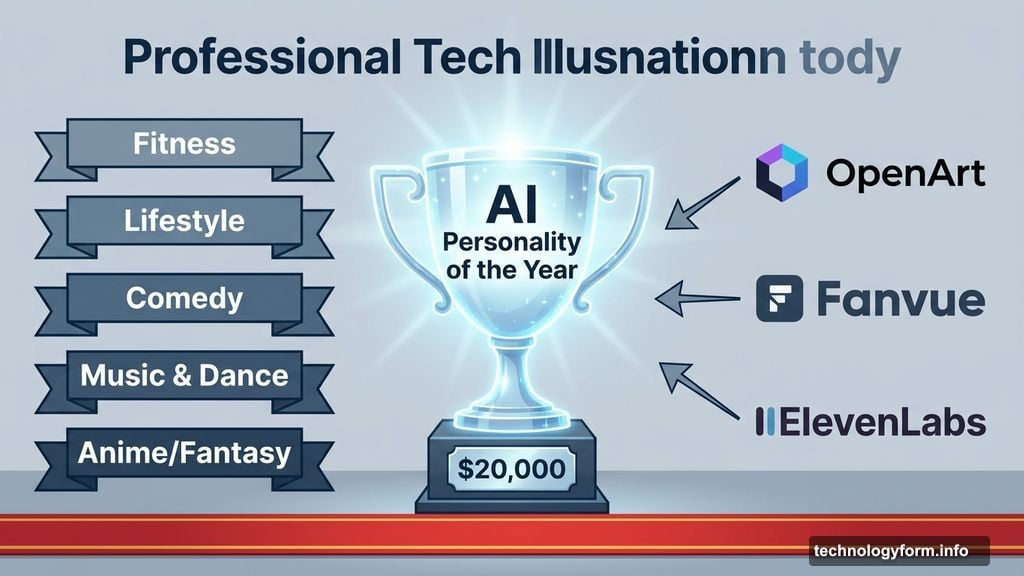
The competition launched on Monday and runs for a full month. Behind it is a collaboration between generative AI studio OpenArt, AI creator platform Fanvue, and AI voice company ElevenLabs.
Contestants compete for a $20,000 prize pool. Winners take home cash across categories including fitness, lifestyle, comedy, music and dance, and fictional cartoon, anime, or fantasy personalities. An overall winner gets the biggest share.
The celebration itself happens in May. Organizers want it to feel like a proper awards night — a genuine industry milestone, not a novelty experiment.
So Who Gets to Judge These Virtual Stars?
The judging panel is genuinely interesting. Among the 13 judges are Gil Rief, a 13-time Emmy-winning comedy writer, the creators of Aitana Lopez (a well-known Spanish AI model), and Christopher “Topher” Townsend, the MAGA rapper who created AI-generated gospel singer Solomon Ray.
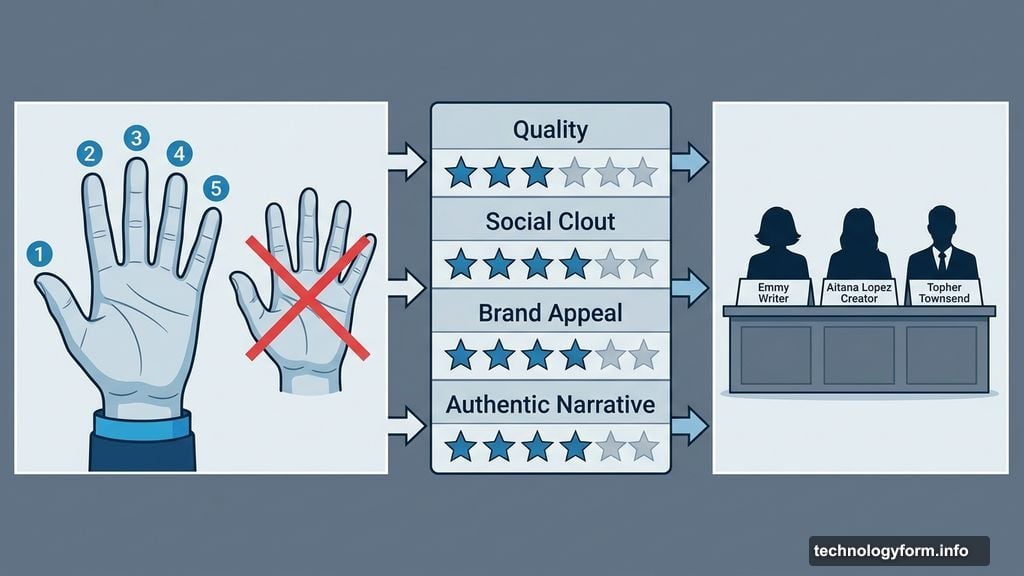
According to the judges’ briefing seen by The Verge, contestants get scored on four areas: quality, social clout, brand appeal, and the inspiration behind the avatar.
And yes, one of the specific judging criteria is having the right number of fingers and thumbs. That detail alone tells you a lot about where AI image generation currently stands.
Other criteria include consistent visual identity across social channels, genuine follower engagement, and what the judges call “an authentic narrative” behind the character.
How to Actually Enter
To compete, creators must build their AI influencer on OpenArt’s platform and submit through www.AIpersonality.ai. The entry process asks for social media handles across TikTok, X, YouTube, and Instagram, plus the story behind the character, your reasons for creating it, and details of any brand partnerships.
Existing AI influencers are welcome to enter. But they still need to submit material produced through OpenArt’s platform specifically, according to Matt Jones, head of brand at Fanvue.
The Anonymous Authenticity Problem
Here’s where things get philosophically tangled. Creators don’t need to publicly identify themselves to enter or win. Jones told The Verge that creators who want to stay out of the spotlight are completely welcome to do so.
“If a person who created this amazing piece of work wants nothing to do with the press or to expose themselves or to have their name out there, that’s obviously fine,” he said. “There would be no need to thrust anybody into the limelight here.”
That sounds reasonable on the surface. But think about what the contest is actually judging. One of the key criteria is “authentic narrative.” Yet the creator behind that narrative can stay fully anonymous. And the influencer themselves is, by definition, fictional.
So you have anonymous humans judging the authenticity of fake people. In a contest celebrating creative talent that doesn’t need to be publicly credited. It’s a bit of a philosophical pretzel.
Familiar Problems Follow the Format
The AI influencer space carries some real baggage, and this contest doesn’t escape it. Questions about originality keep surfacing — whether AI-generated likenesses borrow too heavily from real creators without credit or compensation. Whether these tools simply reproduce existing social biases in synthetic form. Whether anonymous creation makes accountability nearly impossible.
Some of that baggage belongs specifically to Fanvue. Back in 2024, a Guardian columnist described the company’s “Miss AI” beauty pageant as something that “takes every toxic gendered beauty norm and bundles them up into a completely unrealistic package.” That criticism hasn’t fully faded.
The broader AI influencer ecosystem has also seen some genuinely troubling corners. AI-generated personas like white nationalist rapper Danny Bones and MAGA fantasy character Jessica Foster have flourished partly because anonymity makes accountability difficult.
What This Actually Tells Us About the Industry
Jones pushes back on the cynicism, at least partly. He argues that creators inevitably put something real into their AI characters, even if those characters aren’t real people.
“You can’t help but put a little bit of yourself into the stories that you tell and the characters that you make,” he said.
And there’s something to that. The influencer economy has always run on a kind of performed authenticity. We all know that the polished lives we see on Instagram aren’t entirely real. But we’ve built an entire content ecosystem around them anyway.
AI influencers are just the next layer of that same dynamic — not strictly real, but familiar enough to function within systems the internet already built. The audience already knows how to engage with curated, constructed personas. AI personalities are a synthetic extension of something that was never entirely genuine to begin with.
Whether that makes the whole thing more honest or more absurd probably depends on your tolerance for this particular corner of the internet.
What’s clear is that the AI influencer economy is moving fast, generating real money, and now handing out trophies. For better or worse, it’s becoming a proper industry — finger-count scoring criteria and all.