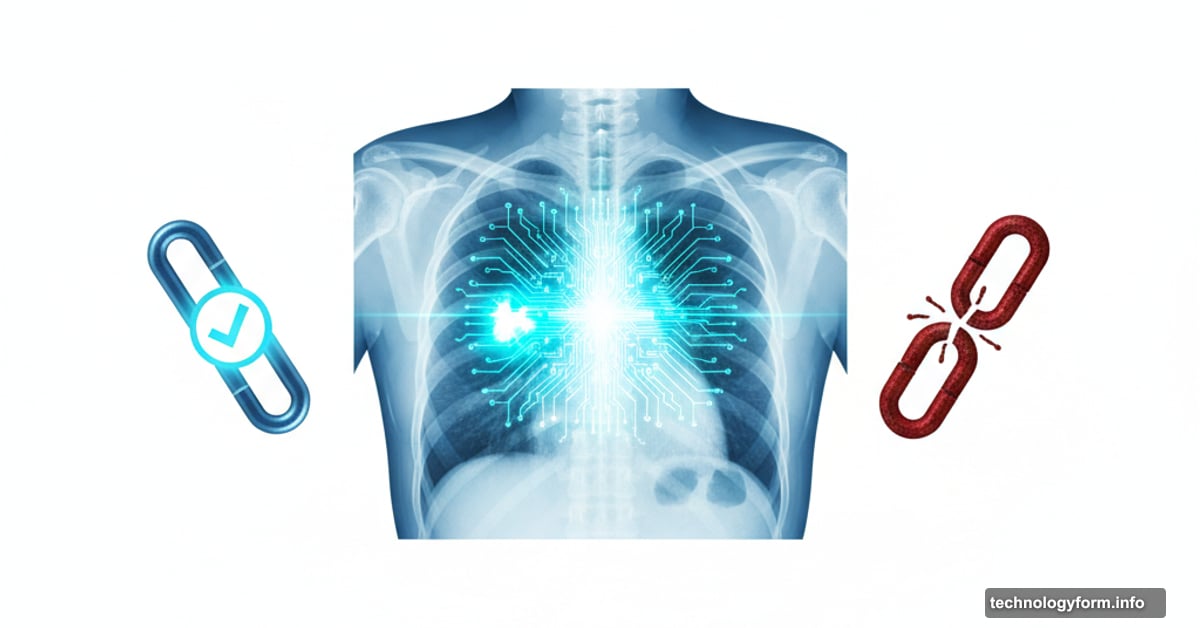
AI Spots Cancer Early by Fixing Health Care’s Follow-Up Crisis
A routine appendicitis scan revealed breast cancer. Then the system failed.
The radiologist documented a suspicious lesion requiring immediate follow-up. But that critical finding never reached the patient’s primary care doctor. Ten months passed before anyone noticed. By then, the cancer had spread to her brain.
She died 18 months later.
That patient was Angela Adams’ friend. Adams, a critical care nurse at Duke University Medical Center, watched the health care system fail someone she loved. So she built technology to prevent it from happening again.
Health Care Loses 50% of Follow-Up Cases
Radiologists spot concerning findings on scans ordered for entirely different reasons. A chest X-ray reveals a suspicious lung nodule. An abdominal CT catches a kidney mass. A routine scan detects early-stage cancer.
These discoveries should trigger immediate action. Instead, they vanish into broken communication systems.
Research from the University of Washington and Lahey Hospital reveals the scope of the problem. Approximately 50% of radiology follow-up recommendations never get completed. That excludes mammograms, where tracking is more established.
The consequences hit hard. Delayed diagnoses lead to worse outcomes. Patients develop advanced disease while waiting for appointments that were never scheduled. Recent studies show these missed follow-ups cost the health care system $3 million annually at individual hospitals.
Plus, the problem is accelerating. Modern imaging technology has become remarkably sensitive at detecting abnormalities. Adams calls these findings “incidentalomas” – unexpected discoveries that weren’t the original reason for the scan.
Detection rates have jumped 40% in recent years. More findings mean more follow-ups that need coordination. But the system can’t keep pace with the volume.
Communication Breaks Down Between Doctors
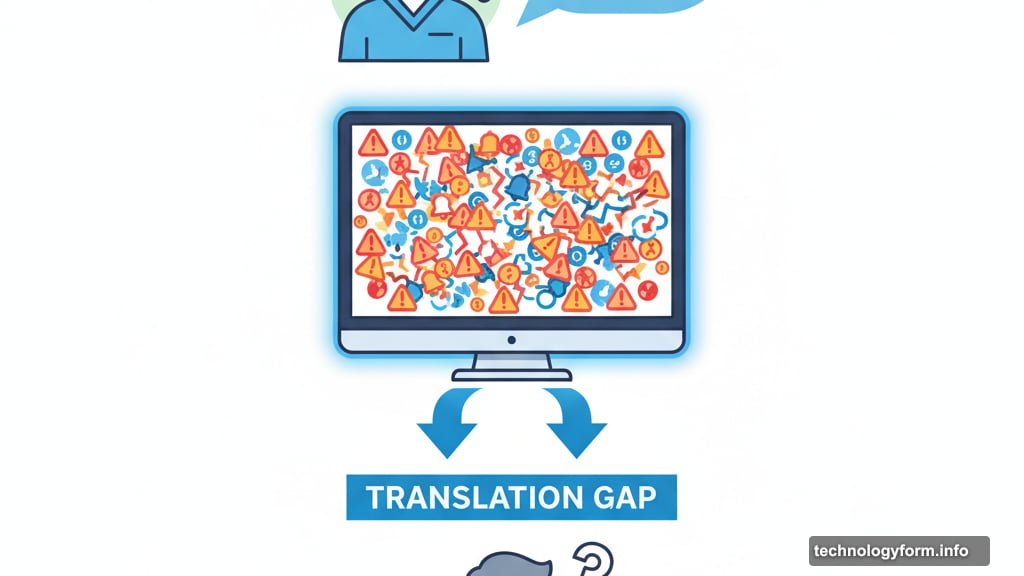
Hospital systems operate in chaos. Radiologists identify critical findings but can’t always reach the ordering physician directly. Electronic health records create notification fatigue. Important alerts get buried under routine messages.
Moreover, translation gaps compound the problem. Radiologists speak in technical terminology that doesn’t always translate clearly to primary care doctors. Nuanced findings can be misinterpreted or overlooked entirely.
The old system worked differently. A radiologist could call the primary care physician directly for urgent cases. Personal communication ensured nothing slipped through cracks.
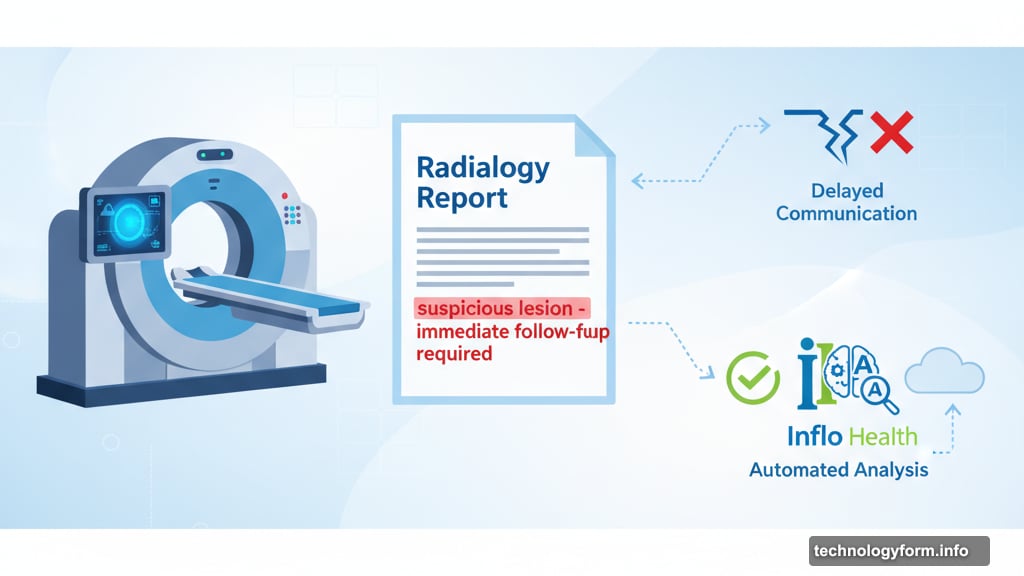
Now automated workflows have replaced phone calls. Technology was supposed to improve efficiency. Instead, it created new failure points where critical information gets lost.
Inflo Health Automates the Boring Parts
Adams co-founded Inflo Health in 2020 with CTO Nate Sutton. The platform uses natural language processing and large language models to scan imaging reports automatically.
The AI reads X-rays, CT scans, MRIs and ultrasound reports. It identifies follow-up recommendations and extracts relevant data points. Then it prioritizes cases based on urgency and risk level.
High-risk situations get flagged immediately. Care teams see exactly which cases need attention first. This eliminates manual tracking, where most follow-ups traditionally disappeared.
The system integrates with existing hospital workflows. It monitors progress in real-time and escalates cases through text messages and provider notifications. Staff can see efficiency metrics and identify bottlenecks.
But Adams maintains strict human oversight. The AI handles straightforward cases from start to finish – approximately 60-70% of all follow-ups. Patients receive text messages about appointments. They respond and complete their scans.
Complex cases get escalated to human care coordinators. That includes situations with multiple findings, oncology patients navigating treatments, or cases requiring clinical judgment.
AI Gives Doctors Time for Complex Cases
“AI is not meant to replace clinicians,” Adams emphasizes. “It should replace all of the broken parts of health systems that we cannot continue to throw people at.”
Her background spans critical care nursing and health care AI leadership. She’s been working in medical AI since before the post-pandemic surge made it trendy.
The technology empowers radiologists rather than replacing them. Automation handles routine follow-up coordination. That frees specialists to focus energy on genuinely complex cases requiring expertise.
Think of it as a workflow pyramid. AI manages the broad base of straightforward cases. Humans occupy the top, handling situations that demand clinical judgment and experience.
East Alabama Medical Center adopted the platform and boosted follow-ups by 74%, according to the American College of Radiology. Inflo Health reports impacting 125,000 lives to date.
If Adams’ friend had Inflo Health available, she would have received immediate notification about her follow-up. Her primary care doctor would have been alerted automatically. The breast cancer could have been caught before it spread.
Health Care Resists Technology Adoption
Health systems lag a decade behind other industries in adopting technology. Adams sees this resistance as dangerous conservatism.
Medical AI has existed since the 1960s. Apache scores predict mortality in intensive care patients. Cardiac risk calculators estimate 10-year disease probability. These tools are now embedded in standard clinical care.
Yet health care maintains a traditionalist mentality that holds patients back. Throwing more humans at systemic problems isn’t working.
“At the end of the day, AI – and its underpinnings – are just math,” Adams says.
The key is implementing technology to support humans rather than replace them. Done right, AI benefits clinicians, improves communication, and strengthens the broader health care system.
The Real Cost of Broken Systems
Adams focuses on what matters most: “Technology’s highest calling is to give humans back the two most important things in life that you cannot buy, which are health and time.”
Radiologists spend countless hours on administrative follow-up tasks. Care coordinators chase missing appointments manually. Patients navigate confusing systems trying to schedule necessary scans.
Meanwhile, critical findings sit in electronic records, invisible to the people who need to act on them.
Inflo Health doesn’t claim to solve every health care problem. It targets one specific failure point where automation clearly helps: ensuring follow-up recommendations actually happen.
The approach seems obvious in retrospect. Use AI for what it does well – scanning documents, identifying patterns, tracking tasks, sending reminders. Let humans handle what they do well – making clinical decisions, managing complex cases, caring for patients.
Adams’ friend shouldn’t have died from a cancer that was detected early. The technology to prevent that tragedy existed. The system just failed to use it properly.
Now it exists, built by someone who understands what happens when follow-ups fall through cracks. Not because clinicians don’t care, but because broken systems make it nearly impossible to track every case perfectly.
That’s a problem AI can actually solve.