Ticketmaster’s Day of Reckoning: A Jury Now Holds the Concert World’s Future
A Manhattan jury is about to deliver a verdict that could shake up the entire live music industry. After weeks of dramatic testimony, courtroom battles, and some genuinely jaw-dropping moments, the antitrust trial against Live Nation-Ticketmaster is wrapping up — and the outcome could reshape how Americans buy concert tickets for generations.
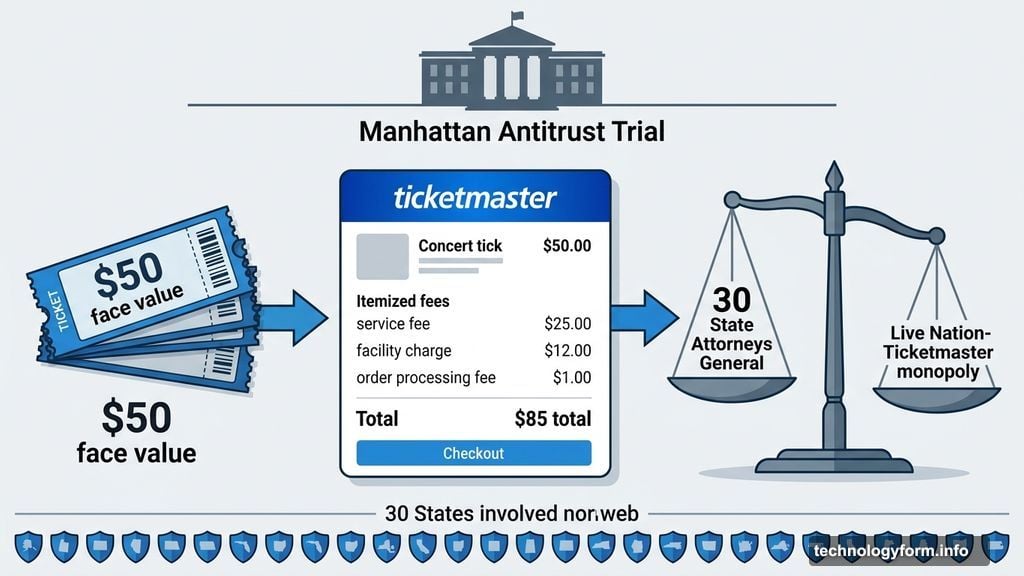
This isn’t just a legal dispute between corporations. It’s a case that touches millions of fans who’ve stared at a Ticketmaster checkout screen wondering why a $50 ticket somehow ends up costing $85.
How This Trial Started — And Why States Kept Fighting
The trial kicked off on March 2nd, but things got complicated fast. The Department of Justice, which originally joined the case, cut a deal with Live Nation just one week in. That left more than 30 state attorneys general holding the bag — and they decided to keep fighting anyway.
That’s a significant gamble. States pushed forward betting they could win bigger relief for their residents than the federal settlement offered. Their goal isn’t just a legal win. They want to permanently change how the concert industry works, potentially through a full breakup of Live Nation-Ticketmaster.
The antitrust complaint boils down to this: states argued Live Nation used its dominant position in concert promotion and amphitheater control to pressure venues into sticking with Ticketmaster — even when venues wanted to switch to competitors.
Consumer frustration clearly fueled this fight. Pennsylvania’s attorney general office reportedly receives so many Ticketmaster complaints that they had to add a special note asking residents to be patient waiting for a response. That’s a telling detail.
The Rapino Phone Call That Became the Trial’s Centerpiece
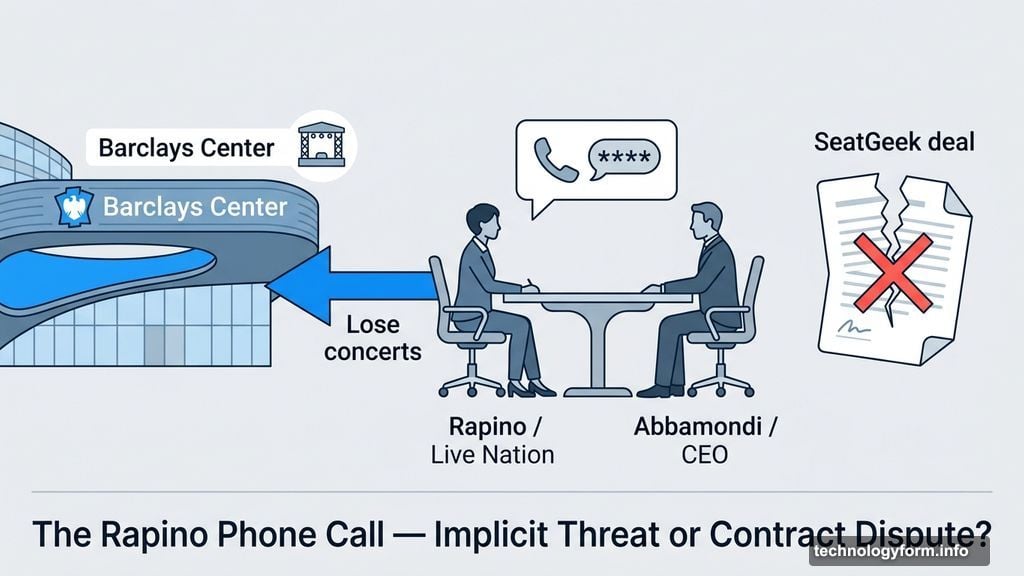
One story dominated the trial more than almost anything else. John Abbamondi, the former CEO of Brooklyn’s Barclays Center, testified as the government’s first witness. He described a phone call with Live Nation CEO Michael Rapino that he said amounted to an implicit threat.
In a recording played in open court, Rapino drops an F-bomb and sounds visibly agitated. He told Abbamondi it might be a “tough time to deliver tickets or concerts with a new competitor in town.” Abbamondi took that as a warning: keep using Ticketmaster, or lose access to Live Nation concerts.
SeatGeek’s CEO testified that this kind of pressure is exactly why his company started offering “retaliation insurance” to venues it was trying to win over from Ticketmaster. That detail says a lot about how the competitive dynamics actually work on the ground.
Rapino told a different story when he took the stand. He said his frustration was about a contract dispute, not a threat. He claimed Abbamondi was “trying to trap” him, and that he expected a chance to match SeatGeek’s competing bid. He said he was “caught flat footed” when no such opportunity came.
The jury will have to decide which version they believe.
Internal Chats, “Robbing” Fans, and a Perjury Accusation
Beyond the Rapino call, the trial surfaced some damaging internal communications. Live Nation employee Ben Baker — now head of ticketing for Live Nation venues — had 2022 internal chats exposed in court. In them, he bragged about “robbing” fans “blind” with costs for things like parking.
Baker called the messages “immature and regrettable.” Rapino said he hadn’t known about them until the trial and planned to “deal with” the issue that week. But those chats stuck. They fit neatly into the states’ narrative about a company that prioritizes extracting money over serving fans.
The states’ economic expert, Rosa Abrantes-Metz, put a number on that extraction. She testified that Ticketmaster keeps an average of $2.30 more per ticket sold compared to a competitor — and that most of that premium lands on concertgoers, not venues. That figure became another legal flashpoint when Live Nation accused her of perjury, claiming she misrepresented how she calculated damages. The judge said it looked more like a misunderstanding than deliberate perjury, but reserved final judgment on her testimony.

Oak View Group and the Bid-Rigging Backstory
Another revealing piece of the trial involved Oak View Group (OVG), a major venue management company. OVG had a deal with Ticketmaster that gave it financial incentives to steer venues toward the platform — a deal it reportedly never disclosed to clients.
In a separate case, OVG’s previous CEO Tim Leiweke faced DOJ accusations of bid-rigging, leading the company to sign a non-prosecution agreement. (Leiweke was later pardoned by President Trump.) Current OVG CEO Chris Granger testified that he didn’t know why the Ticketmaster deal wasn’t disclosed to clients, but admitted “we should have.” Yet he still maintained Ticketmaster is simply the superior product compared to rivals like SeatGeek and AXS.
That kind of testimony captures the central tension of the whole trial. Supporters of Ticketmaster argue the platform genuinely wins on merit. Critics say those wins are shaped by incentive structures that tilt the playing field.
Live Nation’s Defense: Competition Is Fierce, Quality Is Real
After the states rested, Live Nation called its own witnesses — and they delivered a notably different picture.
Drake’s manager Adel Nur praised Live Nation as a fair and generous partner, describing multimillion-dollar bonuses and a promoter that went “above and beyond.” Live Nation’s president of touring, Omar Al-joulani, insisted competition for major artists is brutal. He said the company has lost big names like Morgan Wallen and Bruce Springsteen. “I can’t stress telling you how competitive the business is,” he told the jury.
On venue relationships, Rapino pushed back on the idea that Live Nation dictates terms. “I don’t tell the billionaire what to do with his venue. He tells me,” he testified, apparently referring to venue owners. The company’s vice president of commercial strategy, Jennifer Johnson, added that exclusive deals are often something clients actually want — and that such arrangements carry more risk for Ticketmaster, not less.
The Barclays Center Gets a Second Opinion
The jury heard another angle on the Barclays Center story from the arena’s chief entertainment officer, Laurie Jacoby. According to Jacoby, things weren’t running smoothly after Barclays switched from Ticketmaster to SeatGeek. Ticket sale problems emerged for shows by The Strokes and My Chemical Romance. Attracting artists became harder. So the arena switched back to Ticketmaster — not because of threats, but because the other platform wasn’t delivering.
That testimony complicated the states’ narrative. And late in the trial, the states actually chose to voluntarily dismiss their own claim about unlawful exclusive dealing — a notable retreat on one part of the case.
Still, cross-examination of Ticketmaster’s Jennifer Johnson revealed that sales representatives received bonuses for renewing and extending venue contracts, at least through 2024. That kind of incentive structure is exactly what antitrust cases are often about.
What Happens After the Verdict
The jury could deliver its decision within hours or days. And the outcome genuinely matters, regardless of which direction it goes.
If Live Nation wins, the DOJ’s settlement — widely criticized when it was announced — may start to look more reasonable in retrospect. It would also signal that the company’s business practices fall within legal bounds, even if consumers find them infuriating.
But if the states win, the path opens toward something much bigger. A breakup of Live Nation-Ticketmaster is one real possibility — separating the promotion side of the business from the ticketing platform. That would be a seismic shift in how the concert industry operates.
Either way, don’t expect this to end cleanly. Almost certainly, appeals will follow whatever verdict arrives. This trial’s conclusion is really just the beginning of the next chapter in a years-long legal fight over who really controls the music industry.
For fans who’ve grumbled through countless Ticketmaster checkout screens, that chapter can’t come soon enough.