Wikipedia Traffic Crashed 8%. AI Search Just Stole Its Audience
Wikipedia held out longer than most. While AI scraped the web dry and social media devolved into chaos, the online encyclopedia remained that rare corner of the internet people actually trusted.
But the numbers tell a brutal story. Human pageviews dropped 8% year-over-year. Plus, the decline accelerated after Wikipedia fixed its bot detection systems and discovered fake traffic propping up the stats.
So what killed Wikipedia’s traffic? The same thing eating every website alive.
AI Search Engines Cut Out the Middleman
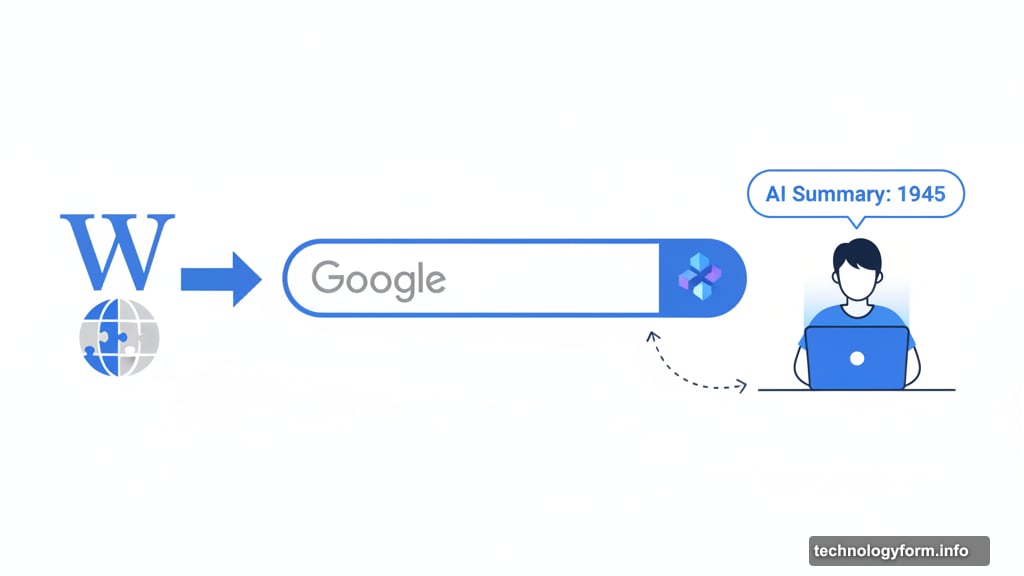
Google and others now answer questions directly. Instead of sending people to Wikipedia, they extract information and serve it in AI-generated summaries.
Marshall Miller from the Wikimedia Foundation confirms this shift hit hard. Search engines increasingly “provide answers directly to searchers rather than linking to sites like ours,” he wrote in a recent blog post.
The math is simple. Someone searches “when did World War II end.” Google’s AI summary tells them “1945” right at the top. Why click through to Wikipedia? Most people don’t.
Google disputes that AI summaries reduce traffic. But Wikipedia’s own data suggests otherwise. Those direct answers work great for searchers. Terrible for the website that sourced the information.
Social Video Platforms Ate the Young Generation
Younger people abandoned traditional search entirely. Instead, they hunt for information on TikTok, Instagram, and YouTube.
Miller points to this generational shift as another traffic killer. “Younger generations are seeking information on social video platforms rather than the open web,” he explains.
Think about it. A Gen Z user wants to learn about historical events. They don’t Google it. They search TikTok for a quick explainer video. The information might originally come from Wikipedia. But the creator gets the views, not the encyclopedia.
Wikipedia even tested AI summaries to compete with this trend. However, editors revolted and the foundation paused the experiment. Turns out Wikipedia’s volunteer community values accuracy over engagement tricks.
Bot Traffic Masked the Real Problem
For months, Wikipedia’s traffic looked stable. Then everything changed after an update to bot detection systems.
The new systems revealed something disturbing. Much of the “unusually high traffic” from May and June came from sophisticated bots designed to evade detection. These weren’t ordinary scrapers. They mimicked human behavior well enough to fool previous detection methods.
So the real traffic decline started earlier than anyone realized. The 8% drop reflects months of hidden deterioration. And it might get worse as AI companies build even better bots to harvest Wikipedia’s content.
The Volunteer Crisis Nobody Talks About
Falling traffic creates a vicious cycle. Fewer visitors means fewer potential volunteers. Fewer volunteers means less content creation and updates. Less content means the encyclopedia becomes less valuable.
Wikipedia runs entirely on volunteer editors. These unpaid contributors write articles, fact-check claims, and fight misinformation. They do it because they believe in free knowledge. But that belief weakens when nobody actually visits the site.
Miller worries openly about this dynamic. “With fewer visits to Wikipedia, fewer volunteers may grow and enrich the content,” he warns. Plus, fewer individual donors support the work financially.
One remarkable example from last week: Wikipedia editors held a conference where an attendee reportedly disarmed a gunman. These dedicated volunteers literally risk their lives for knowledge sharing. But how many new volunteers will step up if traffic keeps tanking?
AI Companies Owe Wikipedia Big Time
Here’s what bugs me most. AI systems train on Wikipedia’s content. They regurgitate encyclopedia knowledge in their answers. But they don’t send traffic back to the source.
That’s parasitic behavior dressed up as innovation. Wikipedia volunteers spend countless hours creating accurate, sourced content. AI companies monetize that work without compensating the community or driving visitors to the site.
Miller argues these companies “must encourage more visitors” to Wikipedia itself. He’s right. But enforcement seems impossible. No law requires AI search engines to cite sources or link back to original content.
Wikipedia is developing a new attribution framework. The foundation also created two teams focused on reaching new readers. Plus, they’re recruiting volunteers to help. But these feel like band-aids on a structural problem.
What Actually Needs to Change
The Wikimedia Foundation can’t solve this alone. The entire internet ecosystem shifted away from linking and towards extraction.
Miller suggests ordinary people can help by clicking through to original sources when searching online. He encourages “talk with the people you know about the importance of trusted, human curated knowledge.”
That advice sounds quaint. Most people won’t change their search habits out of principle. They want fast answers, not sourcing education.
So the real pressure needs to come from somewhere else. Regulators could require AI systems to prominently cite sources and link to originals. Search engines could prioritize traditional results over AI summaries. Social platforms could penalize content theft.
None of that will happen without public outcry. Because right now, tech companies profit from extracting Wikipedia’s value while starving it of traffic. And they’ll keep doing it until someone forces them to stop.
Wikipedia survived two decades of internet chaos by staying neutral, accurate, and free. But survival might not be enough anymore. The question isn’t whether Wikipedia remains important. Obviously it does. The question is whether it can stay alive when AI and social media platforms harvest its value without giving back.