OpenAI Is Building a Phone That Ditches Apps Entirely
Forget everything you know about smartphones. OpenAI wants to build a device where AI agents handle your tasks instead of you juggling a dozen different apps.
That’s the core idea behind a rumored OpenAI smartphone, first reported by industry analyst Ming-Chi Kuo. And honestly, it sounds like a pretty bold rethink of how phones actually work.
AI Agents Replace the App Drawer
Right now, getting something done on your phone means hopping between apps. You check one app for directions, another to book a table, a third to pay. It’s fine, but it’s friction.
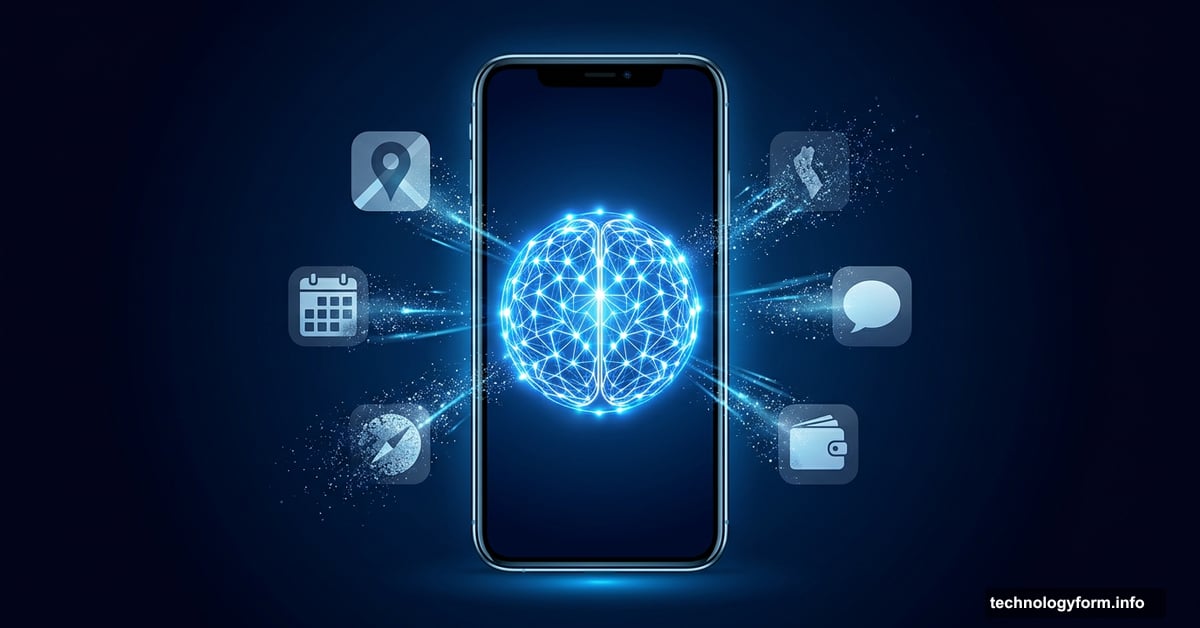
OpenAI’s rumored phone flips that model. Instead of apps, AI agents would sit at the center of the experience. They’d handle tasks across multiple services for you, without you manually switching between anything.

Kuo put it well. “Users are not trying to use a pile of apps,” he said. “They are trying to get tasks done and fulfill needs through the phone. This fundamentally changes how people think about smartphones.”
That’s a big vision. But it’s also exactly the direction both Qualcomm and MediaTek have been pushing for years, which is probably why OpenAI is partnering with both companies.
The Hardware Partners Behind the Device
According to Kuo, OpenAI is working with three key partners. MediaTek and Qualcomm would co-design a custom smartphone chip for the device. Luxshare, a major electronics manufacturer, would handle co-design and production.
The chip partnership makes a lot of sense. Most premium Android phones in 2026 already run on either Qualcomm’s Snapdragon 8 Elite Gen 5 or MediaTek’s Dimensity 9500. These are the companies building the processors that power today’s best devices. Tapping them for an AI-first phone is a smart move.
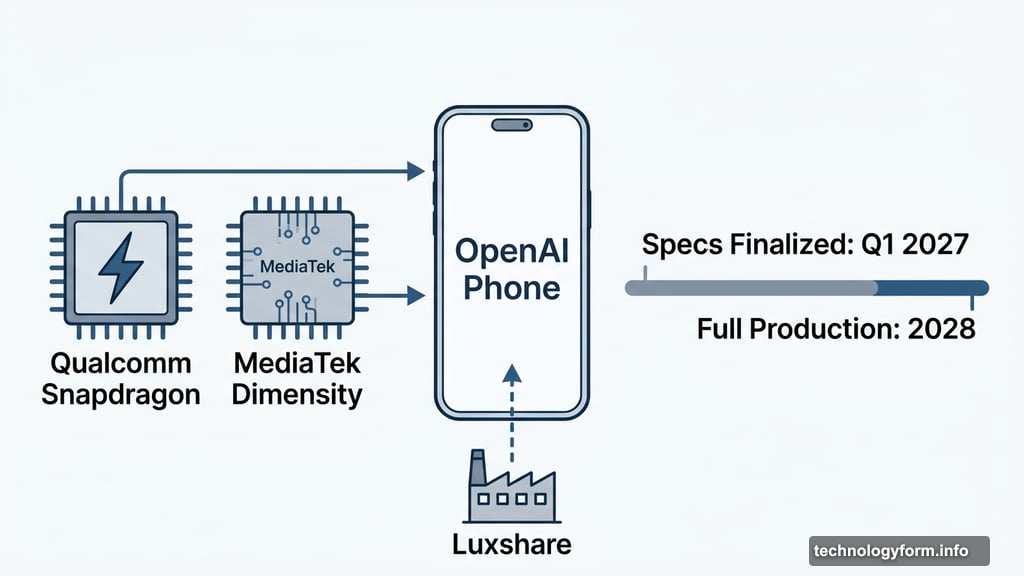
Kuo reported that specs and suppliers should be finalized by late 2026 or early Q1 2027. Full production is expected sometime in 2028.
OpenAI’s Bigger Hardware Ambitions
This phone isn’t a solo project. It’s part of a larger push into hardware that OpenAI has been quietly building for a while now.
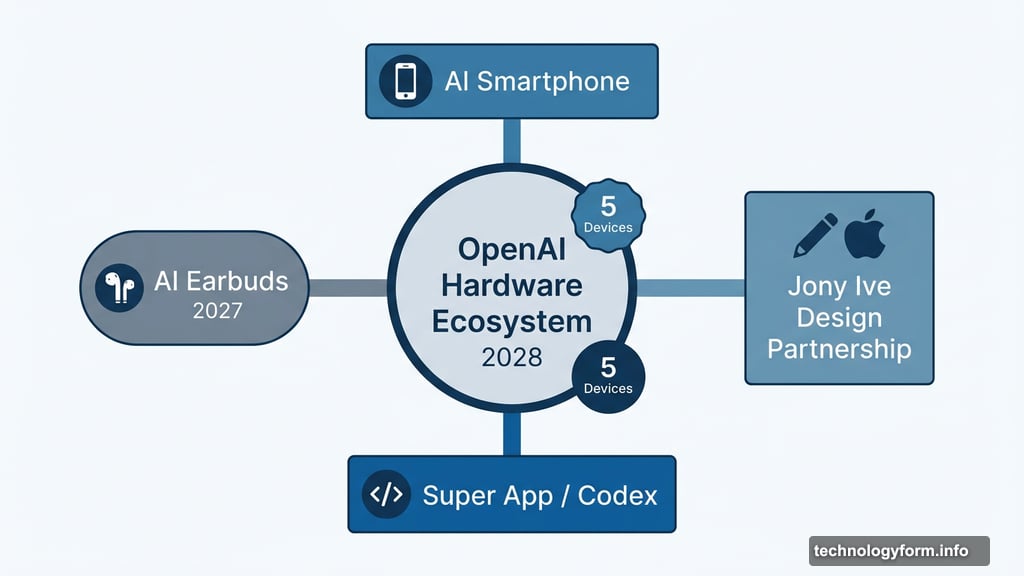
The most high-profile piece is a partnership with Jony Ive, the legendary designer behind many of Apple’s most iconic products. Recent rumors suggest OpenAI could have as many as five different devices ready by the end of 2028. That reportedly includes AI earbuds, which may launch later this year or in early 2027.
So the phone fits into a wider product ecosystem, not just a one-off experiment.
OpenAI Is Sharpening Its Focus
Meanwhile, OpenAI has been trimming its ambitions elsewhere. The company reportedly paused its Sora video generator and shelved a planned ChatGPT “adult mode.” The goal seems to be cutting distractions in favor of a more focused “super app” built around the Codex coding tool.
That context matters. OpenAI isn’t trying to do everything at once. It’s zeroing in on productivity and AI agents as its core identity. A smartphone built around that same idea fits the strategy perfectly.
Whether the rumored device delivers on its promise is another question entirely. Building great hardware is notoriously hard, and even companies with deep pockets and brilliant partners have stumbled. But if OpenAI can pull this off, the app-centric smartphone experience we’ve all grown used to might start looking pretty dated by 2028.
OpenAI did not respond to a request for comment.