Google Maps Went Hands-Free. Gemini Just Made Driving Way Easier
Google Maps stopped being just a navigation app. It became your AI copilot.
The new Gemini integration changes how you interact with Maps while driving. Instead of tapping and swiping at red lights, you talk. Gemini handles questions, finds places, and even reports traffic incidents. All without touching your phone.
Plus, navigation got smarter. Maps now gives directions using actual landmarks instead of vague distance measurements. That’s a bigger deal than it sounds.
Ask Questions While You Drive
Gemini turns Maps into a conversation partner. You can ask about restaurants, gas stations, or coffee shops along your route. Then follow up with more specific questions.
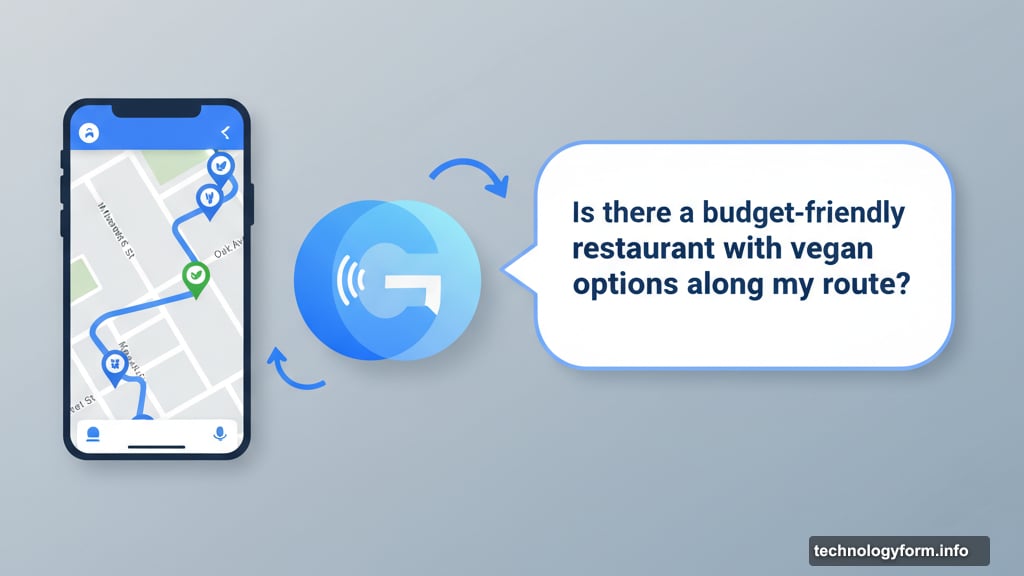
Here’s how it works in practice. Say you’re driving and hungry. You ask, “Is there a budget-friendly restaurant with vegan options along my route, something within a couple of miles?”
Gemini searches nearby options and responds. Then you can follow up: “What’s parking like there?” No need to repeat context or start over. Gemini remembers what you’re talking about.
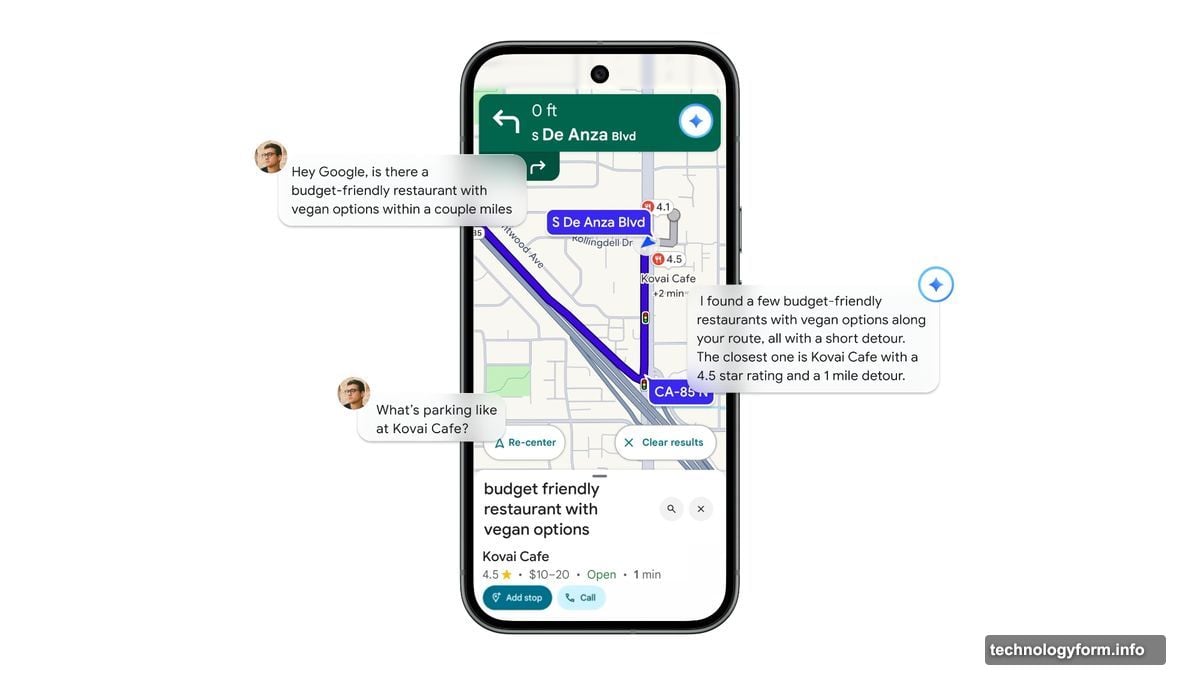
But it goes beyond food searches. You can ask about sports scores, news updates, or weather conditions. Gemini will answer while keeping your eyes on the road. Moreover, it can add events to your calendar or send messages through voice commands.
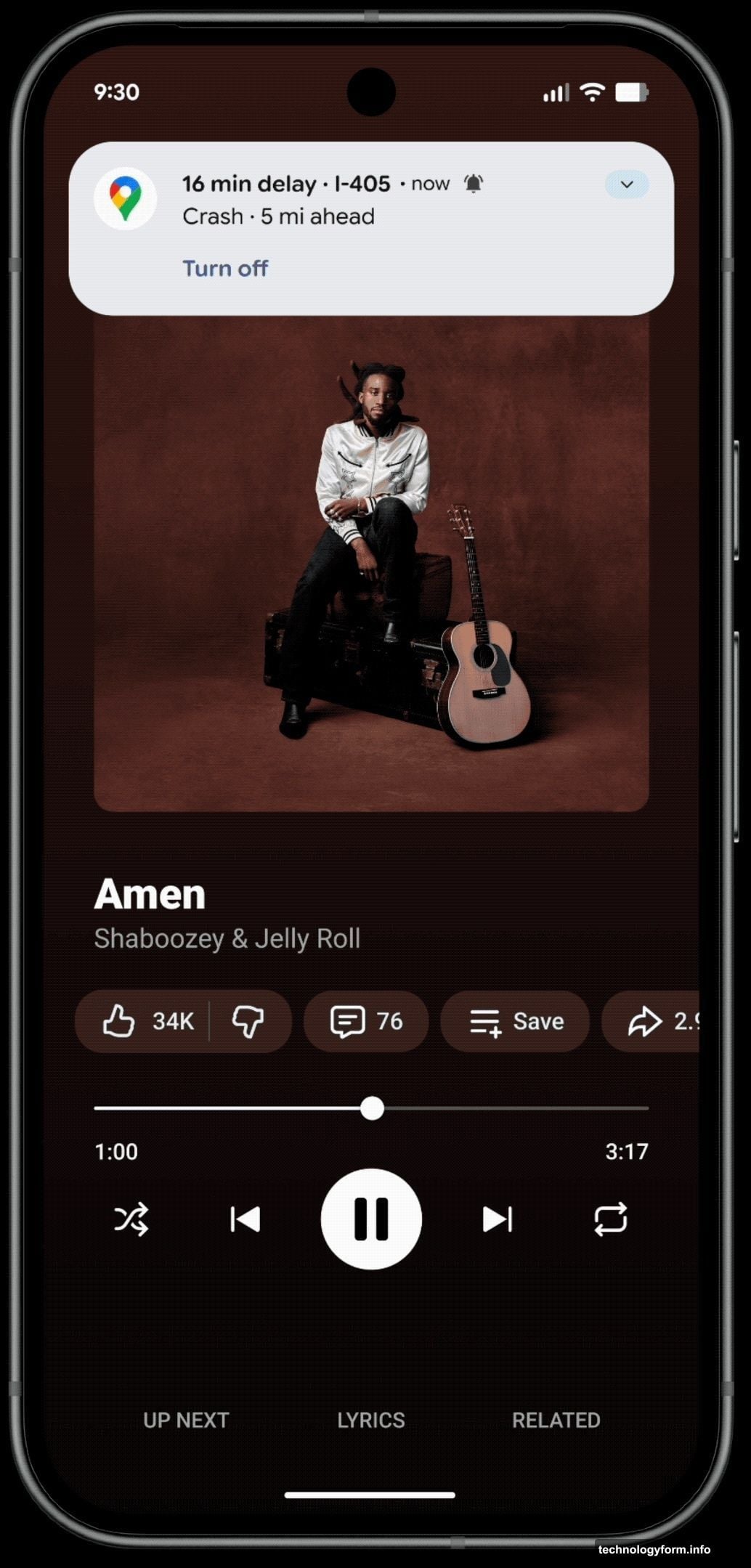
The hands-free reporting feature stands out too. Spot an accident or road closure? Just tell Gemini. Maps files the report and alerts other drivers approaching that area.
Navigation That Actually Makes Sense
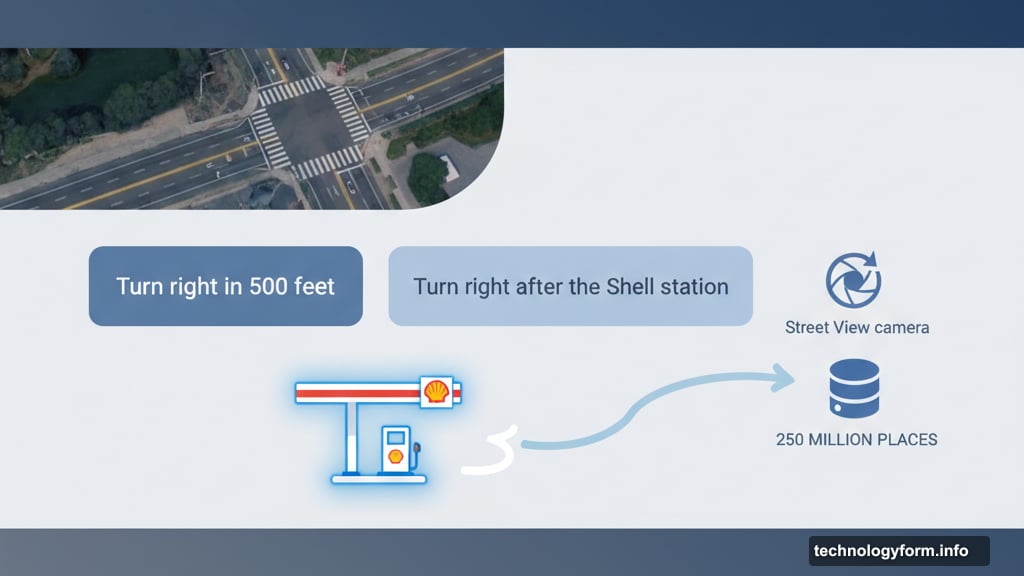
Traditional GPS directions confuse people. “Turn right in 500 feet” means nothing when you’re watching traffic instead of measuring distance.
Google fixed this problem by combining Gemini with Street View data. Now Maps identifies visible landmarks near your turns. Instead of feet or meters, it says things like “Turn right after the Shell station” or “Turn left just past McDonald’s.”
This feature required serious technical work behind the scenes. Gemini cross-references information about 250 million places with millions of Street View images. Then it picks landmarks that are easy to spot while driving.
So Maps highlights these landmarks before your turn. A gas station icon might glow on your screen. Or a restaurant name appears with an arrow. You know exactly where to turn without counting distances or staring at your phone.
Currently, this landmark navigation only works in the United States. But Google plans to expand availability to other regions soon.
Point Your Camera and Learn Everything
Google added another clever feature by connecting Maps with Google Lens. Point your phone camera at a building, restaurant, or monument. Then ask questions about what you’re seeing.
For instance, you spot an interesting building downtown. Open Maps, point your camera at it, and ask “What is this place and why is it popular?” Gemini analyzes the image and provides context about the location’s history, significance, or reviews.
This works particularly well for tourists exploring unfamiliar cities. Instead of typing searches or reading plaques, you just point and ask. Gemini pulls information from Google’s massive database of places and reviews.
The feature launches in the United States later this month. Both iOS and Android users will get access.
Rollout Timeline and Availability
Google’s staggering the release across platforms and regions. Here’s what’s coming when:
Traffic incident alerts are rolling out now for Android users in the United States. iOS support comes later. Android Auto compatibility arrives “soon” according to Google’s announcement.
Landmark-based navigation launches on both iOS and Android devices in the United States within the coming weeks. International availability wasn’t announced yet.
The Google Lens integration with Gemini goes live in the United States by month’s end. Both platforms get simultaneous access.
So if you’re outside the United States, you’ll wait longer for these features. Google typically tests new capabilities in limited markets before expanding globally.
The Real Competition Here
Apple Maps upgraded significantly over the past few years. But it still lacks conversational AI integration. Siri handles basic requests. But it doesn’t match Gemini’s contextual awareness or follow-up question capabilities.
That gives Google a clear advantage. Especially for people who spend lots of time driving. Hands-free operation isn’t just convenient. It’s safer. Plus, the landmark navigation addresses a genuine pain point that GPS directions created.
Still, some privacy concerns exist. Gemini processes your questions, location data, and search history to provide personalized answers. Google claims data handling follows their privacy policies. But users should understand what information they’re sharing.
These features also require consistent internet connectivity. Offline mode works for basic navigation. But AI conversations, live traffic updates, and landmark identification need active data connections.
What This Means for Drivers
Navigation apps reached maturity years ago. Most mapping services offer similar core features: directions, traffic updates, place searches. So companies compete on user experience improvements rather than fundamental capabilities.
Gemini integration represents Google’s bet on AI as the differentiator. Instead of better maps or faster routing, they’re offering better interaction. You talk naturally. The app understands context. Everything happens without touching your screen.
This matters more as distracted driving regulations tighten. Many states now ban handheld phone use while driving. Voice interaction isn’t just convenient. It’s becoming legally necessary.
Moreover, Google’s leveraging AI to solve old problems. Landmark navigation addresses confusion that GPS distance measurements created. Traffic reporting becomes easier when you just speak instead of tapping through menus.
Whether these features justify Google Maps over alternatives depends on your needs. But the hands-free capabilities and conversational AI definitely push navigation forward. That’s worth paying attention to.