A Major Publisher Killed This Book Over AI Writing Fears. Here’s What Happened.
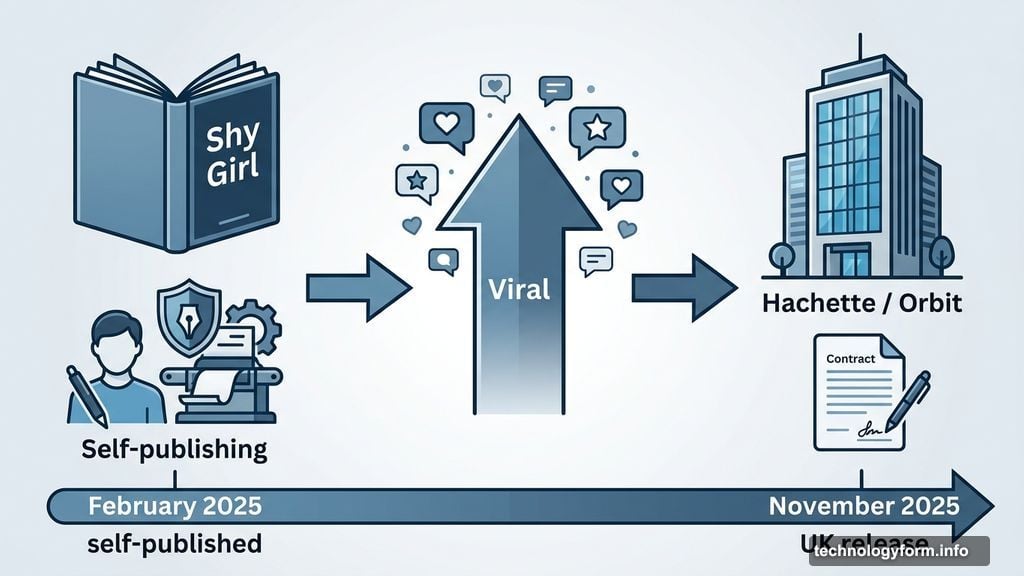
Last June, Mia Ballard’s horror novel Shy Girl felt like a publishing success story. The self-published book went viral, won over readers, and landed a deal with one of the biggest publishers in the world.
Now it’s gone. And the reason why sends a clear message to the entire publishing industry.
Hachette Book Group has officially canceled the US release of Shy Girl following multiple allegations that the manuscript contains AI-generated content. It marks the first time a major traditional publisher has publicly pulled an already-acquired title over AI writing suspicions. And it probably won’t be the last.
How a Viral Horror Novel Became a Publishing Scandal
Ballard originally self-published Shy Girl in February 2025. The book caught fire online and attracted serious attention from traditional publishers. By November, Hachette’s science fiction and fantasy imprint Orbit had released it in the UK. A US debut was planned for the following spring.
Then readers started taking a closer look at the text.
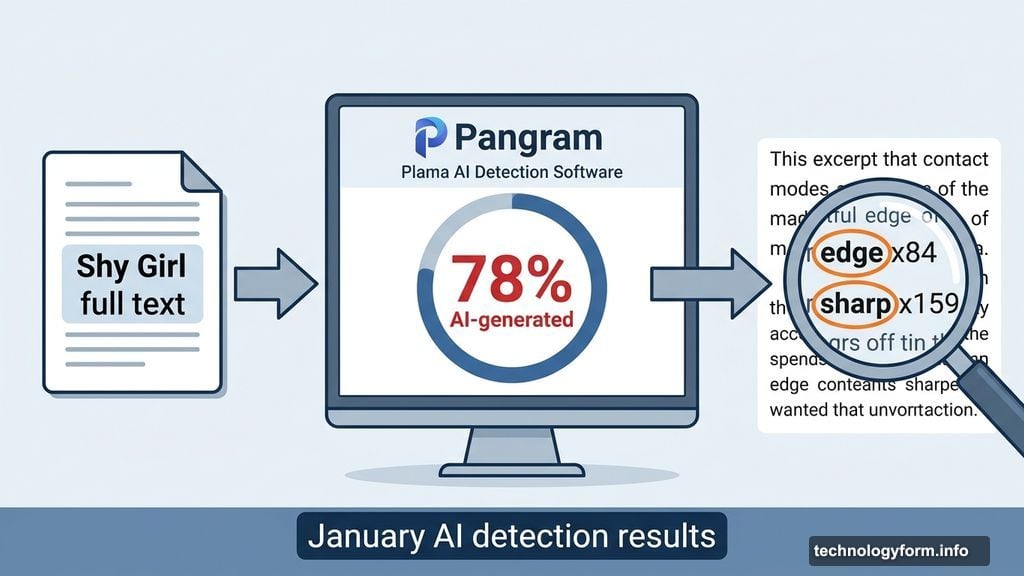
Suspicions spread across online book communities for months before things escalated. A YouTuber named frankie’s shelf posted a detailed video analysis pointing out linguistic patterns typical of AI-generated writing. The video also flagged some eyebrow-raising word repetition: the word “edge” appears 84 times in the novel, and “sharp” shows up 159 times, often in ways that feel abstract and disconnected from the surrounding prose.
That kind of repetitive, slightly-off phrasing is something AI detection specialists recognize immediately.
The AI Detection Results That Changed Everything
In January, Max Spero, founder and CEO of Pangram, ran the full text of Shy Girl through his company’s AI detection software. His conclusion was striking. According to Spero, the novel tested as 78% AI-generated.
Shortly after, The New York Times published evidence of AI usage in the manuscript. Hachette moved fast. The publisher canceled the US release and scrubbed the book from its website entirely.
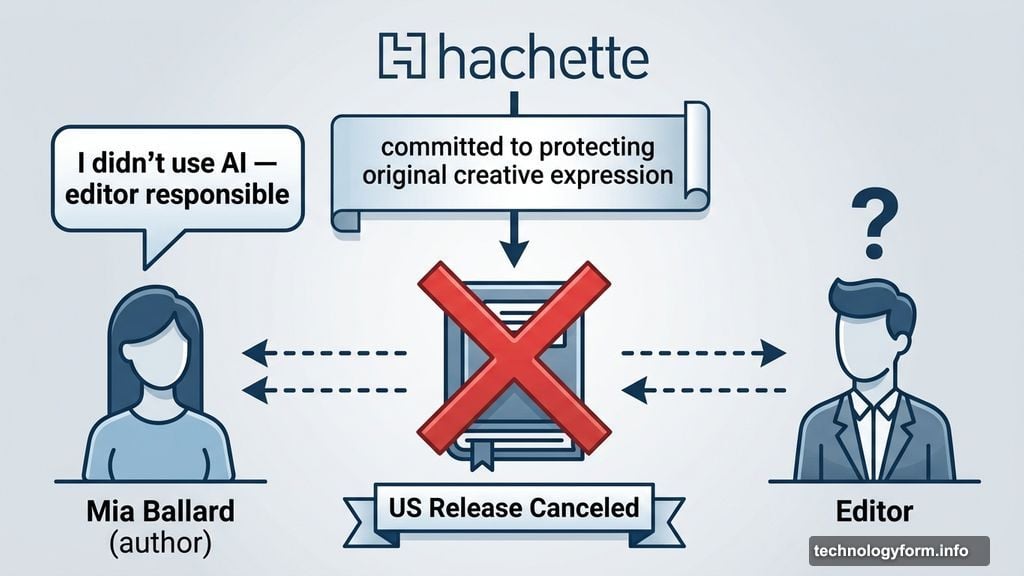
“Hachette remains committed to protecting original creative expression and storytelling,” the publisher said in a statement to the Times.
The cancellation wasn’t just a business decision. It was a public signal about where one of the world’s largest publishing houses stands on AI-assisted writing.
Ballard Says She Didn’t Do It
Mia Ballard has denied using AI tools to write Shy Girl. Her explanation puts the blame elsewhere. She says an editor was responsible for the sections of the manuscript that appear AI-generated.
“My name is ruined for something I didn’t even personally do,” Ballard wrote in an email to the New York Times.
It’s a painful position to be in, regardless of where the truth lies. Whether the AI content came from the author, an editor, or somewhere else in the production process, the outcome is the same. The book is canceled. The reputation damage is real. And the questions being asked are ones the publishing industry has been slow to address.
Why This Moment Matters Beyond One Book
The Shy Girl situation isn’t just about one novel or one author. It’s about a much bigger tension that’s been building quietly in publishing for years.
AI writing tools have already flooded self-published book markets on platforms like Amazon. That’s been a known problem. But traditional publishers like Hachette operate differently. They have acquisition editors, manuscript review processes, and contracts that require authors to disclose whether AI tools were used in creating their work.
Ballard was subject to that disclosure requirement. Now that a major publisher has publicly canceled a title over AI concerns, every author with a traditional publishing deal is on notice. The scrutiny is real, the detection tools are improving, and the consequences are significant.
For readers, the story raises uncomfortable questions about trust. When you buy a novel from a major publisher, you assume a human wrote it. That assumption just got a lot more complicated.
The publishing industry built its reputation on original human storytelling. What happens to that reputation when the lines start to blur, even unintentionally, is something every publisher, author, and reader is now being forced to figure out together.