
Suno’s Copyright Filters Are Shockingly Easy to Beat
AI music is flooding streaming platforms. And one popular tool is making it easier than most people realize.
Suno, the AI music platform used by millions, claims it blocks copyrighted material. Its official policy prohibits users from generating unauthorized covers of other people’s songs. But investigative testing by The Verge reveals those filters are surprisingly fragile — and the results have real consequences for working musicians.
Beyoncé Covers Slipping Past the Filter
Getting Suno to generate a near-identical cover of a famous song doesn’t require technical skill. It just requires a little patience and a free audio tool.
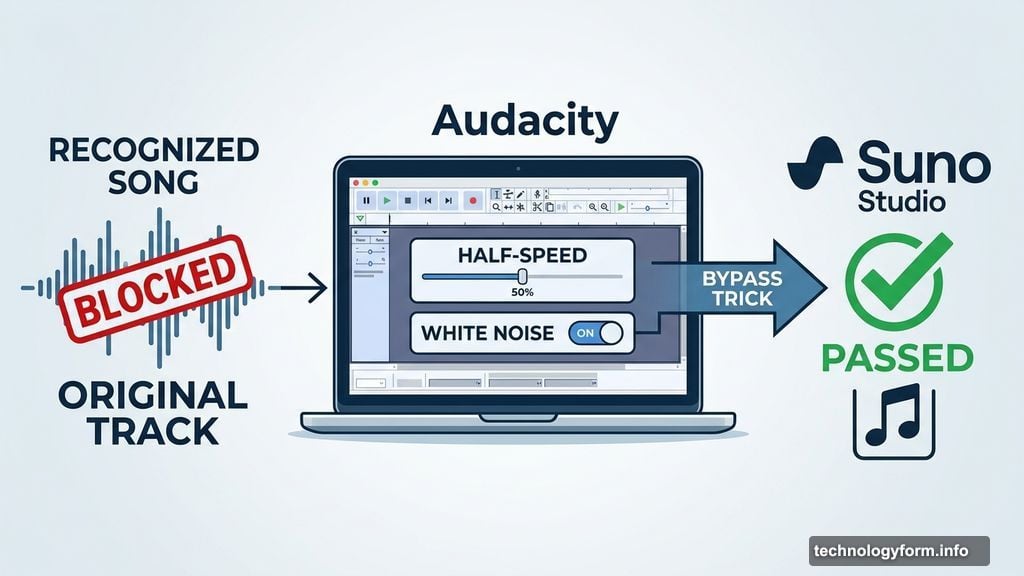
Suno Studio, available on the $24-a-month Premier Plan, lets you upload a track and use it as a musical seed. Upload a well-known hit directly, and the system often catches it. But slow the track to half-speed in Audacity, add a burst of white noise to the start and end, and those copyright detections essentially disappear. Restore the original tempo inside Suno Studio, trim the noise, and you’re off.
The results are unsettling. Covers of Beyoncé’s “Freedom,” Black Sabbath’s “Paranoid,” and Aqua’s “Barbie Girl” came out alarmingly close to the originals. Not perfect copies — but close enough that some listeners might mistake them for alternate takes or unreleased B-sides.
Suno declined to comment for this story.
The Lyrics Filter Has the Same Problem
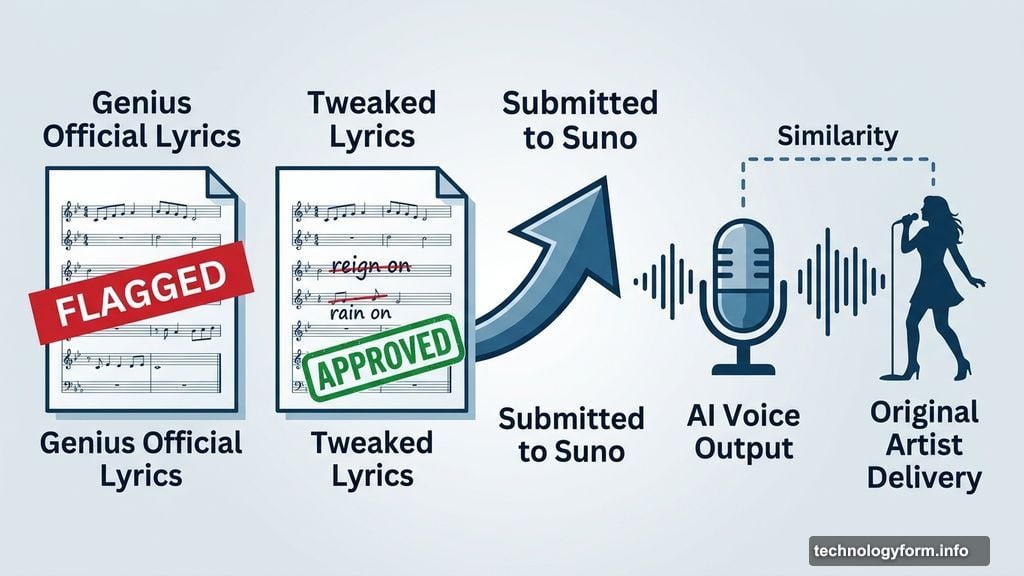
Vocals get filtered too, in theory. Paste in the official lyrics from Genius and Suno flags them, replacing them with gibberish. But the filter cracks under minimal pressure.
Changing “rain on this bitter love” to “reign on” and “tell the sweet I’m new” to “tell the suite” was enough to slip “Freedom’s” lyrics through. Beyond the first verse and chorus, even those tiny tweaks weren’t necessary. The AI voice closely mimics Beyoncé’s original delivery — slightly off, but clearly recognizable.
Indie and underground artists face a different problem entirely. Tracks by singer-songwriter Matt Wilson, Charles Bissell’s “Car Colors,” and experimental artist Claire Rousay bypassed Suno’s copyright detection without any modifications at all. Artists distributing through Bandcamp or services like DistroKid appear most vulnerable. DistroKid and CD Baby both declined to comment.
AI Covers Sound Hollow But Still Cause Damage
These generated covers land firmly in uncanny valley territory. “Paranoid’s” riff stays recognizable. “Freedom” is obviously “Freedom” from the first snare hit. But there’s a lifelessness to everything.
Pink Floyd’s “Another Brick in the Wall” loses its experimental doom-disco edge and becomes vacant dancefloor filler. A “California Über Alles” cover sands off the rough edges until it sounds like a wedding band. David Gilmour’s guitar tone gets approximated, but all the phrasing and progression disappear — replaced by a mindless run of notes.
Still, the hollow quality doesn’t protect artists from real harm. Suno’s system only scans audio on upload. It doesn’t recheck outputs before export. That means someone could take a generated cover, upload it through a distribution service like DistroKid, and start collecting streaming royalties — without paying the royalties that legitimate cover licensing requires.
Real Artists Are Already Getting Hurt
Folk musician Murphy Campbell discovered this firsthand. Someone uploaded what appeared to be AI covers of her YouTube songs directly to her Spotify profile. Shortly after, distributor Vydia filed copyright claims against her YouTube videos and began collecting royalties on them.
Here’s the particularly infuriating part: the songs Vydia successfully claimed were all in the public domain. Spotify eventually removed the AI covers, and Vydia rescinded its claims — but only after Campbell ran a social media campaign to draw attention to the situation. Vydia says the two incidents are unrelated and it is not associated with the AI covers of Campbell’s work.
Campbell isn’t alone. Experimental composer William Basinski and indie rock group King Gizzard and the Lizard Wizard have both had AI imitations slip through multiple platform filters and reach Spotify. These fake tracks can siphon streams directly from an artist’s own profile page. In a payout structure where Spotify requires a minimum of 1,000 streams before paying artists anything, smaller musicians absorb the damage hardest.
Streaming Platforms Are Trying, But Struggling
Spotify, Deezer, and Qobuz have all taken steps to fight AI spam and impersonators. Spotify spokesperson Chris Macowski told The Verge that the company “takes protecting artists’ rights seriously, and approaches it from multiple angles,” including systems to detect duplicate or highly similar tracks backed by human review.
But Macowski also acknowledged the challenge. “It’s an area we’re continuing to invest in and evolve, especially as new technologies emerge.”
That’s honest — and a bit worrying. Because platforms like Suno generate volume that human reviewers simply can’t keep pace with.
A Broken System With No Easy Fix
Suno is one piece of a larger problem. Artists can contact Spotify to remove fake tracks from their profiles. But tracing exactly how those fakes were made — and whether Suno’s filters specifically failed — is much harder to prove.
What makes this particularly frustrating is the asymmetry. The people generating AI covers spend about ten minutes and $24 a month. The artists whose work gets scraped, imitated, and monetized often spend years building a catalog. Murphy Campbell had to run a whole social media campaign just to get royalty claims removed from public domain songs.
Suno’s response to all of this? So far, silence.
The filters exist. They’re just not doing the job. And until that changes, indie and independent artists bear the cost.