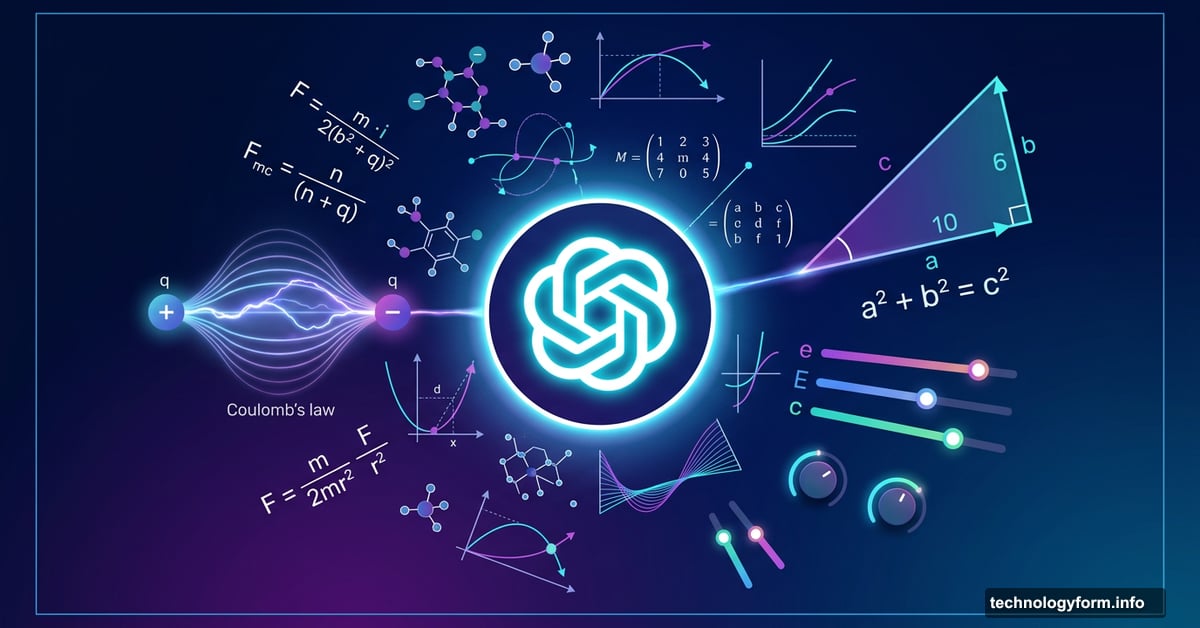
ChatGPT Can Now Show You Math and Science in Motion
Learning the Pythagorean theorem from a wall of text is rough. But watching it change in real time as you adjust numbers? That’s a completely different experience.
OpenAI just made that possible. ChatGPT now generates interactive visuals when you ask it to explain certain math and science concepts, and the results look genuinely useful for students at any level.
Dynamic Visuals That Respond to Your Input
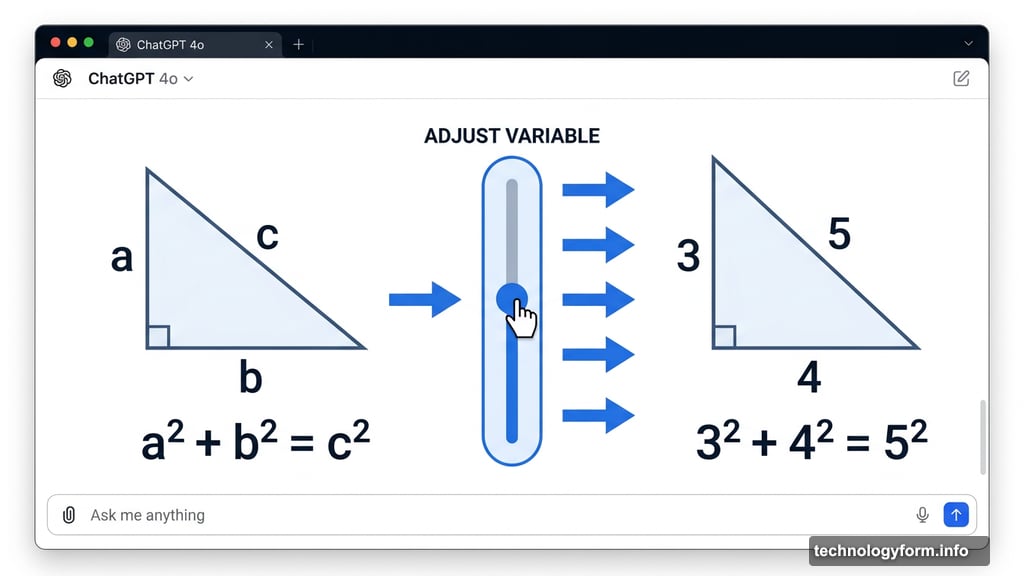
Here’s what makes this different from a regular explanation. When ChatGPT responds with one of these interactive visuals, you can actually manipulate the variables yourself.
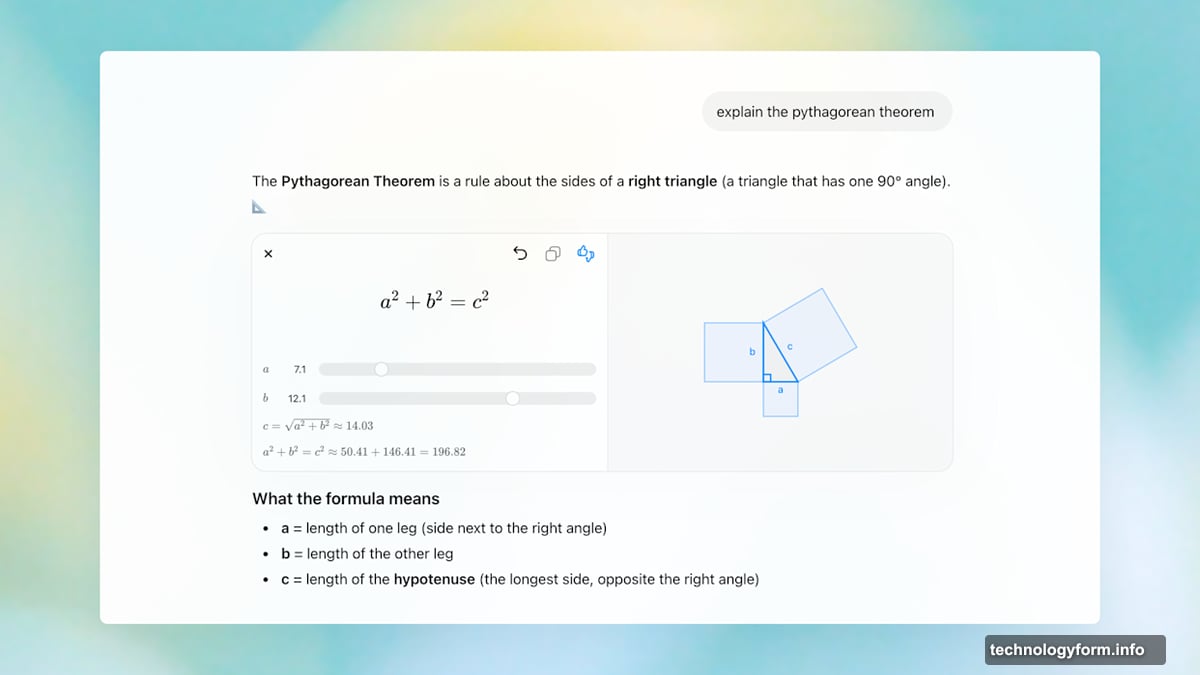
Change a number in the equation. Adjust a value. The visual updates instantly to show you how those changes affect the outcome. So instead of reading about how Coulomb’s law works, you can feel it work by poking at the inputs until the concept clicks.
At launch, ChatGPT supports interactive visuals for more than 70 concepts. The list includes classics like the Pythagorean theorem, Coulomb’s law, and lens equations. OpenAI says more topics are coming over time.
No Subscription Required
Good news for budget-conscious students. These interactive visuals are available to every ChatGPT user, regardless of whether you pay for a subscription.
That said, OpenAI is pretty upfront about who benefits most. High school and college-aged students are the primary audience here. And honestly, that makes sense. These are exactly the people wrestling with abstract equations and desperate for something that makes the concept feel real.
Study Mode Gets a Powerful Companion
This isn’t OpenAI’s first move into education-focused features. Last summer, the company released Study Mode, which takes a notably different approach.
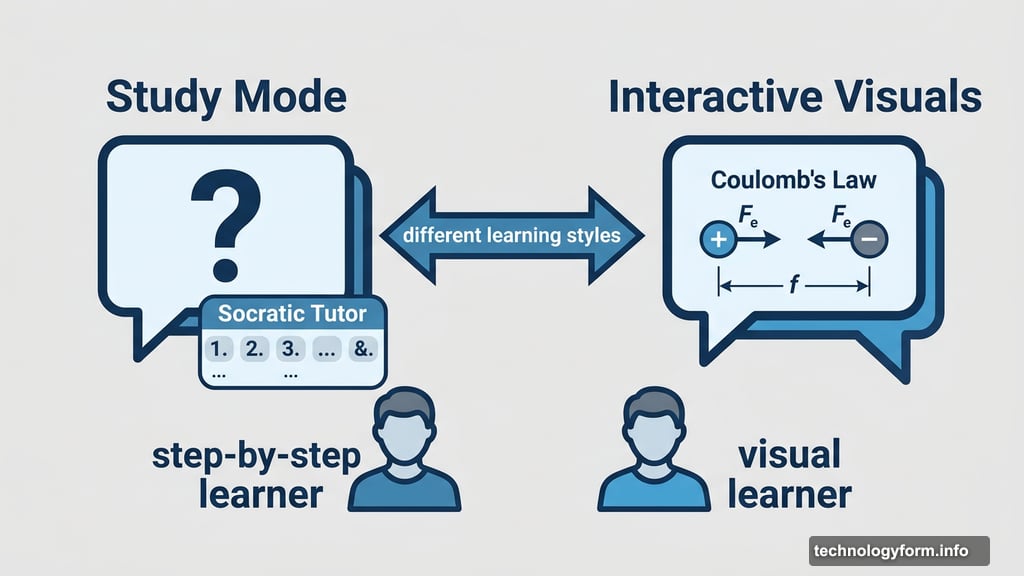
Instead of handing you an answer, Study Mode guides you toward finding it yourself. Think of it as the Socratic tutor version of ChatGPT. Interactive visuals, by contrast, show you the mechanics directly, letting you experiment freely.
Together, the two features cover different learning styles pretty well. Some students need to work through problems step by step. Others need to see something move before they can understand it. Now ChatGPT handles both scenarios.
Why This Matters for Learners
There’s a real gap between reading an equation and understanding what it means. Textbooks have tried for decades to bridge that gap with diagrams and worked examples. Interactive tools do it better, because you’re not just reading, you’re experimenting.
The fact that this works inside a conversational chatbot makes it even more accessible. You don’t need to track down a specialized app or simulation tool. Just ask ChatGPT to explain Ohm’s law, and it hands you something you can play with right there in the chat window.
OpenAI framed today’s launch as “just the beginning,” which suggests the concept library will grow significantly. If they can extend this across physics, chemistry, biology, and beyond, ChatGPT starts looking less like a homework shortcut and more like a genuinely powerful study partner.
That’s a version of the tool most students will actually want to spend time with.