Google Grabbed Hume AI’s Best Engineers. Voice Tech Just Got Serious
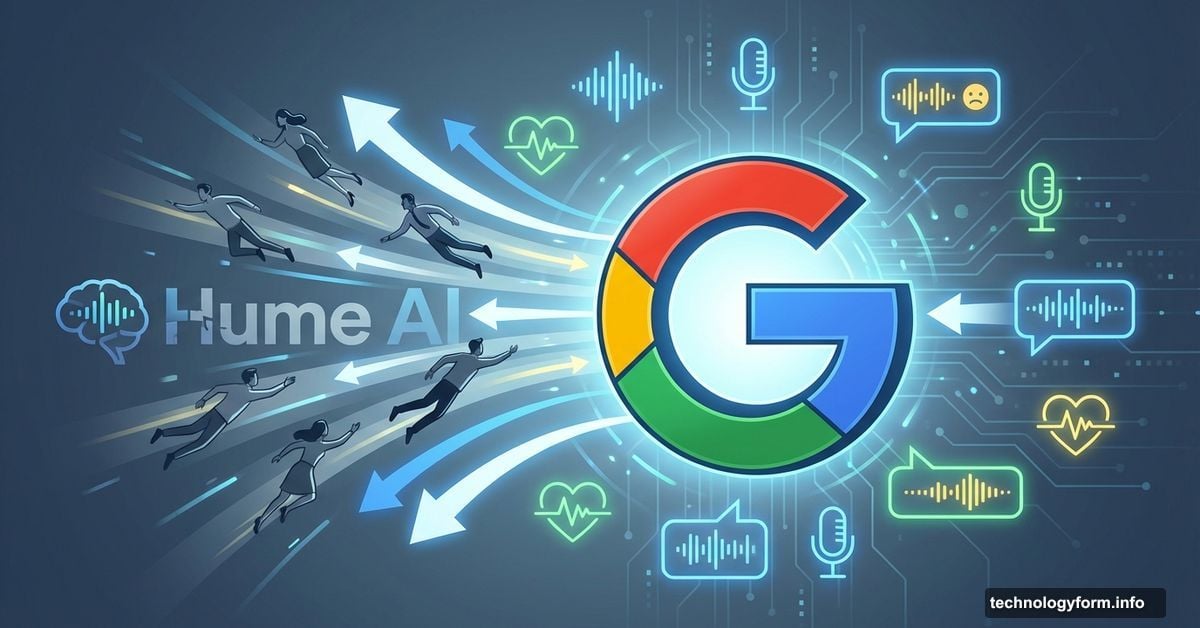
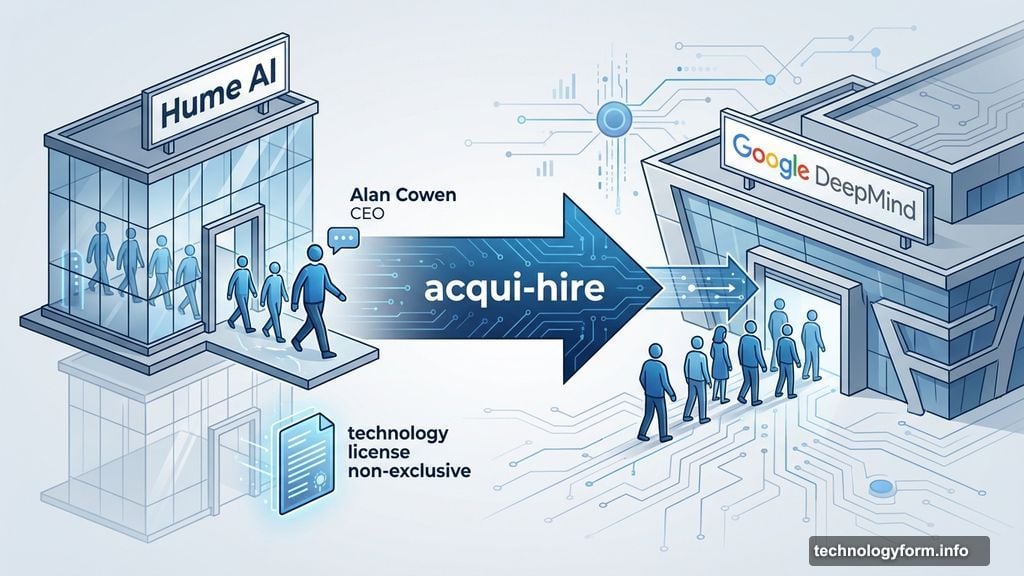
Google DeepMind just pulled another acqui-hire move. This time they snagged the CEO and top engineers from Hume AI, a voice startup known for reading emotions through sound.
The pattern keeps repeating. Promising AI startup builds something interesting. Big tech swoops in. Takes the talent, leaves the shell company behind. But this deal reveals something bigger than just another team acquisition.
Voice AI is becoming the battleground where tech giants compete.
What Google Actually Got
Alan Cowen, Hume AI’s CEO, plus seven core engineers now work at DeepMind. Their mission? Make Gemini’s voice features actually understand how you feel when you talk.
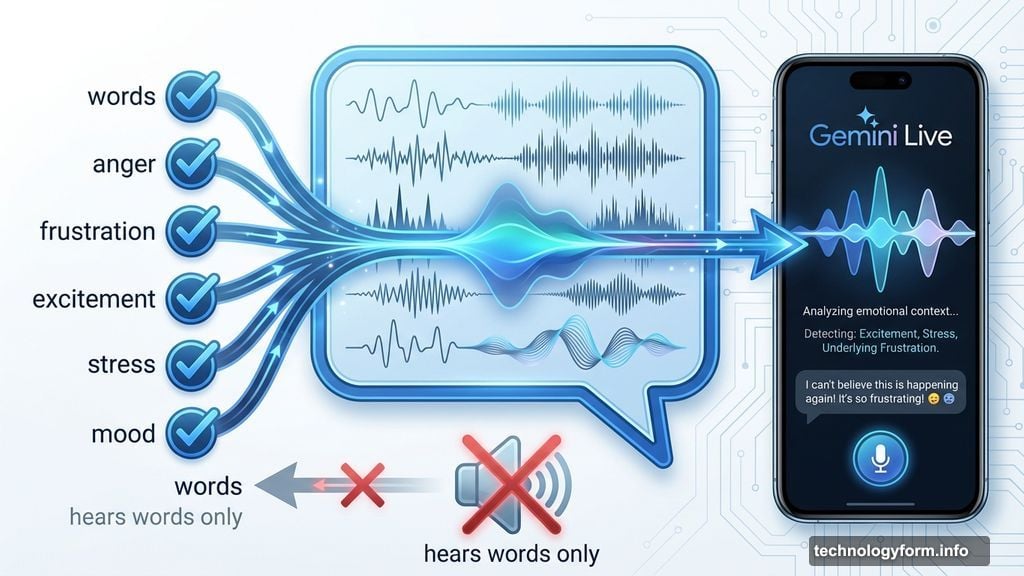
That’s not trivial. Most voice assistants hear words. Hume AI built tech that detects mood, stress, excitement, frustration. The difference matters when AI needs to respond naturally instead of robotically.
Google licensed Hume’s technology under non-exclusive terms. So Hume keeps operating as a business. Andrew Ettinger, who joined as CEO last week, claims they’ll hit $100 million in revenue this year and release new models soon.
Still, losing your founder and lead engineers is brutal. No matter how you spin it.
The Acqui-Hire Pattern Continues
This marks Google’s second talent grab in recent months. Last year they absorbed Windsurf’s coding team. OpenAI pulled the same move with Convogo and Roi.
Why not just buy the company? Simple. Regulators pay less attention to hiring decisions than acquisitions. The FTC recently announced they’re watching these deals more closely. But for now, big tech exploits the loophole.
The strategy works because startups face pressure. Funding gets harder. Incumbents have resources and distribution. Many founders choose guaranteed impact at a giant over uncertain independence.
Plus, the team gets paid. Google presumably offered packages these engineers couldn’t refuse. Hume AI investors likely got decent returns. Everyone wins except the startup ecosystem losing another independent player.
Voice Is the New Arms Race
Here’s why this matters beyond one deal. Every major AI company is betting huge on voice.
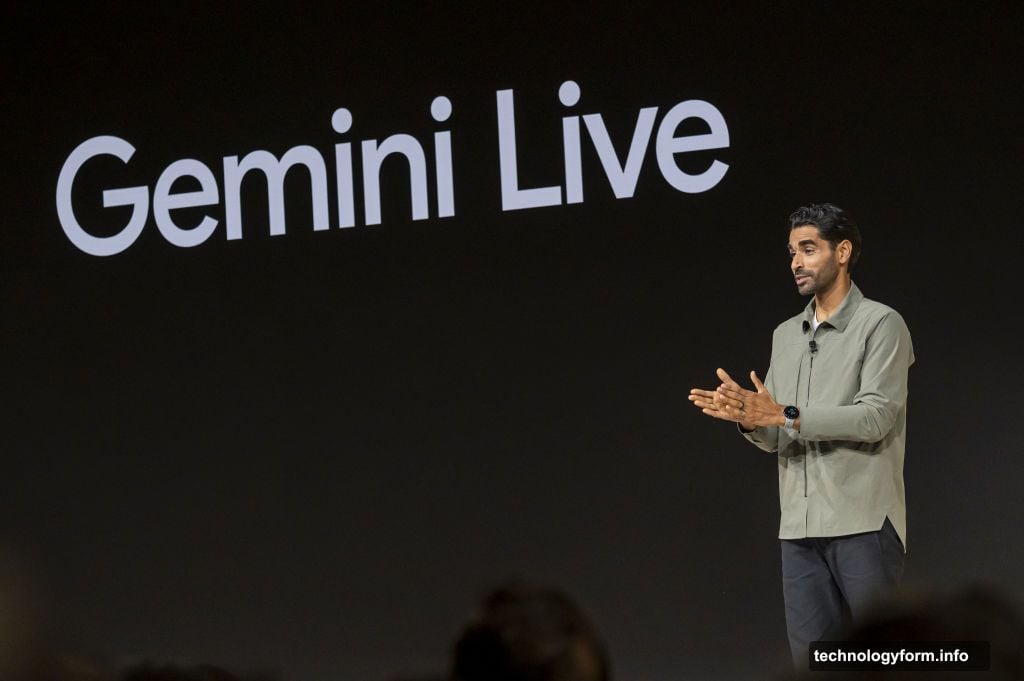
Google keeps improving Gemini Live, which lets users have actual conversations with their chatbot. Last month they released a native audio model that handles complex workflows better. That’s engineer-speak for “it sounds less like a robot.”
OpenAI is reportedly overhauling its audio models for a physical device launching this year. Leaks suggest earbuds designed with Jonny Ive’s team. If true, that’s a direct shot at AirPods and voice-first computing.
Meta grabbed Play AI last year to boost Ray-Ban smart glasses. Those glasses increasingly rely on voice for everything. Calls, texts, photos, even hearing conversations in noisy rooms. Voice isn’t a feature. It’s the interface.
ElevenLabs, the voice generation startup, crossed $330 million in annual recurring revenue this month. Demand is exploding.
Why Wearables Demand Better Voice Tech
Investor Vanessa Larco nailed it: “Voice is the only acceptable input mode for wearables.”
Think about it. You can’t type on smart glasses. Touchscreens don’t work on earbuds. Voice is the only practical way to control devices you wear.
But current voice tech frustrates users. Commands fail. Context gets lost. Responses sound mechanical. That’s why companies desperate to sell wearables need better voice AI immediately.
Hume’s emotional intelligence technology could change that equation. Imagine earbuds that detect you’re stressed and adjust responses accordingly. Or glasses that recognize excitement and capture photos automatically.
Suddenly voice interfaces feel helpful instead of annoying. That’s the gap Google wants to close with this team.
What This Means for Hume AI’s Future
Hume AI says they’re fine. Ettinger claims new models are coming. Revenue projections look strong. They’ll keep licensing technology to other AI firms.
Maybe that’s true. Or maybe it’s damage control after losing your core team.
The real test comes in six months. Can Hume ship meaningful updates without Cowen and the lead engineers? Will clients stick around if innovation slows? Does non-exclusive licensing to Google hurt their competitive position?
History suggests skepticism. Companies rarely thrive after acqui-hires. The best people left. Vision often follows. What remains usually fades or gets acquired fully later.
But occasionally the remaining team proves doubters wrong. They hire strong replacements. Execute the roadmap. Build something new. It’s possible. Just rare.
The Talent Consolidation Problem
Step back and the pattern looks concerning. Top AI talent concentrates at four companies: Google, OpenAI, Meta, Anthropic. Startups struggle to compete for researchers. Funding flows to established names.
That stifles innovation. Fewer independent teams mean fewer different approaches. Diversity of ideas decreases. Progress centralizes around similar architectures and goals.
Plus, these acqui-hires might dodge antitrust scrutiny now. But regulators will eventually catch up. The FTC already signaled they’re paying attention. Future deals could face tougher challenges.
For now though, big tech keeps shopping. Startups keep selling. The cycle continues until someone breaks it.
Voice AI advances rapidly. But at what cost to the startup ecosystem that generates breakthrough ideas?