Google Is Fighting Back Against Websites That Trap You with the Back Button
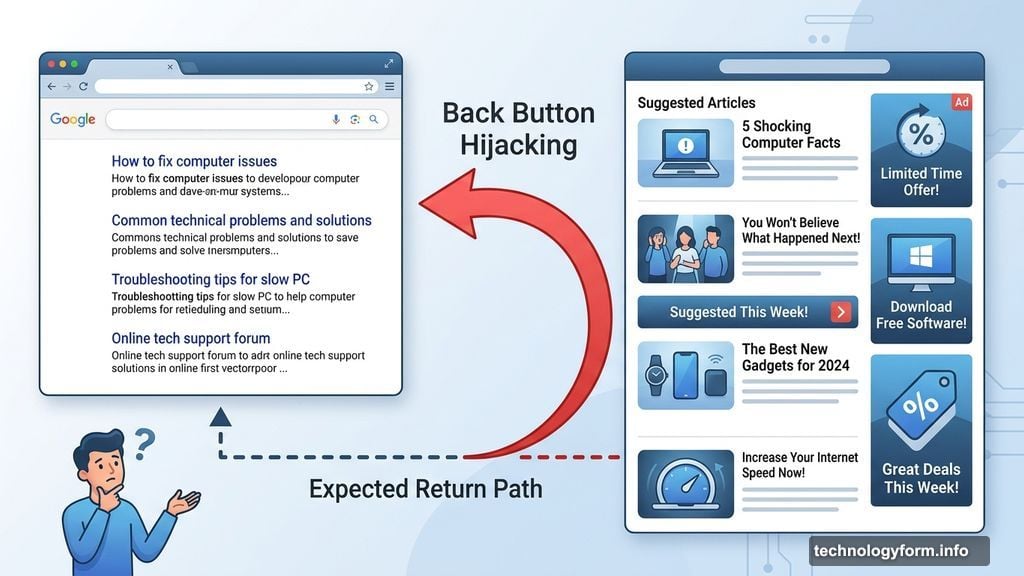
You know the feeling. You click a link from Google Search, scan the page, and hit the back button to return to your results. But instead of going back, you’re suddenly stuck on some “hey, check out these other articles!” page you never asked for. It’s annoying. It feels manipulative. And Google has finally had enough of it.
The search giant just announced a new policy targeting this exact behavior, and websites that keep doing it are about to face some serious consequences.
Back Button Hijacking Gets Its Own Spam Label

The practice even has a name: back button hijacking. It happens when a website intercepts your browser’s back button and inserts an extra page into your browsing history before letting you leave. That extra page might be a list of suggested content, a wall of ads, or just a delay tactic designed to keep you on the site a few seconds longer.
Google’s Chris Nelson, from the Search Quality team, put it plainly in the official announcement. Back button hijacking “interferes with the browser’s functionality, breaks the expected user journey and results in user frustration.” Nelson also noted that people report feeling manipulated by the tactic, and that it makes them less willing to visit unfamiliar sites altogether.
So Google is treating it seriously. Under the new policy, first spotted by 9to5Google, back button hijacking now qualifies as an explicit violation of Google’s spam policies. Specifically, it falls under the “malicious practices” category, right alongside threats like malware. That’s not a slap on the wrist. That’s a search ranking penalty waiting to happen.
What This Means for Websites
Websites that currently use back button hijacking have a deadline to fix things. Google will start enforcing this new policy on June 15, giving developers and site operators time to audit their code and remove any navigation interference.
Sites that don’t comply risk being downranked in Google Search results. And for most websites, that’s a genuinely frightening prospect. Organic search traffic is often the lifeblood of content-driven sites. Losing visibility in Google results can gut a website’s audience almost overnight.
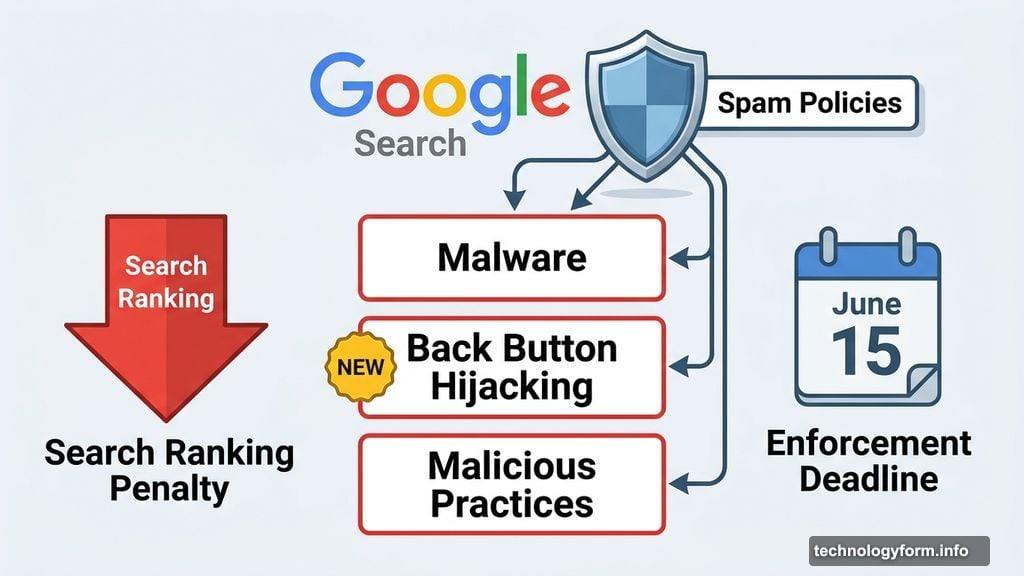
It’s worth noting this isn’t entirely new territory for Google. Nelson’s announcement pointed out that “inserting deceptive or manipulative pages into a user’s browser history has always been against our Google Search Essentials.” The difference now is that Google has seen a rise in the behavior and decided to spell out the consequences explicitly.
Why This Matters More Than You Think
At first glance, this might seem like a minor quality-of-life fix. But the implications run deeper than a little browser annoyance.
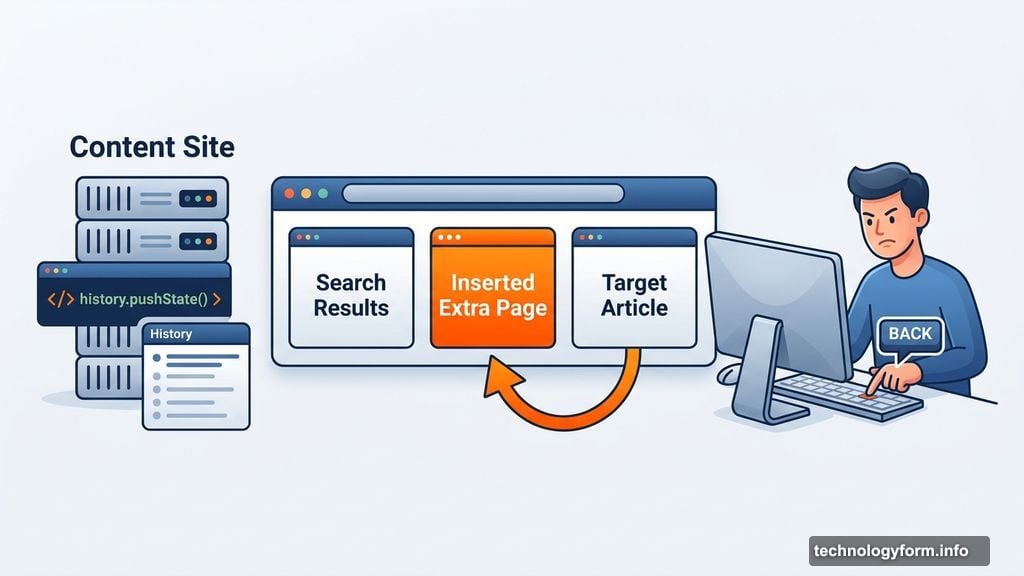
Back button hijacking is a symptom of a broader problem with how some websites treat visitors. Instead of earning your attention with good content, they try to trap it through friction. And when browsing the web starts to feel like wrestling your way out of a conversation with someone who won’t let you leave, people stop exploring unfamiliar sites entirely. That’s bad for the open web.
Google also has a self-interested reason to crack down here. When users click a search result and have a terrible experience, they blame the search engine that sent them there. So cleaning up back button hijacking protects Google’s reputation just as much as it protects yours as a user.
The June 15 enforcement date is coming up fast. For legitimate site owners, the fix is simple: stop intercepting browser navigation. For users, this change means that clicking links in Google Search should soon become a little less stressful, a little more trustworthy, and a lot less likely to leave you feeling like you need to escape a digital sales pitch just to read an article.