
Meta Profits From Scams While Users Lose Billions
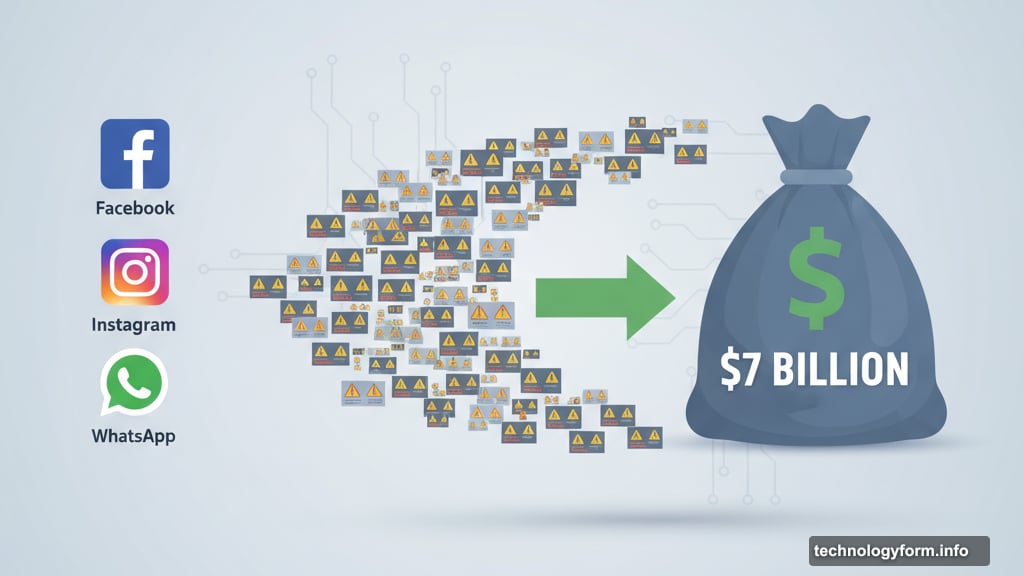
Meta knows scammers flood its platforms with fraudulent ads. Internal documents reveal the company earns roughly $7 billion yearly from obvious scam advertisements alone.
Yet the social media giant does almost nothing to stop them. Meanwhile, vulnerable users lose thousands of dollars to fake stimulus checks, deepfake celebrity endorsements, and phony investment schemes.
This isn’t incompetence. It’s a business model built on looking the other way.
The Scale of Meta’s Scam Problem
Reuters obtained internal Meta documents showing a staggering reality. Users see 15 billion scam ads daily across Facebook, Instagram, and WhatsApp combined.
Meta’s own trust and safety team estimated one-third of US scams involve their platforms. That’s not a small oversight. That’s systemic complicity.
The numbers tell a brutal story. Americans reported $16 billion in scam losses to the FBI last year. But that figure drastically understates the problem since most victims never report fraud due to embarrassment.
Globally, scammers stole over $1 trillion in 2024 according to the Global Anti-Scam Alliance. And Meta platforms served as the launchpad for much of that theft.

Why Meta Won’t Fix the Problem
Money explains everything. Reuters reports Meta generates $16 billion annually from scam ads and banned goods advertisements. That represents 10 percent of the company’s total revenue.
Even the most obvious scams stay up. Internal systems require 95 percent certainty before removing fraudulent ads. So scammers operate in a grey zone where Meta “can’t be sure” their fake Trump stimulus checks are actually fake.
Plus, when Meta does flag a scam ad, the company grants between eight and thirty-two “strikes” before banning the account. Scammers run multiple versions of the same fraud for months while raking in thousands from victims.
The online payment platform Zelle reported that half of all scam reports from their users involved Meta platforms. Half. Let that sink in.
AI Makes Scams Worse
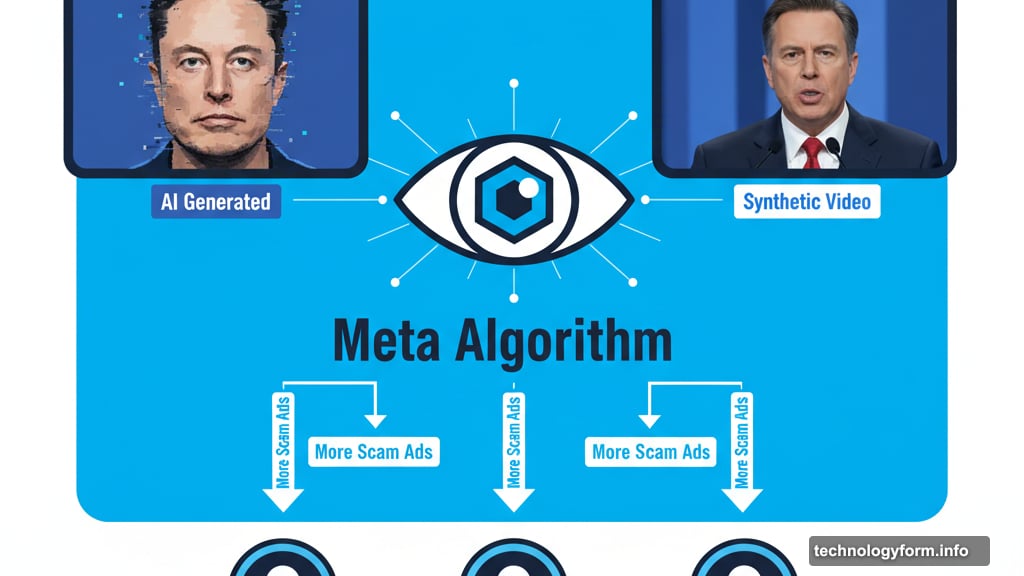
Artificial intelligence supercharged the scam industry. Deepfakes of Elon Musk hawk fake cryptocurrency investments. Synthetic videos show American politicians promoting nonexistent government benefits.
These AI-generated ads look increasingly real. And Meta’s recommendation algorithms make the problem worse by showing more scam ads to people who click on them.
Think about that design. The most vulnerable users, those interested enough to click, get targeted with even more fraud. It’s algorithmic exploitation at scale.
Moreover, Southeast Asian criminal organizations now run massive scam compounds staffed by human trafficking victims. These operations adopt AI tools rapidly, diversifying tactics and scaling up operations.
The Victims Meta Ignores
Scam victims aren’t wealthy. They’re elderly people on fixed incomes. Young job seekers. Immigrants navigating new systems. People facing financial hardship who desperately need that promised stimulus check or stable employment.
Losing even a few hundred dollars devastates these victims. But for Meta, those losses translate into billions in advertising revenue.
Meta spokesperson Andy Stone disputed the reporting in a statement to The Verge. He claimed the leaked documents present a “selective view” and that subsequent review showed many flagged ads weren’t actually violations.
Stone also noted user reports of scam ads declined over 50 percent in the past 15 months. But that decline means little if the company still earns billions from fraud while vulnerable users lose their savings.
What Meta Should Do Immediately
The Tech Transparency Project, a small nonprofit watchdog, easily identified scam ads using simple criteria. If a tiny organization can spot fraud better than a multibillion-dollar company, something’s broken by design.
First, Meta should lower the barrier for removing scam advertisements. One confirmed scam should trigger removal of all ads from that account. No second chances. No thirty-two strikes.
Second, Meta needs sophisticated fraud detection systems. The current 95 percent certainty threshold is absurdly high. Banks don’t need 95 percent certainty to block suspicious transactions. Neither should Meta.
Third, require verified advertiser identities. Only users with real names and verified identities should purchase ads. This cuts down on deepfakes and creates paper trails for law enforcement.
Regulators Must Act
Meta won’t fix this voluntarily. The profit motive overpowers any ethical concerns. So regulators need to step in with force.
The FTC has authority to regulate “unfair or deceptive acts or practices.” That includes false advertising on social platforms. Regulators should mandate advertiser verification and pre-approval for ads before they run.
Plus, allow independent third-party audits of advertising systems. Meta operates in darkness. Transparency would reveal just how bad the scam problem really is.
Most importantly, raise fines to levels that actually hurt. Current penalties barely register against Meta’s revenue. Fines should be calculated as percentages of revenue from scam ads, not fixed dollar amounts.
Those fines could fund a scam victims compensation program. Make Meta’s profits from fraud pay back the people it harmed.
State legislatures can act too. If federal regulators won’t move, state attorneys general should launch consumer protection lawsuits under existing fraud laws. This isn’t partisan. Scams hurt everyone.
Meta Chose Profit Over Safety
This pattern repeats throughout Meta’s history. In 2018, the company admitted Facebook failed to prevent its platform from fomenting genocide in Myanmar.
Now Myanmar is a failed state hosting the scam compounds whose ads make Meta billions. The circle of harm is complete.
Meta repeatedly demonstrates that user safety matters less than quarterly earnings. The company won’t change unless forced to change.
Seven billion dollars buys a lot of inaction. But it shouldn’t buy immunity from consequences.