Google’s AI Mode Just Became Your Personal Travel Agent
Google Search now builds complete trip itineraries for you. Just describe where you want to go, and AI Mode generates a full plan with flights, hotels, and activities.
This isn’t another chatbot promising to help with research. Google’s new Canvas feature actually assembles working travel plans you can refine and book. Plus, it pulls real data from Google Maps, including photos and reviews.
The catch? It’s currently US-only and requires opting into AI Mode through Google Labs. But the rollout signals something bigger. Google is pushing hard to keep travel planning inside its ecosystem.
Canvas Turns Travel Ideas Into Real Plans
Google’s Canvas workspace launched in March for coding and study plans. Now it handles trip planning too.
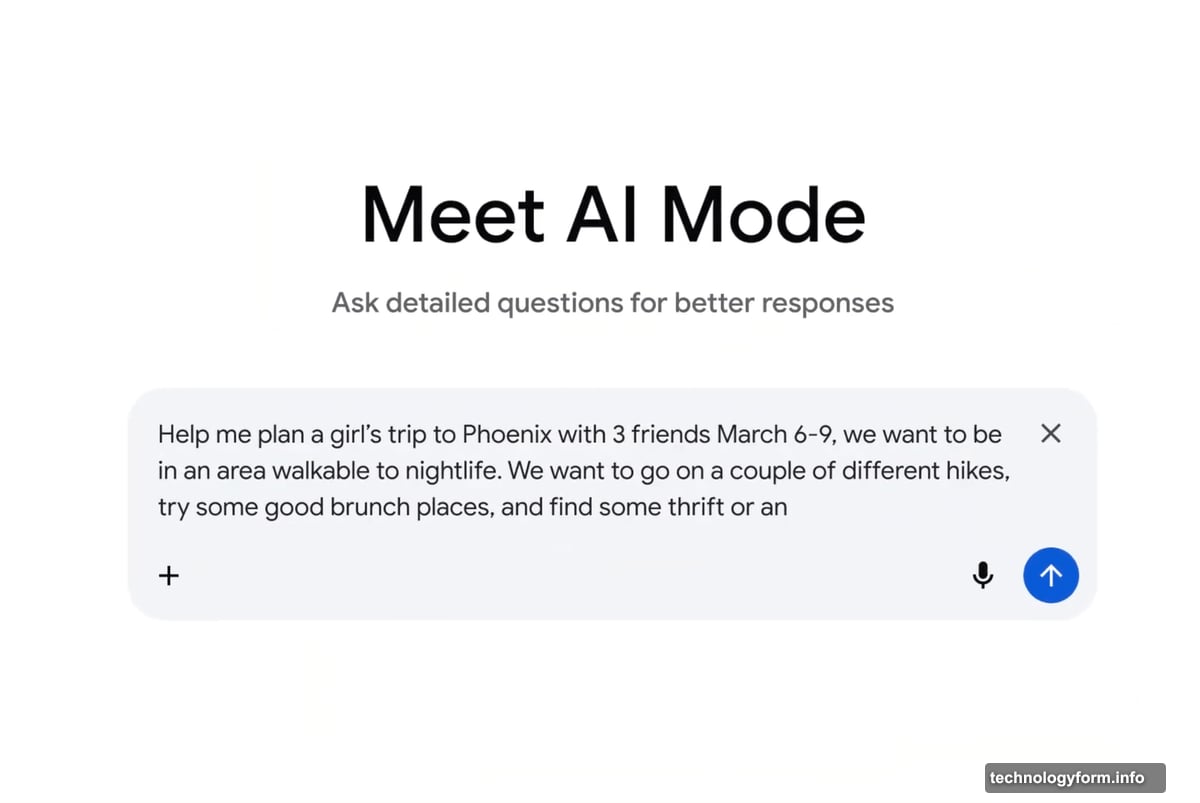
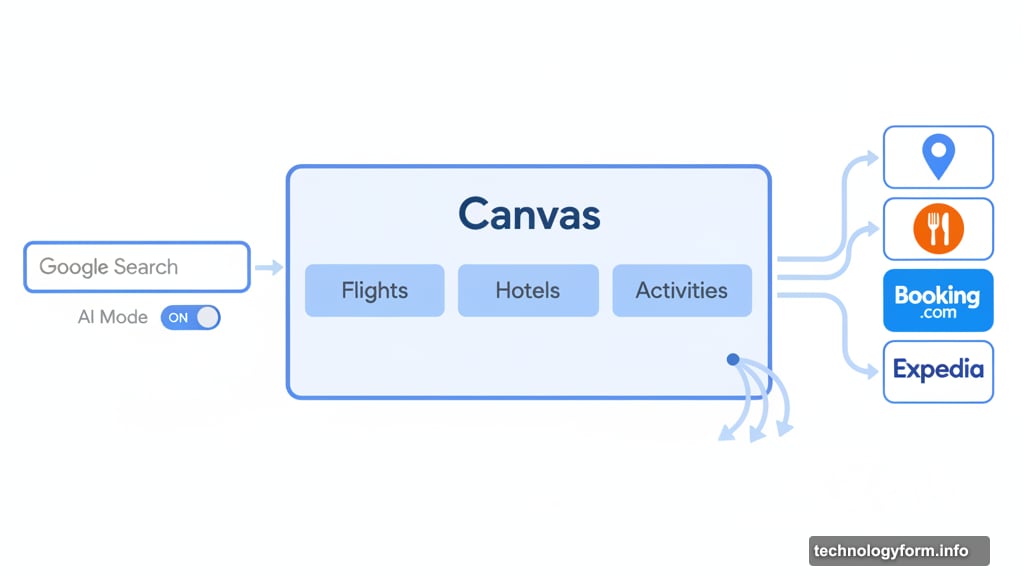
Here’s how it works. You tell AI Mode about your travel goals. The system generates a side-panel itinerary with flight options, hotel suggestions, and activity recommendations. Everything appears in one dynamic document that updates as you refine your requests.
For instance, you can ask for hotels under $200 per night with free breakfast. Or activities within 30 minutes of your hotel. The AI adjusts your plan based on each new request.
All generated plans save automatically to your AI Mode history. So you can return later to tweak details or start fresh. Google pulls in Map data to show actual photos and user reviews for suggested locations.
This feels more structured than generic AI chat responses. Instead of parsing through conversational suggestions, you get an organized itinerary that resembles what a travel agent might create.
Restaurant Booking Goes Beyond Labs Users
Google already tested agentic booking for events and appointments with Labs users. Now restaurant reservations roll out to all US users.
AI Mode shows booking options through partners like OpenTable, Resy, and Tock. You click through to finalize reservations on those platforms. The AI doesn’t complete the booking itself. It just connects you to the right service with relevant availability.
Hotels and flights are next. Google announced partnerships with Booking.com, Expedia, Marriott, and Wyndham Hotels. Those integrations will enable agentic booking for accommodations and airfare.
But here’s the interesting part. Google positions this as helpful automation. Yet it’s really about keeping users inside Google’s environment instead of visiting competitor websites directly.
Traditional Travel Sites Face New Pressure
Kayak and Expedia built businesses around travel search and booking. Google’s AI Mode now threatens that model.
Users who previously visited multiple travel sites for comparison can now stay in Google Search. The AI aggregates options, suggests alternatives, and connects to booking platforms. That reduces traffic to standalone travel services.
Sure, Google partners with some of these companies. But the partnership terms likely favor Google’s platform. Smaller travel sites without integration deals risk losing visibility entirely.
Google also expanded its AI-powered Flight Deals feature globally. The tool now works in over 200 countries and territories with support for 60+ languages. More users can find cheap flights without leaving Google’s ecosystem.
This mirrors how Google Shopping affected e-commerce sites. The company provides a useful service while simultaneously capturing more of the customer journey. Travel companies either adapt by integrating with Google or risk becoming irrelevant.
What This Means for Your Next Trip
Google’s travel planning features work best for straightforward trips. Big cities, popular destinations, standard itineraries. The AI pulls from existing data and user reviews.
However, complex trips with specific requirements might still need human expertise. Niche destinations, special accommodations, or unusual timing could exceed what the AI handles well.
Also remember that Google’s suggestions come from its partners and data sources. You might miss better deals or options that aren’t integrated with Google’s platform. Independent research still has value for comparison.
But for quick weekend getaways or routine business travel? AI Mode handles the basics efficiently. You’ll save time on initial planning and can refine details as needed.
The bigger question is whether convenience justifies giving Google even more control over travel decisions. The company already dominates search, maps, and reviews. Now it’s becoming the default travel planner too.
That concentration of power shapes which businesses succeed and which ones fade. Users gain convenience. The travel industry loses leverage. Google wins regardless.
Your move is deciding how much planning control you’re comfortable outsourcing to one platform’s AI.