OpenAI’s Atlas Browser Isn’t About Better Browsing. It’s About ChatGPT Dominance
OpenAI just dropped its new browser, ChatGPT Atlas. The move caught attention because it puts a browser in front of 800 million weekly ChatGPT users.
But here’s what matters. Atlas isn’t really about improving how you browse the web. Instead, it’s OpenAI’s play to make ChatGPT the center of your digital life while controlling its own distribution channels.
The stakes are higher than they look. Plus, this move reveals exactly what OpenAI fears most.
The Real Reason OpenAI Built a Browser
OpenAI faces a distribution problem. Last week, Meta kicked ChatGPT and Perplexity off WhatsApp, which reaches 3 billion monthly users. That’s a wake-up call.
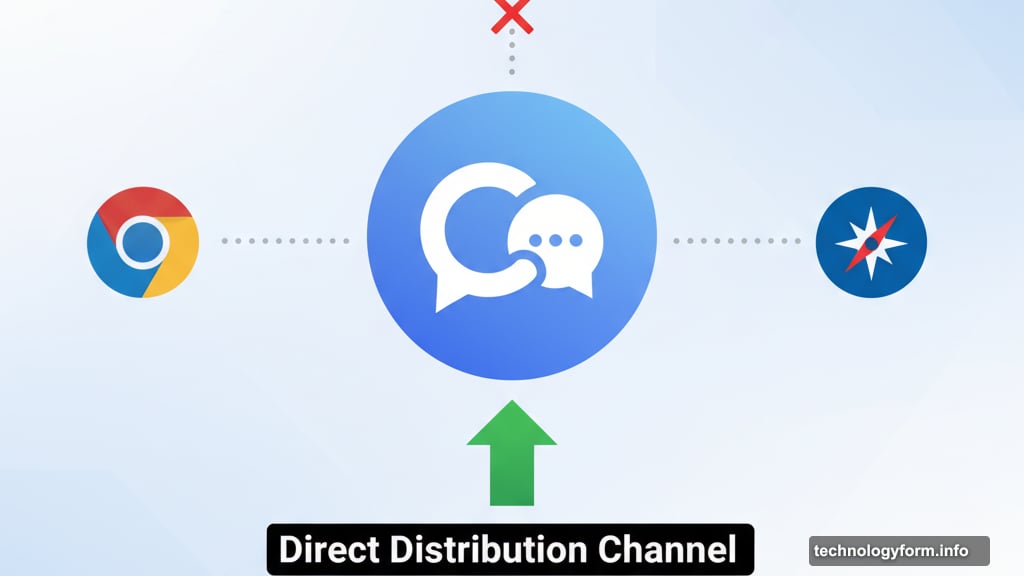
Platform owners control the pipes. They can shut off access anytime. So OpenAI needs its own distribution channel that nobody can take away.
Enter Atlas. The browser gives OpenAI direct access to users without depending on app stores, operating systems, or messaging platforms. It’s launching on Mac first, with Windows, iOS, and Android versions coming soon.
Unlike competitors using invite systems, OpenAI made Atlas available to everyone immediately. That’s aggressive. They want scale fast.
ChatGPT First, Web Second
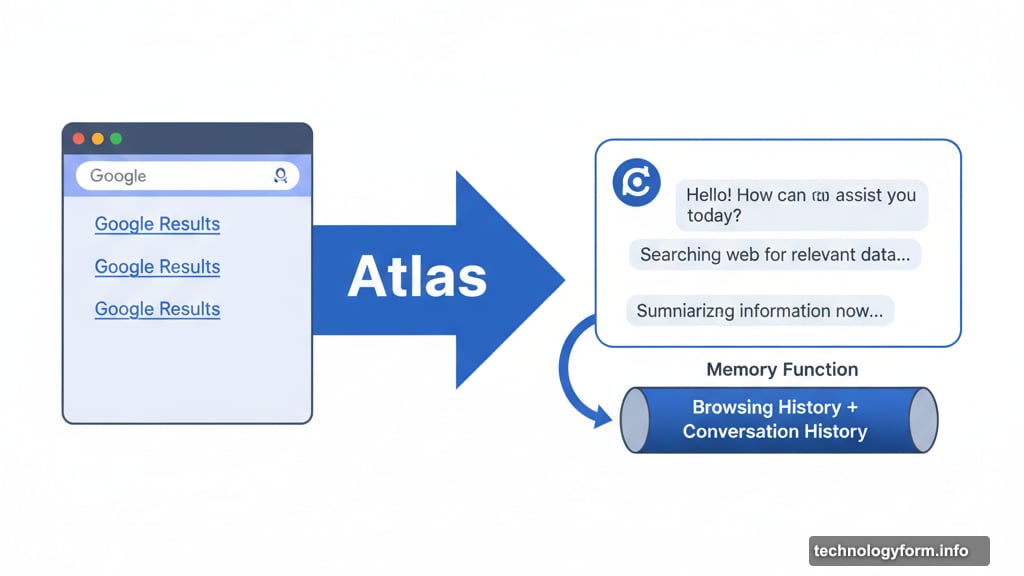
The core pitch is simple. Use ChatGPT instead of Google for search and answers. Type your question in the address bar. Get an AI response instead of a list of links.
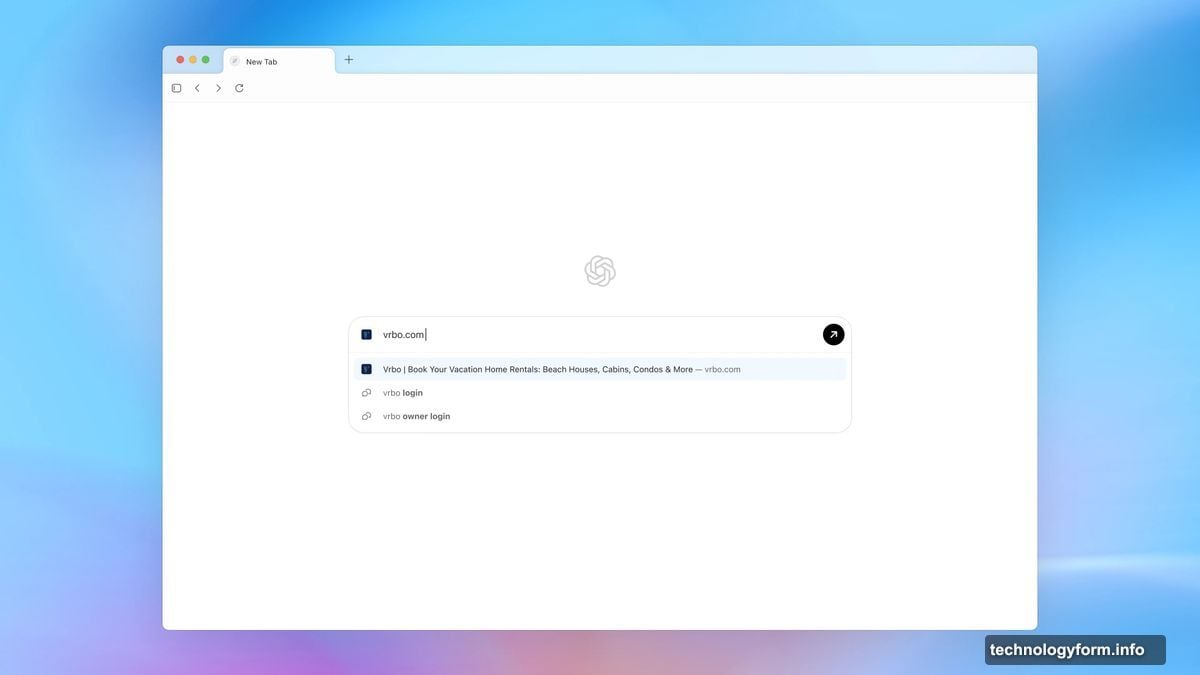
Sounds familiar? That’s because Perplexity, Opera’s Neon, The Browser Company’s Dia, and Strawberry all share the same concept. Atlas isn’t innovative here.
But OpenAI CEO Sam Altman framed it differently at launch. He called AI “a once in a decade opportunity to rethink what a browser can be.” His argument? Tabs were great but nothing major changed since then.
That’s marketing speak. The reality is more practical. OpenAI wants ChatGPT to be your default interaction with the internet, not Chrome or Safari.
Features Designed to Feed ChatGPT Data
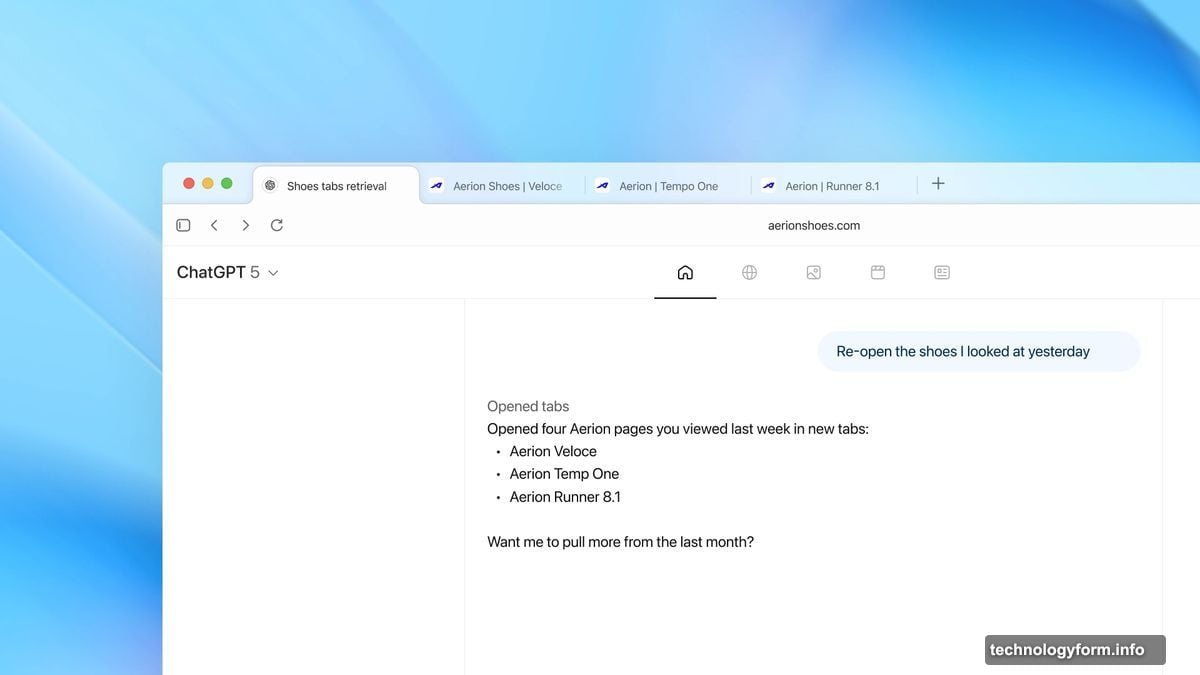
Atlas includes features that gather more user context. The memory function combines your browsing history with ChatGPT conversation history.
Ask “What was that work document with my presentation plan?” and ChatGPT fetches the link. Convenient, yes. But it also means ChatGPT learns everything about your web activity.
This context feeds into other OpenAI products. When the company rolls out “Sign in with ChatGPT” widely, apps will access this browsing data to personalize experiences.
Moreover, Atlas integrates multiple websites directly into ChatGPT conversations. Instead of copying links, you reference sites naturally. This helps OpenAI’s AI agent work better since it already uses a headless browser internally.
A hovering writing assistant appears in text fields across the web. Plus, OpenAI is working to integrate its App SDK into Atlas. That means calling other apps within ChatGPT for better discoverability.
All of these features prioritize ChatGPT’s capabilities over actual browsing improvements.
What’s Missing Tells the Story
Atlas lacks basic browser features users expect. No ad blocker. No VPN. No reading mode. No built-in translation.
These omissions are revealing. Traditional browsers add features that improve your experience consuming web content. Atlas treats web pages as context for ChatGPT instead.
Want to block ads? Ask ChatGPT to summarize the page without distractions. Need translation? Tell ChatGPT to translate for you. Everything routes through the AI.
In contrast, The Browser Company’s Arc includes practical innovations like AI-powered file renaming and web page customization. Those features actually improve browsing.
Atlas makes browsing secondary to ChatGPT interactions. Opening a page gives ChatGPT more training data rather than helping you read the content better.
The Distribution Game
OpenAI needs to convert Chrome, Safari, and Edge users. That’s tough. Chrome succeeded because it was fast and made Google the default search starting point.
Atlas works great for people who already replaced Google with ChatGPT. But average users? They might not want their chatbot and browser merged yet.
The company is betting on steady ChatGPT growth. Weekly users hit 800 million. But converting browser market share requires a different kind of adoption.
Think about it. People use Chrome out of habit. It’s familiar. It works. Switching requires real incentive beyond “talk to ChatGPT instead of Googling.”
OpenAI’s Bigger Vision
CEO of applications Fidji Simo laid out the endgame in a blog post. ChatGPT isn’t staying a simple chatbot. It’s evolving into “the operating system for your life.”
That phrase matters. Operating systems control how you interact with technology. They sit between you and everything else. They gather data about every action you take.
Atlas fits that vision perfectly. It’s not just a browser. It’s a canvas for ChatGPT to expand into more of your digital workflow.
But here’s the uncomfortable truth. This vision requires you to route everything through OpenAI’s infrastructure. Your searches, browsing history, documents, and daily activities all flow through ChatGPT.
Tech leaders love talking about AI as a platform shift. Sundar Pichai and Satya Nadella both say it. Yet for consumers, phones and desktop OS remain the primary way to access AI tools.
OpenAI wants to change that hierarchy. Make ChatGPT the first interface, not the operating system beneath it.
Why This Feels Different
Other AI browsers exist. Perplexity’s Comet. Opera’s Neon. The Browser Company’s Dia. Even General Catalyst backs Strawberry.
But none reach 800 million weekly users out of the gate. OpenAI’s scale changes the competitive landscape immediately.
Plus, OpenAI controls both the AI model and the distribution channel. That’s powerful. They can optimize the browser for ChatGPT in ways third-party apps can’t match.
Meta’s recent decision to block third-party chatbots demonstrates why this matters. Platform dependence is risky. Owning your distribution protects against sudden shutdowns.
The Question Nobody’s Asking
Will average users actually want this? ChatGPT enthusiasts sure. Power users who already spend hours in the chatbot daily? Absolutely.
But billions of people still default to Chrome or Safari. They search Google, click links, read articles, and close tabs. That workflow feels comfortable.
Merging browsing and AI requires changing decade-old habits. Chrome won by being faster and better, not by fundamentally changing how people used the web.
Atlas asks users to rethink their entire relationship with the internet. Put ChatGPT first. Let it gather context from everything you do online. Trust it to surface the right information.
That’s a big ask. Especially when Atlas lacks basic features people expect from modern browsers.
OpenAI has momentum. ChatGPT adoption keeps climbing. But converting that into browser market share against Google, Apple, and Microsoft? That’s a much harder fight.
Atlas might succeed with the ChatGPT faithful. Whether it reaches mainstream users remains the billion-dollar question OpenAI needs to answer.