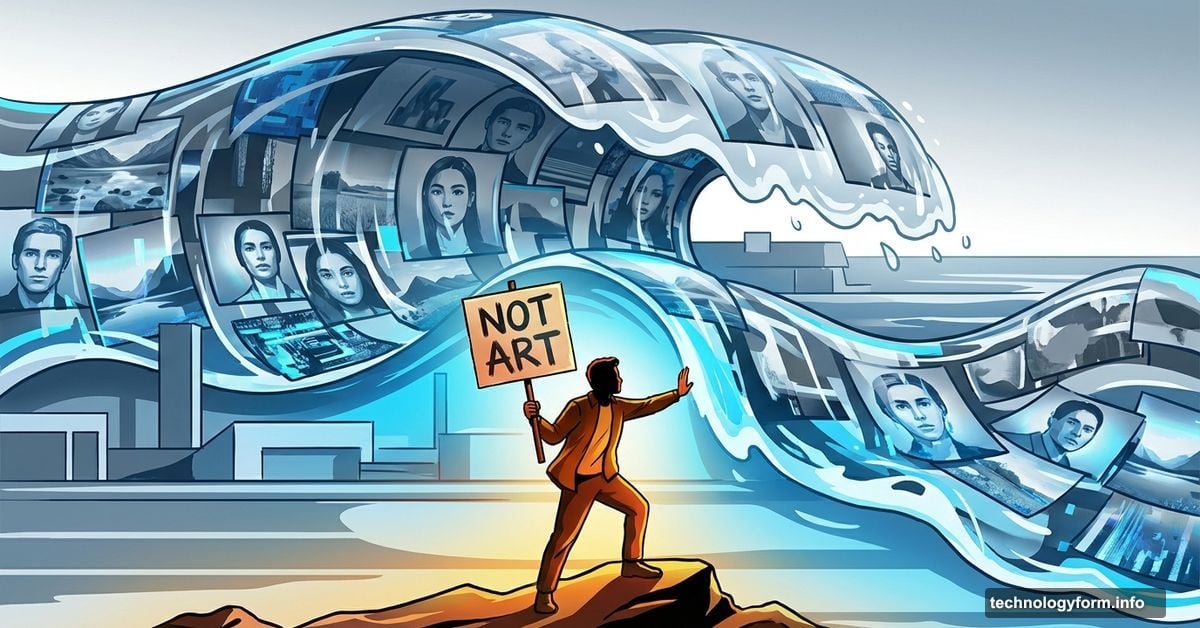
AI Image Generators Flooded 2025. Making Them Uncool Is Our Only Hope
AI-generated content exploded this year. Videos went from clunky disasters to near-perfect fakes in seven months flat.
But here’s the truth nobody wants to say out loud: None of it counts as art. Not even close. And if we don’t collectively reject this manufactured garbage in 2026, our entire online experience drowns in algorithmically generated slop.
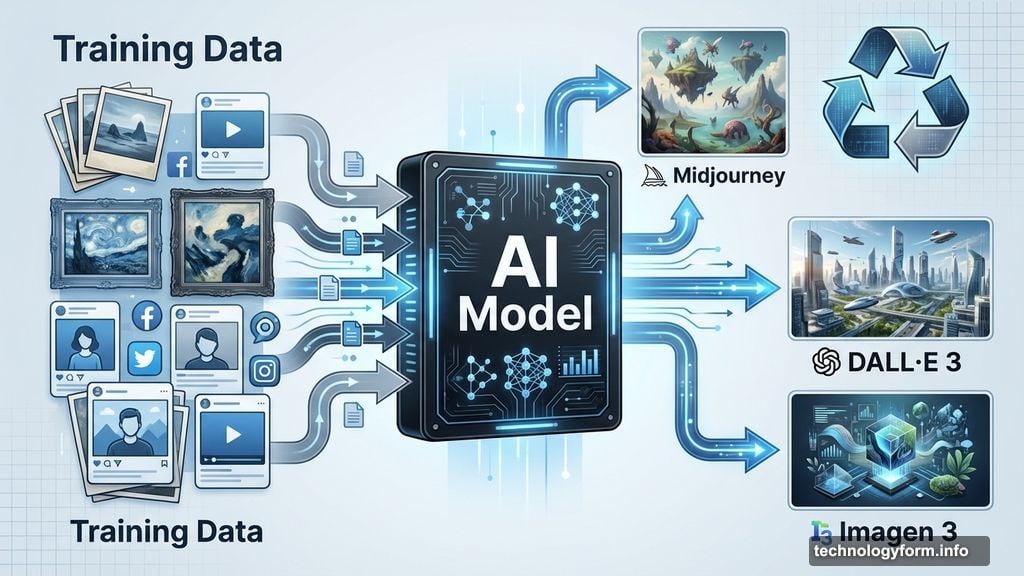
The technical improvements came fast. Too fast, honestly. Google’s Veo 3 proved cinematic AI video works. OpenAI’s Sora showed terrifying glimpses of a future where anyone can deepfake your face. Meanwhile, Imagen 3 and DALL-E 3 churned out images so polished they fooled casual observers.
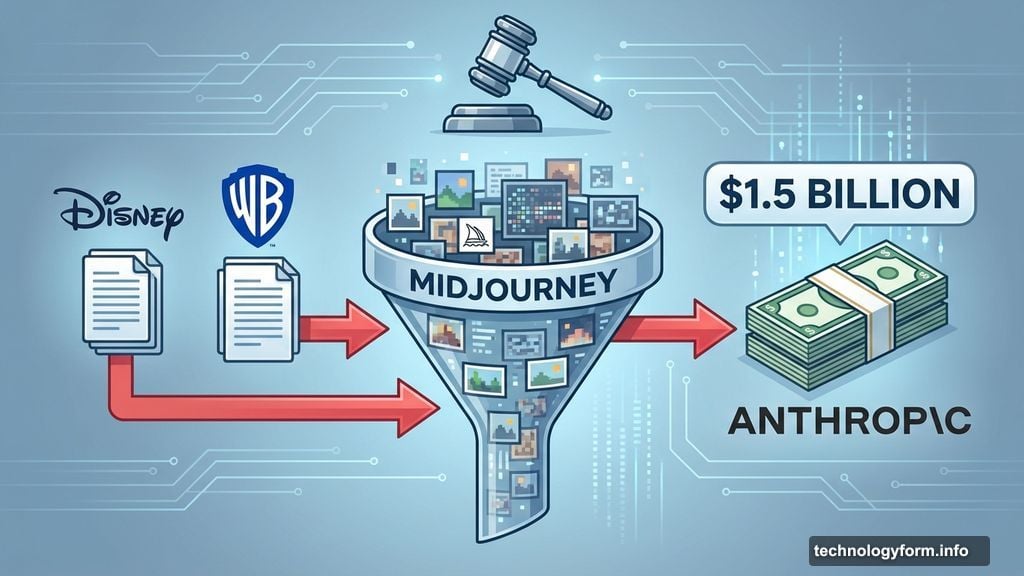
Yet behind the glossy demos, real artists screamed about theft. Disney and Warner Bros. filed brutal copyright lawsuits calling Midjourney “a bottomless pit of plagiarism.” Anthropic settled with authors for $1.5 billion after piracy accusations. Plus, the energy costs for video generation pushed AI companies to build massive data centers over local community objections.
Tech executives sold this as “democratizing creation.” That’s marketing speak for “flooding the internet with content nobody asked for.”
Why AI Content Will Never Be Art
AI models mimic human creativity by design. They train on massive datasets of photographs, designs, and social media posts. The wider the training data, the more capable the model becomes.
So when you ask ChatGPT to create Studio Ghibli-style images, it works because the model studied that specific aesthetic. It copies, remixes, and regurgitates existing styles. But it never creates anything fundamentally new.
Film writer Nora Garrett nailed it this year: “AI is sold to us like it’s the future, but it’s a regurgitation of our collective past, remarketed as the future.” She added that making things “quicker, cheaper and more optimally” isn’t conducive to human spirit or collectivism.
Director Guillermo del Toro put it even simpler when asked about using AI: “I’d rather die.”
Art connects people through shared human experience. It makes us uncomfortable, shows us truths we’d rather avoid, and reflects our collective humanity. AI can’t do that. In fact, research shows we stop thinking critically when using AI.
Take Tchaikovsky’s Nutcracker pas de deux. He composed it in 1892 while grieving his sister’s death. That sorrow bleeds through the music, particularly in the Sugar Plum Fairy’s duet. The emotional weight still moves audiences 133 years later.
AI music generators could never achieve that depth. They lack the human experience that transforms sound into meaning.
AI Slop Consumed Social Media in 2025
Even legitimate AI uses created problems. Low-quality, pointless AI images and videos—what we call “slop”—became inescapable on social platforms. The plasticky, trashy aesthetic screams “I didn’t care enough to make this myself.”
This slop doesn’t pretend to be art. But it’s so ubiquitous that social media turned into an antisocial wasteland. You scroll past AI-generated nonsense searching for actual human connection.
Image and video generation became must-have features in the AI race this year. Companies poured billions into these capabilities. Any innovation gave competitors an edge in retaining users and staying relevant.
That funding mentality guarantees more AI content in 2026, not less.
Tech Companies Won’t Save Us
We can’t depend on AI companies to stop this flood. Many invested in preventing deepfakes and illegal content. Yet users easily circumvent every system’s rules within weeks of launch.
AI detection technology helps but can’t catch every instance of generated misinformation. The tools simply aren’t advanced enough yet.
If we want to stop AI “art” and slop, we need a different strategy. We have to make it culturally unacceptable. The only way to reduce supply is killing demand.
Generative AI won’t disappear entirely. It’s useful for specific tasks like brainstorming or personalization. But we need to be more thoughtful about when it’s appropriate. AI isn’t the right tool for every project.
Great creative work happens in the process of doing that work. Creative work is knowledge work. Replacing intellectual and emotional labor with AI produces nothing but slop.
The Backlash Already Started
This movement against AI content gained momentum throughout 2025. McDonald’s and Coca-Cola faced swift backlash for AI-generated holiday ads. Artists now proudly label their work as AI-free. Others proclaim themselves AI haters without shame.
The cultural shift is happening. We just need to accelerate it.
Stop elevating AI enthusiasts to the level of professional creators. Don’t let brands feed you AI slop instead of human-centric work. And definitely don’t let tech companies claim AI garbage is an unavoidable consequence of innovation.
Demand human creativity. Reward artists who resist AI shortcuts. Call out AI content when you see it. Make using AI for creative work deeply uncool.
Otherwise, 2026 becomes the year authentic human expression gets buried under mountains of algorithmically generated trash. Our online spaces deserve better. Artists deserve better. And honestly, we all deserve better than accepting mediocrity as the new normal.